Top 7 Pattern Activities for Preschoolers
Early Childhood Education
Jun 5, 2026
Engage preschoolers with fun pattern activities that enhance math skills and creativity using everyday materials like snap cubes and buttons.

Did you know? A child's ability to spot patterns at age 5 can predict their math skills at age 11 [1]. Patterns show up all around us, from clothes to music to nature, and they help build math, logic, and problem-solving skills [2]. Here’s a quick guide to seven fun and easy pattern activities for preschoolers using everyday items:
Snap CubeSequences: Use colorful interlocking cubes to create and extend patterns.
Nature Pattern Hunt: Collect leaves, rocks, and pinecones to form patterns outdoors.
Cereal NecklaceSequencing: String colorful cereal pieces in patterns for a creative snack.
Clothespin Patterns: Clip colored clothespins onto cardboard strips to create sequences.
Playdough StampPatterns: Use stamps and household items to imprint patterns in playdough.
Toy Car Track Patterns: Create road patterns with tape and drive toy cars along them.
Button Sorting and Sequencing: Sort and arrange buttons by color, size, and shape to form patterns.
These hands-on activities help kids build fine motor skills, spatial awareness, and early math concepts. If you want to go further, try using digital tools like Funexpected Math for interactive pattern practice. Begin with simple AB patterns, like red-blue-red, and slowly make them more complex to encourage logical thinking and get your child ready for math.
1. Snap Cube Sequences
Snap cubes are small, colorful plastic cubes that connect on all six sides, making them a fun and hands-on way to explore patterns. These ¾-inch interlocking cubes provide a tactile experience that helps reinforce pattern recognition. Their design makes them a great tool for introducing mathematical concepts through engaging, playful activities.
Materials Needed
To get started, you'll need a set of colorful snap cubes (also called linking cubes or interlocking cubes). A basic set of 100 cubes costs about $13.99[3], while larger sets of 500 are available for around $63.99[4]. With their range of colors, these cubes are perfect for creating visual patterns that grab a child’s attention.
Activity Steps
Start by showing your child a simple ABAB pattern with two colors, like red and blue, and ask them to continue the sequence. Once they’re comfortable, move on to a three-color ABCABC pattern (e.g., red, blue, yellow) and encourage them to replicate or extend it. Begin with straightforward sequences and gradually increase the complexity by adding more colors or varying the pattern[5]. You can prompt them with questions like, "What do you think comes next?"
As they build confidence, introduce pattern cards or create custom sequences for them to copy. You can also encourage them to design their own patterns and explain the rules they followed. This not only strengthens their understanding of patterns but also sparks creativity. For a change of pace, try incorporating outdoor elements to expand their pattern recognition skills.
Skills Developed
Working with snap cubes helps children develop a variety of important skills. The act of grasping, stacking, and connecting the cubes strengthens fine motor abilities, including finger strength, grip, and dexterity[6][7]. These skills are crucial, as studies indicate that strong fine motor development in early childhood is linked to later academic success[8]. Beyond motor skills, snap cube activities enhance spatial awareness, hand-eye coordination, and color recognition. They also help children practice counting, grouping, and one-to-one correspondence by organizing and sequencing the cubes.
"When preschoolers understand patterns, they can describe them, reproduce them, extend them, fill in missing elements, and create new patterns." - Play to Learn Preschool [5]
2. Nature Pattern Hunt
Taking math outside makes it more interactive and fun. This activity builds on indoor pattern exercises and encourages kids to observe, explore, and connect with nature as they find patterns. Nature has plenty of materials, like leaves, rocks, and pinecones, that are great for making patterns. It also gets kids moving and thinking in new ways.
Materials Needed
You'll need a few simple items to get started:
Natural materials like leaves, rocks, pinecones, sticks, acorns, flowers, or shells (if available). Aim for a variety of shapes, sizes, colors, and textures.
A collection bag for each child to gather their finds.
A blanket or mat to use as a workspace, especially if the ground is damp or uneven.
Activity Steps
Start by setting some ground rules: collect only items already on the ground - no picking plants or disturbing living things. Encourage kids to gather at least four of each type of item to ensure enough materials for pattern-making.
Then, create a simple search list together. Look for leaves with unique shapes, rocks in different sizes, or fallen flowers with interesting designs. Encourage kids to notice textures, colors, and other details as they explore.
Once everyone has their materials, demonstrate some basic patterns. For example:
A simple leaf–rock–leaf sequence.
A slightly more complex leaf–leaf–rock pattern.
Or try alternating three items, like rock–pinecone–leaf.
After you show a few examples, let the kids make their own patterns. Ask them to explain the rules they used, such as sorting by color, size, or texture. You can also add challenges, like making patterns with leaves in different colors (brown, yellow, green) or lining up rocks by size in a spiral or straight line.
Skills Developed
This activity is packed with benefits. As kids sort and classify natural materials, they sharpen their observation and categorization skills. They also expand their vocabulary with descriptive words like smooth, rough, big, small, round, and pointed.
This activity also teaches kids to care for the environment. They learn to respect nature by not picking plants and by putting things back when they are done. Gathering, sorting, and arranging items helps with fine motor skills and hand-eye coordination. Predicting and continuing patterns also helps build early science skills [9].
Before wrapping up, remind kids to return the materials to their original spots, reinforcing the importance of caring for the environment.
3. Cereal Necklace Sequencing
This activity mixes creativity with learning and makes practicing patterns fun and tasty. Kids enjoy making their own necklaces and eating them afterward. Threading cereal pieces in order helps children learn about patterns and also builds important motor skills.
Materials Needed
Gather these simple materials to get started:
O-shaped cereal in various colors (Cheerios, Fruit Loops, or similar round cereals work perfectly)
String or yarn, cut into 18–24-inch lengths
Masking tape to secure one end of the string to the table
Pattern cards (optional) to guide beginners with visual examples
If possible, opt for dye-free, organic cereal. In February 2025, Krysten's Kitchen recommended brands like Lovebird Organic Cereal, Seven Sundays Cereal, and Three Wishes Cereal for their clean ingredients and toddler-friendly appeal [10].
Activity Steps
Start by taping one end of the string securely to a table. This keeps the cereal from sliding off and makes threading easier for little hands. Show children how to slide cereal pieces onto the string, holding it steady to help them get started [10].
Begin with simple two-color patterns, like red–yellow–red–yellow, and let your child copy the sequence. As you work together, talk about the patterns you see. For example, say, "I notice you're using blue, then green, then blue again!"
To make things easier, arrange the cereal pieces into patterns on the table before stringing. This lets kids see and adjust the sequence as needed [11]. You can also use pattern cards with pictures of color combinations for extra guidance.
As their skills grow, challenge them with more complex patterns, such as red–red–blue or yellow–green–green. Encourage them to notice both the colors and the shapes as they create their designs [11].
"The child can explore patterns and colors by arranging the fruit loops and cheerios in different sequences on the necklace." – Learning Corner [12]
This hands-on activity can lead to even more fun pattern projects.
Skills Developed
Cereal necklace sequencing strengthens the pattern-recognition skills introduced earlier while targeting several developmental areas.
Fine motor skills: Threading small cereal pieces builds the hand and finger strength essential for tasks like drawing and writing [13].
Bilateral coordination: Kids practice using both hands together - one holds the string while the other threads the cereal [14].
Math concepts: Through hands-on exploration, children learn about colors, shapes, and counting, laying the groundwork for future math skills [13].
"Recognizing patterns is a skill that translates directly into algebraic thinking, so by exploring these ideas now, you will be setting the stage for bigger math ideas later." – PBS KIDS for Parents [15]
Additionally, this activity develops focus and patience as kids concentrate on following sequences and solving problems, like figuring out which piece comes next or fixing mistakes in their pattern.
4. Clothespin Patterns
This fun, hands-on activity uses everyday clothespins as learning tools. Kids enjoy the click of the clothespins, and while they play, they also build fine motor skills and learn about patterns.
Materials Needed
To set up a simple and engaging pattern activity, gather these supplies:
Colored clothespins in 4–6 different colors (both wooden and plastic work great)
Cardboard strips cut to 12–18 inches, or the edges of a sturdy cardboard box
Pattern cards (optional) with simple sequences for visual guidance
Small containers to sort clothespins by color for easy access
Standard-sized clothespins work best because they help strengthen small hands.
Activity Steps
Clothespin pattern activities combine play with learning. Start by showing your child how to open and close a clothespin using a thumb-and-index finger pinch, which mirrors the motion needed for a proper pencil grasp[16].
Begin with simple AB patterns using two colors. For example, clip a red clothespin, then a blue one, and repeat the sequence along the cardboard edge. As you do this, say the pattern out loud - "red, blue, red, blue" - to help them recognize and internalize the sequence[17].
Once they’re comfortable with basic patterns, introduce more complex ones like ABC (red, blue, yellow) or AABB (red, red, blue, blue)[17]. Planning Playtime used a creative twist by having children clip specific numbers of clothespins onto numbered popsicle sticks, blending patterning with counting practice[18].
Encourage your child to extend patterns by asking, "What comes next?" and let them create their own designs. As they grow more confident, challenge them to invent and complete sequences on their own[17].
"When children have solid patterning skills in place, they're able to predict what will come next. Clear patterns can be found in our daily routines, music, words, and even in nature." [17] - Vanessa Levin, Curriculum Writer, Early Childhood Teacher, Consultant, Public Speaker, and Author
Skills Developed
Clothespin pattern activities help kids in many ways. First, clipping clothespins over and over strengthens their pincer grip and improves hand-eye coordination as they place each clip along the cardboard [19].
The activity also introduces spatial reasoning, as kids learn about positioning, sequencing, and organizing visually. And let’s not forget the math benefits: studies show that understanding patterns at age 5 can predict math skills at age 11, as math is deeply rooted in patterns and structure[2]. On top of that, working with patterns hones executive functions like attention, cognitive flexibility, and working memory[2].
"Fine motor skills are about the small muscle movements in the fingers, hands and forearms." [19] - Learning Resources
As kids try harder patterns, they are not just getting ready for school. They are building skills that will help them learn throughout their lives.
5. Playdough Stamp Patterns
This activity mixes hands-on fun with learning by using everyday items to make patterns and explore textures. It’s a great way to introduce early math ideas like patterns and sequencing while keeping kids interested with playdough.
Materials Needed
Gather these simple items, many of which you likely already have at home:
Playdough (store-bought or homemade) in various colors
Cookie cutters in shapes like stars, circles, and hearts
Bottle caps from jars or bottles for circular impressions
Wine corks for small round stamps
Coins (quarters, nickels, pennies) for textured prints
LEGObricks for geometric patterns
Plastic bottle bottoms to create "flower" shapes
Plastic lids with ridges for long, textured impressions
Recycled items with interesting surfaces, like small containers
Recycled plastic items are especially good for adding interesting textures to playdough.
Activity Steps
To begin, roll out the playdough into a flat surface about ½ inch thick. This creates a smooth canvas for stamping. Start with a simple AB pattern, such as stamping a bottle cap followed by a star-shaped cookie cutter. Repeat the sequence and encourage your child to say the pattern out loud: "circle, star, circle, star." This verbal repetition reinforces the concept while building language skills.
Next, experiment with rolling items like bottles across the dough to create side impressions. Use ridged plastic lids to make continuous textures that can act as a base for more intricate patterns.
As your child becomes more confident, introduce advanced patterns like ABC (circle, star, heart) or AABB (two circles, two stars). Add an element of challenge by asking, “What comes next in the pattern?”
For extra fun, turn it into a scavenger hunt by letting your child search for textured items in your recycling bin. This adds an element of discovery and encourages creativity.
"On top of the sensory experience, this playdough imprinting activity also encourages development of fine motor skills, language skills, processes, exploration and textural differences." [20] - Learn with Play at Home.
Skills Developed
This activity is more than just fun. Pressing stamps into playdough helps kids develop fine motor coordination and strengthens their hand muscles. It also helps them recognize shapes and textures, which builds spatial awareness.
From a math perspective, creating patterns teaches early algebraic thinking by helping children understand sequences and relationships [2]. Counting stamps, identifying shapes, and predicting what comes next in a pattern are all foundational math skills.
Language development gets a boost too. Introducing words like "grooves", "ridges", and "textures" expands vocabulary. Asking questions like “What shape is this?” or “Which pattern is longer?” encourages critical thinking and communication.
This playful activity helps kids see that math is not just about numbers. It is also about noticing the world, finding patterns, and exploring how things fit together.
6. Toy Car Track Patterns
This activity turns your floor into a colorful toy car track and mixes the fun of driving with learning about patterns. By making roads with tape, kids can practice spotting and predicting patterns as they drive their favorite cars. It’s a hands-on way to learn about patterns through play.
Materials Needed
You don’t need much to set up this engaging activity - just a few everyday items:
Toy cars in various colors, sizes, or types (fire trucks, police cars, regular cars, etc.)
Masking tape or washi tape in different colors (road tape rolls are typically 2 inches wide and 5.5 yards long)
Safety scissors for cutting tape
Traffic signs and lights (optional) to add more fun to the scene
Small boxes or containers to create obstacles or buildings
Clean floor space - a vacuumed area ensures the tape sticks properly
Using colorful tape is especially effective for creating clear, easy-to-follow patterns. Plus, most of these materials are likely already lying around your home.
Activity Steps
Start by vacuuming the floor to make sure the tape adheres well. Begin with a simple two-color pattern, like a red-blue loop, and let your child drive their cars along the track. Once they’ve mastered this, introduce more complex sequences. For instance:
Create patterns based on vehicle types, such as fire truck, regular car, fire truck, regular car.
Try size-based patterns by alternating big cars and small cars along the route.
Add variety by designing tracks with intersections, loops, and even different shapes like circles, squares, and triangles. Encourage kids to drive along these shapes while naming them. You can also turn the track into an obstacle course by using boxes or containers to add height and complexity.
Skills Developed
This activity isn’t just entertaining - it’s packed with developmental benefits. Here’s what kids gain while playing:
Predictive reasoning: As kids follow the tape patterns (e.g., red-blue-red), they start to anticipate what comes next. This builds logical thinking and helps them understand cause-and-effect relationships, skills that are foundational for math and problem-solving.
Fine motor skills: Navigating cars along curves, intersections, and around obstacles requires precision. These controlled movements enhance hand-eye coordination and dexterity.
Spatial awareness: As kids steer their cars through turns and judge distances, they develop a better sense of space and direction.
Counting and sequencing: Driving cars in specific patterns or counting the number of loops or shapes reinforces basic math concepts.
Language skills: Descriptive play naturally encourages kids to use words like “next,” “before,” “after,” and “between.” This helps build vocabulary that’s essential for understanding and communicating math concepts.
This simple activity brings together creativity, learning, and fun. It’s a great way to spend time with your child and help them build important skills.
7. Button Sorting and Sequencing
Buttons are more than sewing supplies. They offer lots of learning opportunities for preschoolers. With their vibrant colors, different sizes, and shapes, buttons invite kids to explore, sort, and arrange them. These simple activities help children practice pattern recognition and build early math skills, turning everyday objects into learning tools.
Materials Needed
Getting started with button activities is simple and doesn’t require much. You’ll need an assortment of buttons in different colors, sizes, and shapes. Mixed button packs from craft stores work well, or you can raid your sewing box for extras. For sorting, use small containers like muffin tins, egg cartons, or even plastic lids. If you want to add a splash of fun, try matching the containers to the button colors. For pattern-making activities, grab some white paper and crayons or markers to trace button outlines.
Activity Steps
Begin by introducing basic sorting. Ask kids to group the buttons by one characteristic, like color, and place them in matching containers. Once they’ve mastered simple sorting, move on to patterns. Start with something easy, like an AB pattern (red-blue-red-blue), and gradually work up to more complex sequences like AAB (red-red-blue) or ABC (red-blue-green) [18]. Encourage kids to say the patterns out loud as they create them - this verbal reinforcement helps solidify the concept [19].
For added fun, try these variations:
Trace button shapes on paper and have kids match the buttons to their outlines.
Draw letters and let children use buttons to trace their shapes.
Use a 10-frame grid to introduce early counting concepts.
Start a pattern and challenge your child to complete it.
These activities mix sorting and sequencing, so kids can practice several skills while staying interested and engaged.
Skills Developed
The benefits of button sorting and sequencing go far beyond play. These activities boost visual perceptual skills as children learn to spot similarities and differences. They also enhance memory and cognitive skills through categorization [20]. On the math front, these exercises lay the groundwork for understanding patterns, counting in groups, and even basic operations like addition and subtraction [21].
Beyond math, these activities help kids develop executive function skills - like memory, attention, and problem-solving - that are essential for academic success. Language skills get a boost as children describe their sorting choices and explain their reasoning. Plus, fine motor control improves with every small, precise movement needed to pick up and place buttons [22]. Logical thinking also gets a workout as kids tackle increasingly complex patterns [21]. All of this makes button sorting and sequencing a fantastic way to mix fun with foundational learning.
Digital Pattern Practice with Funexpected Math
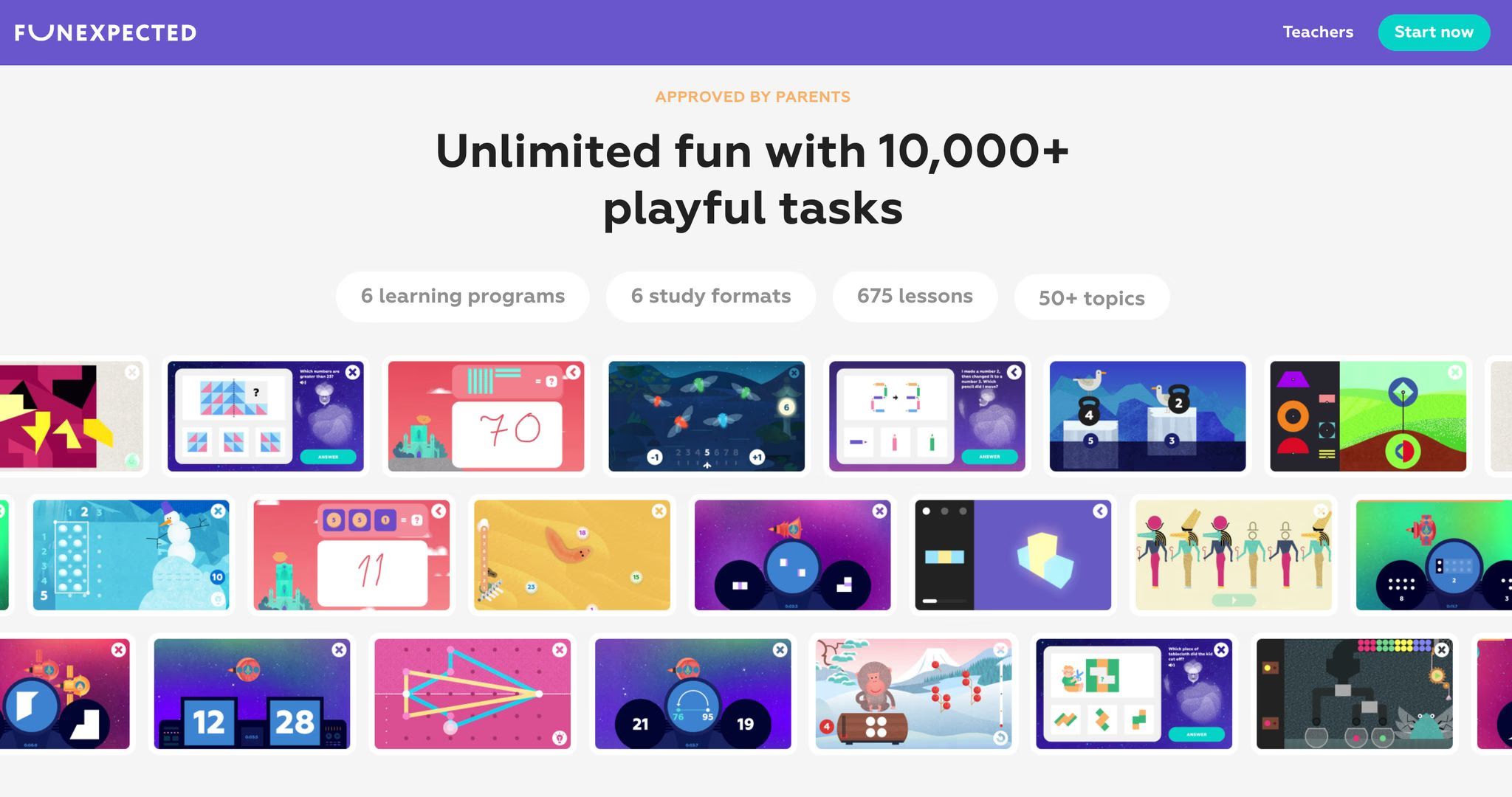
Using physical items like buttons, snap cubes, and natural objects can make learning patterns fun and engaging for preschoolers. Adding digital tools, like the Funexpected Math app, can make learning to the next level by introducing interactive ways to practice patterns.
Why Use Funexpected Math
Funexpected Math is a research-based app designed to help kids develop pattern recognition through digital activities. It adjusts to each child's learning pace, making it suitable for a wide range of skill levels. The app transforms abstract math concepts into interactive experiences, helping kids identify and work with visual patterns in a hands-on digital format [23][24].
With more than 10,000 tasks, including logic puzzles that encourage pattern-based thinking, the app ensures there’s always something fresh to try [23][24].
Example Activities
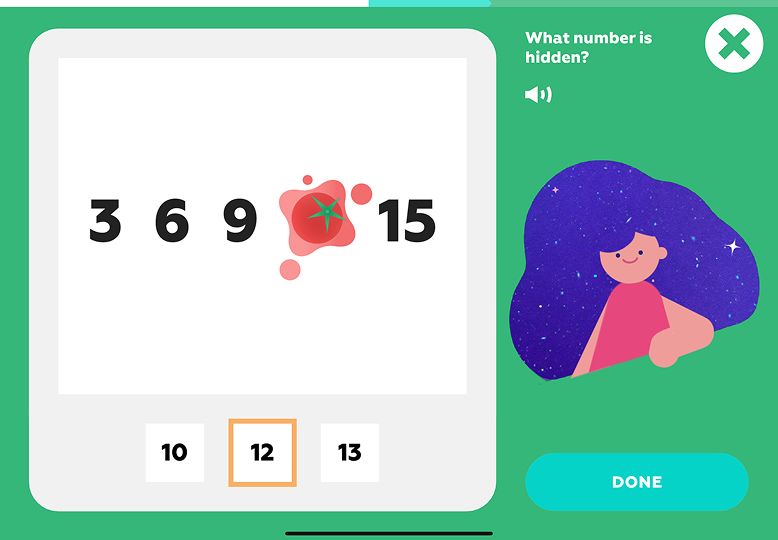
The app offers digital versions of many activities you might already do at home. For instance, virtual bead threading and shape-arranging games allow kids to create colorful sequences using shapes like circles, squares, and triangles. These games mirror activities like making cereal necklaces or arranging snap cubes but use digital tools instead.

Enhancing pattern recognition with beads in Funexpected Math app
The app uses familiar pattern types like AB, AAB, and ABC, but adds something new. Kids can try out patterns, fix mistakes, and try again right away, without having to move real objects. This instant feedback helps them feel confident and encourages them to try harder patterns. It’s a good way to build on what they learn with real objects and keep practicing with digital games.
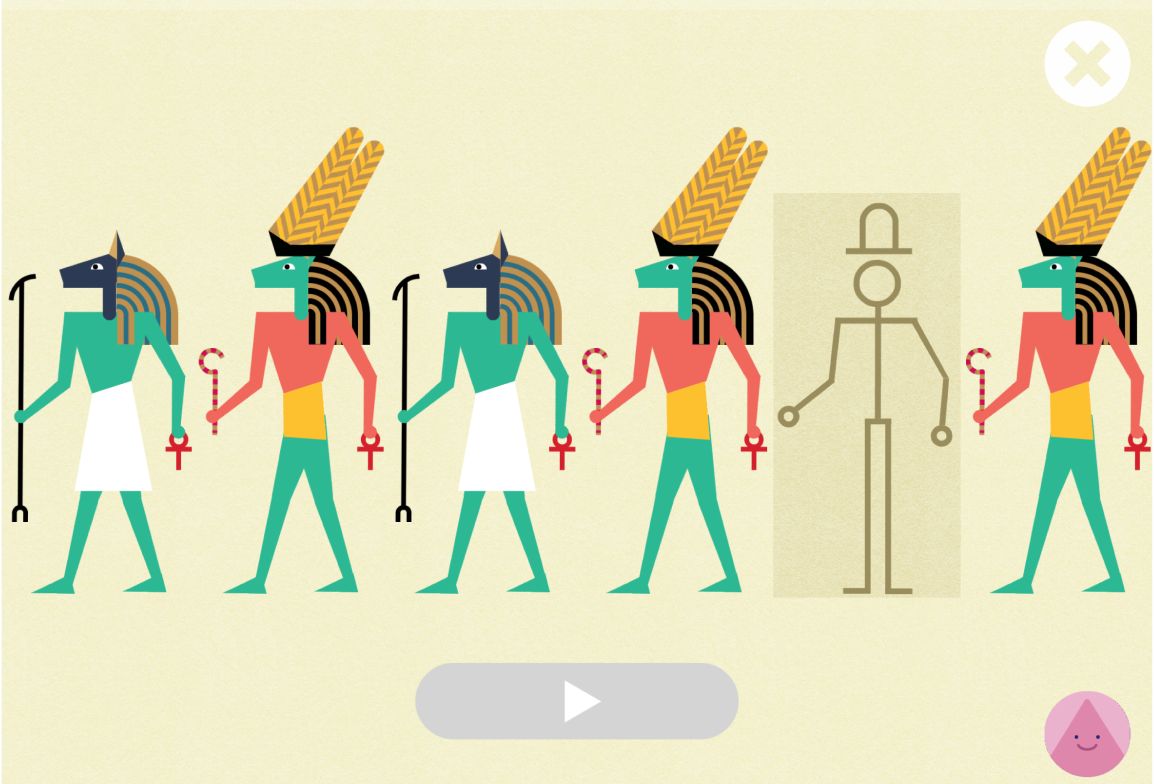
Learning to recognize patterns with the “Gods” game in the Funexpected Math app
Benefits of Combining Physical and Digital Learning
Blending physical play with digital tools creates a balanced learning experience. Research shows that combining the two approaches supports overall child development. Digital play enhances cognitive skills, while physical activities develop motor skills and encourage social interaction [25].
For example, pairing real-world activities like sorting buttons with digital pattern games can strengthen a child’s understanding of patterns from multiple angles. Digital tools also encourage problem-solving and critical thinking, while physical activities provide the hands-on practice young learners need [25].
To make the most of both, try planning a schedule that includes hands-on and digital activities. For example, start the day with sorting real objects and end with a short digital pattern game before bed. This way, your child gets the benefits of both types of learning [25][26].
Conclusion
Introducing patterns to preschoolers lays a strong groundwork for future success in math. Studies show that early pattern recognition is a reliable predictor of math skills later in life [2]. Engaging activities like creating snap cube sequences, arranging buttons, or exploring patterns in nature can have a lasting positive impact on a child’s academic journey.
The seven activities above help children learn important skills like matching, sorting, and sequencing. These are the building blocks for harder ideas they will see in algebra and geometry. By finding patterns, kids also build logical thinking, which helps them solve tough problems in school and in daily life.
Patterns are also deeply tied to early counting and number skills. Learning to spot patterns helps kids get better at counting and supports their overall success in math.
Mixing hands-on activities with digital tools can help kids build these skills even more. Using real objects like cereal pieces or clothespins gives kids valuable hand practice, while digital tools provide quick feedback and plenty of opportunities to exercise. This mix helps with both movement and thinking skills.
FAQs
How do pattern activities help preschoolers develop math skills?
Pattern activities are a fun and effective way to help young children develop early math skills. When preschoolers recognize and make patterns, they are not just having fun. They are building important skills like critical thinking, problem-solving, and spatial awareness. These skills help them with harder math ideas later on.
Working with patterns also helps kids practice counting, sequencing, and predicting what comes next. These skills are key for mastering subjects like algebra and geometry later on. By introducing patterns through interactive, hands-on activities, you make learning enjoyable while setting the stage for a solid mathematical foundation.
How can I make pattern activities more challenging as my child gets better at them?
To keep pattern activities engaging and provide a bit more challenge as your child grows, try mixing things up with these ideas:
Add complexity to patterns by combining different attributes like size, shape, and color, or by creating longer and more intricate sequences.
Experiment with different materials such as beads, blocks, or even items from nature to keep things fresh and interesting.
Let your child take the lead by encouraging them to create their own patterns and explain the reasoning behind their designs.
Incorporate movement into the mix - clapping, stomping, or dancing patterns can make learning more dynamic and exciting.
Spot patterns in the world around you, whether in nature, clothing, or buildings, to show how patterns are everywhere.
For an extra twist, you can explore interactive tools like Funexpected Math. It offers playful, tailored activities that not only enhance pattern recognition but also build other essential math skills.
How can Funexpected Math support hands-on pattern activities for preschoolers?
Funexpected Math adds a playful touch to hands-on pattern activities and gives preschoolers an interactive way to learn early math ideas. The app uses proven methods to teach patterns, logic, and problem-solving with lessons and fun activities.
Designed for kids aged 3–7, the app offers thousands of tasks that create a lively digital space for learning. By blending physical and digital experiences, Funexpected Math makes pattern recognition not only more effective but also a lot more enjoyable for young learners.
Related Blog Posts
Transform Math Learning for Kids
Explore Funexpected's interactive math program designed for children aged 3-7. Build math fluency, logic, and problem-solving skills through engaging, hands-on activities and a personalized digital tutor.