Cognitive Load and Math Anxiety in Kindergarten and 1st Grade
Early Childhood Education
Feb 27, 2026
Early math anxiety and cognitive overload derail K-1 learning; targeted scaffolding, hands-on tools, and low-pressure practice rebuild skills and confidence.

Helping young kids succeed in math starts with understanding two key challenges: cognitive load and math anxiety.
Here’s what you need to know:
Cognitive load: Young children’s working memory can only handle a few pieces of information at once. Overloading it with complex tasks leads to confusion and mistakes.
Math anxiety: Fear of math creates a cycle where kids avoid practice, leading to weaker skills and even more anxiety.
Why it matters: Early math skills predict later academic success[1] and even socioeconomic outcomes in adulthood.
The issues often begin as early as kindergarten and 1st grade, where children’s working memory is still developing. When tasks feel overwhelming or anxiety kicks in, kids struggle to focus, solve problems, and build confidence.
The solution? Supportive strategies like scaffolding and simplified teaching methods. Breaking tasks into smaller steps, using hands-on tools, and providing timely feedback can reduce stress and help kids build stronger math skills.
This article explores how these techniques work, why early intervention matters, and how tools like Funexpected Math can make learning math less intimidating and more engaging for young learners.
Reduce Math Anxiety in Early Childhood: Research & Strategies
How Cognitive Load and Math Anxiety Affect Math Performance
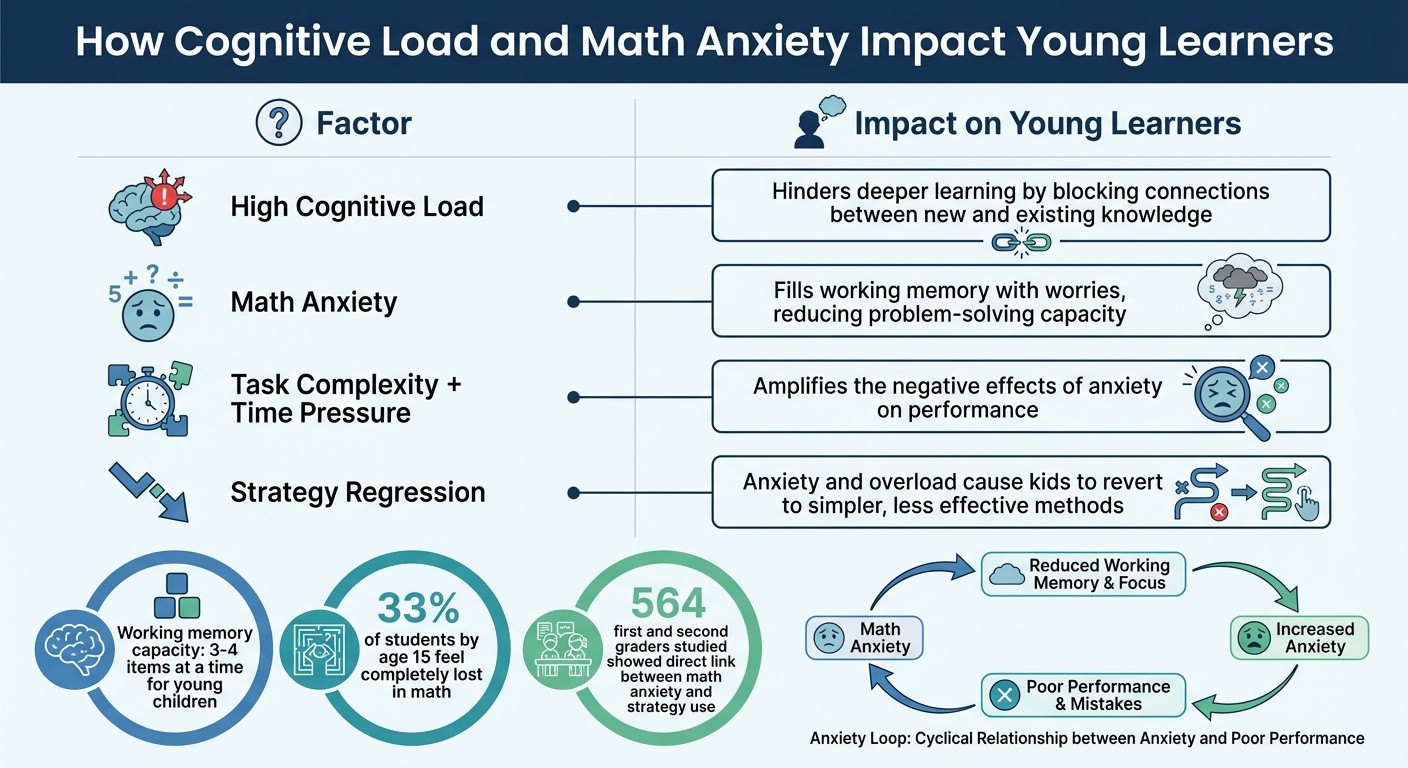
How Cognitive Load and Math Anxiety Impact Young Learners
How Cognitive Load Affects Problem-Solving in Young Children
Young children’s working memory can only handle 3–4 items at a time, so when cognitive load gets too high, it overwhelms their ability to process and connect new ideas with what they already know. Instead of building deeper understanding, they often get stuck on the basics [2][3].
The issue becomes worse when teaching methods don’t align with a child’s current abilities. If there’s too little support, their working memory gets overloaded. On the other hand, too much guidance can lead to shallow learning [2]. This imbalance often results in what researchers call "production deficiencies", where children abandon advanced strategies and fall back on simpler methods, like counting on their fingers [4].
The situation gets even trickier when tasks are complex or time is limited. For kindergarteners and first graders, these added pressures can overwhelm their cognitive systems, making it difficult to solve problems effectively.
Adding to the challenge, negative emotions can further disrupt their ability to think clearly and process information.
How Math Anxiety Shapes Learning Behaviors
Math anxiety adds another layer to the problem. The worry and negative emotions tied to math drain the cognitive resources kids need for problem-solving. Even students who normally use advanced strategies can struggle when anxiety takes over, as their mental energy shifts from solving problems to managing their worries [4].
This creates a vicious cycle. Anxiety reduces the use of advanced strategies, which in turn limits practice and improvement. A study of 564 first and second graders found that math anxiety directly impacts whether children use these higher-level strategies. Those who avoid them tend to perform worse in math [5].
Research on Early Math Skills Development
By the time students reach age 15, about 33% feel completely lost when it comes to math - a pattern that often starts as early as kindergarten or first grade [4]. Research shows that math anxiety can be detected in first and second graders and is a strong predictor of lower math achievement [5].
Early intervention is crucial. When children have to juggle solving a math problem and managing their anxiety at the same time, their working memory gets split between the two tasks. This leaves fewer cognitive resources for solving problems effectively. Without proper support, these struggles can create long-term patterns that persist well beyond elementary school.
Factor | Impact on Young Learners |
|---|---|
High Cognitive Load | Hinders deeper learning by blocking connections between new and existing knowledge [2] |
Math Anxiety | Fills working memory with worries, reducing problem-solving capacity [4] |
Task Complexity + Time Pressure | Amplifies the negative effects of anxiety on performance [4] |
Strategy Regression | Anxiety and overload cause kids to revert to simpler, less effective methods [5] |
Together, these factors highlight the importance of providing balanced and timely support to help young learners succeed in math.
Practical Techniques to Reduce Cognitive Load
Simplifying Math Instructions
How math is presented can deeply influence a child’s understanding. Before introducing a new concept, it’s helpful to teach the vocabulary first. Use simple, relatable terms - like saying "sharing" instead of "division" - and encourage kids to explain these terms back to you to confirm they’ve grasped them [7].
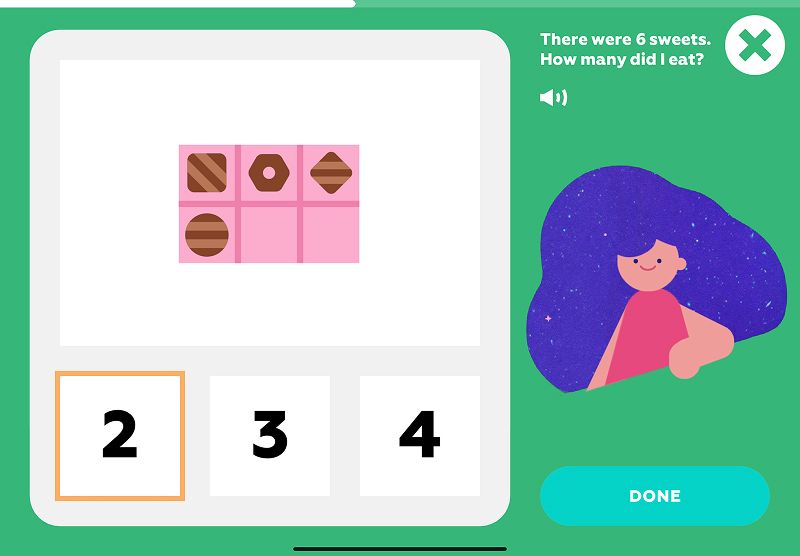
Using relatable terms to explain subtraction to children 3-4 in the Funexpected Math app
A highly effective method is the CRA approach: Concrete-Representational-Abstract. Begin with hands-on objects, progress to visual representations, and finally introduce abstract symbols [8]. This step-by-step process aligns with how children naturally learn. David Leighton, a math expert at Third Space Learning, explains:
"Provide children with the building blocks of place value... and by the time you get to addition problems and subtraction at elementary school, much of the cognitive load of learning a new technique like standard algorithm subtraction will be lifted." [7]
Another helpful strategy is linking new concepts to ones children already know. For example, when teaching 2-digit addition, remind students they’re using the similar strategies they learned for 1-digit addition. These connections act like mental shortcuts, making it easier for students to process new information.
Alongside these strategies, incorporating hands-on tools can further lighten the cognitive load.
Using Visual and Hands-On Learning Tools
Physical manipulatives and visual aids are excellent for easing cognitive demands by shifting some of the mental work to tangible activities [9][10]. This is especially important for younger children, like kindergarteners and first graders, who are still developing their working memory.
A study from Kingston University highlights the benefits of high interactivity - letting kids touch, move, and manipulate objects. This hands-on approach can reduce the negative effects of math anxiety by supporting their working memory [10]. However, not all tools are equally effective. Simple, plain objects like basic cubes work better than overly playful items like teddy bear counters or toy money. The latter can distract children, as they may see them as toys rather than learning tools [11].
The effectiveness of these tools depends on clear guidance. Don’t expect children to discover math concepts on their own through play. Use "linking gestures", such as pointing from a group of beads to a written numeral, to bridge the gap between physical objects and abstract ideas. Stick to the same set of manipulatives throughout the school year. This consistency helps children deepen their understanding of both the tool and the math concepts it represents [11].
Breaking Tasks into Smaller Steps
In addition to simplifying instructions and using visual aids, breaking tasks into smaller, manageable steps can help prevent cognitive overload. Tackling a large math problem all at once can overwhelm a child’s cognitive system. The solution? Chunking - breaking the problem into smaller, achievable parts. For example, when solving word problems, provide a visual organizer with sections like "What I know", "My plan", and "My work." This helps children break down complex scenarios into smaller, more manageable pieces [8]. Physical tools can also slow down rushed processes. If a child is counting too fast and making mistakes, give them tongs to move objects one at a time or have them place items into a bowl as they count [12].
Finally, focus on observing strategies, not just answers. When a child struggles, suggest a new method instead of simply giving the correct answer [13]. This approach not only reduces cognitive load but also nurtures problem-solving skills.
Scaffolding Strategies for Early Math Education
Gradual Progression from Easy to Complex Tasks
Scaffolding provides temporary support that helps children build on what they already know, staying within their Zone of Proximal Development. This method gives structure to teaching, making it easier for kids to grasp new concepts.
Michèle M. Mazzocco and her team at Stanford University describe it well:
"Scaffolding a math task means adjusting the task in ways that foster a child's learning... The key is changing the task just enough so it is not too difficult and not too easy." [12]
One effective approach is the "I do. We do. You do." model [14]. Start by demonstrating a concept while thinking aloud, then solve problems together, and finally let children practice on their own. This step-by-step process helps build confidence at each stage.
Another tool is Learning Trajectories (LTs), which connect a child's current understanding to specific educational activities designed to advance their skills [13]. The trick is adjusting tasks so they’re challenging but not overwhelming.
Scaffolding Component | Purpose | Strategy Example |
|---|---|---|
Modeling | Demonstrates the process | Thinking aloud to show steps [14] |
Prior Knowledge | Links old and new ideas | Tying math problems to real-life events [14] |
Graphic Organizers | Clarifies thinking visually | Using a Venn diagram to compare concepts [14] |
Small-Group Work | Focuses on individual needs | Working in groups of 2–5 for closer guidance [13] |
This structured approach naturally transitions into opportunities for guided exploration, where children take a more active role in their learning.
Encouraging Guided Exploration
Once kids are comfortable with structured support, guided exploration lets them apply their skills in creative ways. This method balances structure and independence by offering hints and prompts when needed, while still allowing room for discovery [13].
Guided play activities take structured learning a step further by encouraging independent problem-solving. Observing how children approach tasks - whether it’s number recognition, counting, or combining groups - can reveal where they need extra help. For example, if a child struggles with addition, you can tailor your guidance to their specific challenge. Connecting math to everyday life, like counting snacks or measuring ingredients, makes lessons more relatable and engaging. Activities like Think-Pair-Share, where kids reflect on a problem, discuss it with a partner, and share their ideas with the group, also promote active learning [14].
Providing Immediate, Positive Feedback
Timely feedback is the final piece that ties everything together. Positive reinforcement, delivered right away, helps build confidence and independence. Research shows that individualized feedback can significantly improve learning outcomes [13].
Instead of pointing out mistakes bluntly, try a more constructive approach, like saying, "I see you counted each object - what happens if we group them by twos?" This kind of gentle correction, especially in small-group settings, creates a safe space for kids to take risks and learn from their efforts. And don’t forget to praise their hard work, not just the results. Recognizing effort fosters long-term motivation and resilience when tackling tough problems.
How Funexpected Math Supports Cognitive Load Management and Scaffolding
Funexpected Math integrates proven scaffolding techniques into its digital platform, creating a learning environment tailored to each child's needs.
An AI Tutor Trained By Top Educators
The app's key feature is Aika, a talking digital tutor. Aika combines the experience of top educators who have raised national math champions.

She scaffolds learning, asks guiding questions, introduces math terms and provides hints when needed. It’s like an older friend for a child, who’s always there to support them.
Interactive Math Challenges for Skill Building
The app uses a structured three-stage model - "Dive in", "Explore", and "Master" - to keep tasks within a child's Zone of Proximal Development. This method reduces cognitive overload and helps ease math-related anxiety. By breaking down challenges into manageable steps, children can gradually build confidence and competence.
With over 10,000 tasks spread across six learning tracks, Funexpected Math covers a wide range of topics, from basic counting to early coding concepts like IF-ELSE statements. For kindergarten and first-grade students, the focus includes addition and subtraction within 10, subitizing up to 10, and identifying 3D shapes from various perspectives. The curriculum also incorporates logic puzzles, spatial reasoning, and foundational algorithm concepts, all designed with insights from neuroscience [14].
Personalized Learning Paths
Funexpected Math employs automatically adapting difficulty to tailor challenges based on each child's progress. This ensures tasks remain engaging without becoming too easy or too frustrating. By maintaining the right level of difficulty, the app reduces the risk of discouragement and long-term math anxiety.
Built-in hints guide children toward solutions, encouraging independence and addressing the tendency toward learned helplessness that can hinder math performance [4]. Research supports this interactive approach, noting that engaging math tasks can help offset math anxiety by enhancing working memory capacity [10].
This individualized system naturally transitions into dynamic, game-like activities that keep learners motivated.

Sorting by 2 attributes in the Fish game (Funexpected Math app)
Gamification for Low-Pressure Learning
The app includes gamified features like "Skill Races," which improve processing speed through fun, hands-on activities. These challenges encourage children to take risks and learn from their mistakes in a supportive setting.
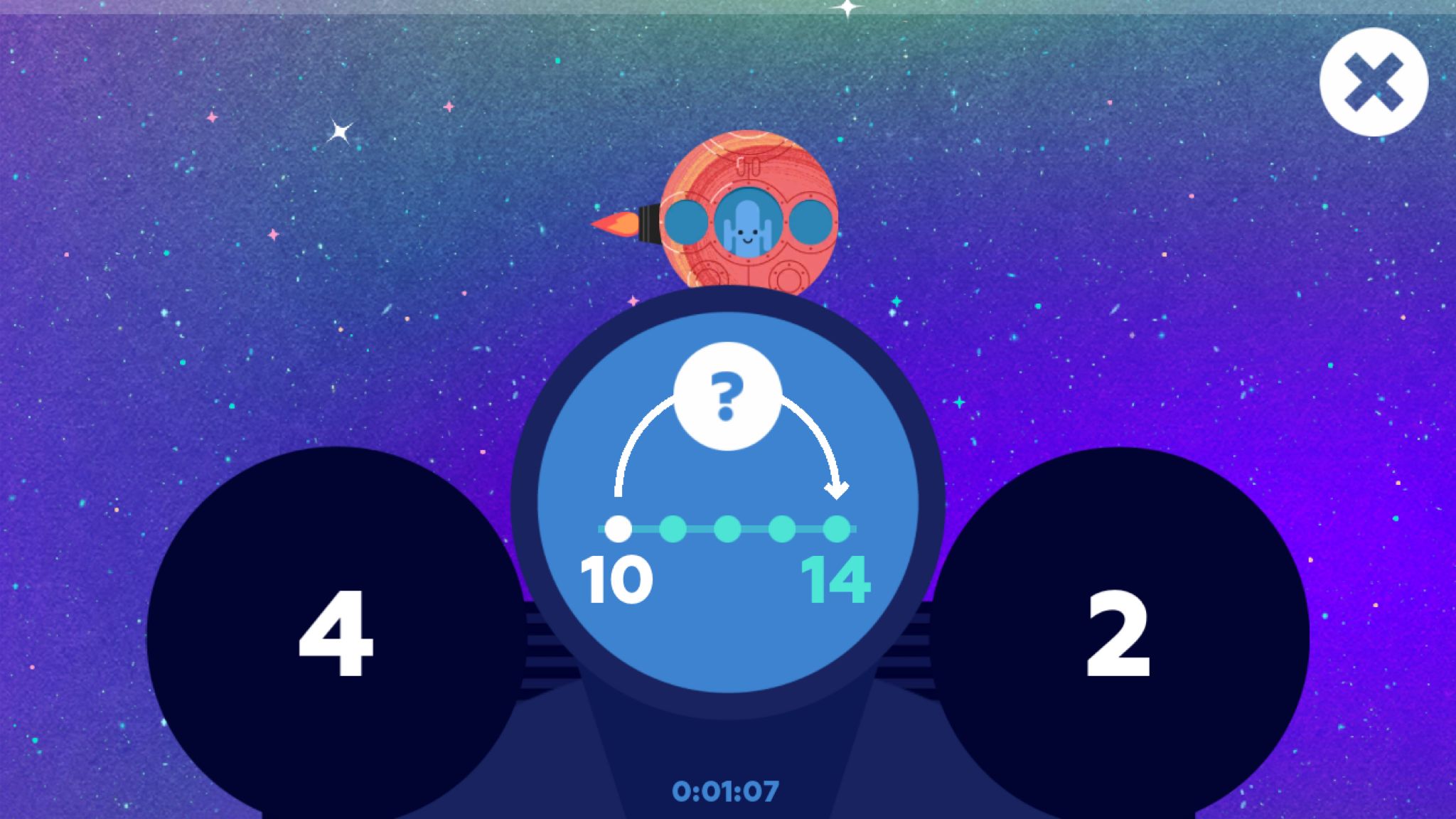
By framing math practice as play rather than formal testing, the app helps children build confidence while reinforcing essential skills.
Conclusion: Building Confidence and Skills in Early Math Learning
Key Takeaways for Parents and Educators
Helping young learners feel confident in math starts with reducing cognitive load and addressing math anxiety. Breaking tasks into smaller, manageable steps, and scaffolding can make a huge difference. Visual aids also play a powerful role, helping children grasp abstract concepts more easily and making math less intimidating [15].
Jerome Bruner captured this idea perfectly when he said:
"Scaffolding is the steps taken to reduce the degrees of freedom in carrying out some task so that the child can concentrate on the difficult skill they are in the process of acquiring." – Jerome Bruner, Psychologist [15]
Techniques like think-alouds guide children through moments of confusion, while simple coping tools - like breathing exercises - can help break the cycle of anxiety and poor performance [6]. These strategies provide a solid foundation for creating supportive learning environments, both in classrooms and at home.
How Funexpected Math Supports Early Learners
Funexpected Math takes these proven strategies and brings them to life in an interactive, engaging way. The platform integrates research-backed methods into a playful and adaptive digital experience, ensuring children can learn at their own pace while building essential math skills.
Available in 16 languages, the platform is designed to fit the needs of families and schools alike, with flexible subscription plans to match. By turning math into an enjoyable, game-like experience, Funexpected Math helps children lay the groundwork for future academic success, one fun challenge at a time.
FAQs
How can parents help young children feel more confident with math and reduce anxiety?
Parents play a big role in helping young children feel more at ease with math. One way to do this is by creating a positive, encouraging environment where learning feels fun and pressure-free. Simple activities like playing math-based games or exploring educational apps together can make math feel less intimidating and more enjoyable. These interactive experiences not only sharpen skills but also help ease the fear that sometimes comes with learning math.
Another helpful strategy is using scaffolding techniques. This means breaking problems into smaller, manageable steps, showing how to solve them, and gradually increasing the challenge as your child becomes more confident. It’s also important to focus on effort rather than just results. Offering patience, reassurance, and praise for trying hard can do wonders for reducing math anxiety and building confidence.
By keeping things supportive and low-stress, parents can help their children see math in a positive light and set the stage for a strong learning foundation.
Why is it important to address math anxiety early in young children?
Addressing math anxiety in young children from an early age is crucial to prevent it from impacting their confidence and academic progress. Studies reveal that math anxiety can begin as early as kindergarten, often leading to difficulties in both math performance and broader learning.
Early intervention allows parents and educators to implement helpful strategies such as step-by-step guidance, interactive tools, and math-focused games. These approaches not only make learning more enjoyable but also ease anxiety while reinforcing essential skills like problem-solving and working memory. This creates a strong base for children to succeed in math and other areas as they grow.
Related Blog Posts
Transform Math Learning for Kids
Explore Funexpected's interactive math program designed for children aged 3-7. Build math fluency, logic, and problem-solving skills through engaging, hands-on activities and a personalized digital tutor.