Elementary Math Apps and Programs for Kids with Dyscalculia
Early Childhood Education
Mar 12, 2026
Clear guide to dyscalculia, multisensory teaching tips, and five kid-friendly math apps that use visual tools and adaptive practice to build number sense.

Dyscalculia is a learning disorder that affects how the brain processes numbers and math concepts, impacting 5–7% of children. Struggling with basic math tasks, kids with dyscalculia often face challenges like counting, recognizing patterns, and solving equations. Early intervention is essential to prevent academic and emotional difficulties like math anxiety and low confidence.
Apps designed for dyscalculia are transforming math learning by making abstract concepts visual and interactive. They provide instant feedback, reduce cognitive strain, and allow kids to learn at their own pace. Key apps include:
Funexpected Math: Hands-on math activities with strong visual support, led by a personal digital tutor; program covers number sense, geometry, logic, and algorithms.
Magrid: Designed to support children with diverse learning needs, including language barriers and special educational requirements.
ST Math: Introduces math ideas through puzzles; builds the conceptual understanding students need to make sense of math.
Monster Math: Math concepts are delivered through visual learning first; Children see patterns and relationships before diving into numbers.
Modmath: Digital graph paper removes the writing barrier to make learning more effective; designed for students with neurological, physical, and other learning differences.
These tools support multisensory learning, break down complex concepts, and reduce math-related anxiety. Short, consistent practice sessions - around 15 minutes a few times a week - can help kids build confidence and improve math skills.
What Is Dyscalculia?
Definition and Symptoms
Dyscalculia, sometimes referred to as "math dyslexia", is a neurodevelopmental disorder that affects how the brain processes numbers and mathematical concepts. Essentially, it disrupts the ability to understand numbers as abstract symbols, a key aspect of "number sense" [1][2]. The Cleveland Clinic defines it as:
Dyscalculia is a learning disorder that affects a person's ability to understand number-based information and math [3].
Symptoms of dyscalculia can vary depending on age. In younger children, early signs include difficulty recognizing numbers, slow counting, and trouble matching numerals to their corresponding words [1]. As children grow, they may continue to rely on counting with fingers, struggle with basic operations like addition and subtraction, and fail to grasp that equations like 1+7=8 and 8=7+1 are equivalent [3]. One of the earliest red flags is difficulty with subitizing - the ability to instantly recognize the number of items in a small group without counting them individually [2].
These difficulties extend beyond the classroom, affecting everyday tasks and interactions.
Impact on Learning and Daily Life
The challenges caused by dyscalculia often create a noticeable gap in academic performance. A child with the condition might excel in subjects like English or history while consistently struggling with math, even if they have average or above-average intelligence [4]. Neuroimaging studies suggest that this struggle stems from fewer neural connections in the brain areas responsible for mathematical processing [3].
Dyscalculia doesn't just impact schoolwork - it also complicates daily life. People with the condition might find it hard to read analog clocks, manage money, calculate tips, or estimate distances and travel times [4]. Spatial awareness can also be affected, leading to challenges like distinguishing left from right or following directions on a map. These frustrations often lead to anxiety and a tendency to avoid tasks involving numbers altogether.
Prevalence and Early Identification
Dyscalculia affects between 3% and 7% of the population and is equally common in boys and girls [5]. It frequently coexists with other conditions - about 11% of children with dyscalculia also have ADHD, and up to 50% may have another learning disability, such as dyslexia [2]. Despite its prevalence, the disorder often goes unrecognized for years, leaving families unaware of the underlying issue.
Early identification is crucial for helping individuals develop coping strategies and alternative ways to process math [6]. Andrew Kahn, PsyD, Associate Director at Understood.org, emphasizes this point:
If kids do not receive supports early, they're much more likely to develop challenges with emotional functioning, mental health, and overall behavior [6].
Colorado State Senator Janice Marchman also stresses the importance of early intervention:
Right now, many families hear the word dyscalculia a long time after their child has been struggling. That needs to change. We see the value of early math checks the same way we see the value of early reading checks [6].
Unlike temporary struggles with math, dyscalculia is a lifelong condition. While it requires targeted interventions, tools like specialized educational apps are designed to help meet these needs [2].
How to Help Kids with Dyscalculia Learn Math
Multisensory Learning Techniques
Start with the Concrete-Representational-Abstract (CRA) method to create a strong math foundation. This involves introducing concepts with physical objects, then moving to images of objects, and finally using abstract symbols. This step-by-step process ensures kids grasp the basics before tackling symbolic math [7][8].
Tools like color-coding, bar models, and number lines are great for making math less abstract and easier to understand. They help kids visualize mathematical relationships, which takes some pressure off their working memory. Even simple techniques, like counting on fingers or using tactile objects, give kids the feedback they need to process concepts. Encouraging children to "think out loud" or using rhymes and songs can also strengthen their understanding through auditory learning [7].
These multisensory strategies naturally help break down complex problems into smaller, more manageable steps.
Breaking Concepts into Smaller Steps
This approach can help children avoid feeling overwhelmed and build their confidence. The CRA model works perfectly here, as it ensures kids fully understand each stage - starting with physical objects to grasp quantity before transitioning to abstract symbols [8].
Having kids verbalize each step as they solve problems strengthens the connection between language and numbers [8]. Tools like graph paper or digital alignment aids can help kids organize their work neatly, reducing errors caused by misalignment [9]. Dr. Meredyth Kravitz, a clinical neuropsychologist, emphasizes the importance of focusing on effort:
Praising efforts instead of outcomes will help your child feel proud of their work, even if it's not reflected in their final grade [9].
By adapting the pace of instruction to the child's needs, these strategies address the specific hurdles that dyscalculia presents.
Play-Based Learning and Reducing Anxiety
Play-based methods can complement structured techniques by reducing math anxiety and making learning more enjoyable. Anxiety about math often creates a vicious cycle: stress leads to difficulty concentrating, which then worsens performance [9]. Play-based learning breaks this cycle by shifting the focus from performance to exploration. When kids see math as a game rather than a test, they’re more likely to stay engaged and push through challenges.
Fun, low-stakes activities help children form positive associations with numbers. This emotional aspect is critical - without addressing anxiety, even the best teaching methods may fall short [9]. Combining structured learning with playful exploration offers a balanced approach that supports both skill development and emotional well-being.
How Apps Help Children with Dyscalculia
Educational apps complement traditional teaching methods by addressing the unique challenges posed by dyscalculia. They use visual and spatial tools to help maintain focus, which is especially useful for children whose working memory struggles with processing numbers [8]. These apps don't replace traditional methods; instead, they offer a safe, mistake-friendly environment where kids can explore concepts without the pressure of time or fear of judgment.
Using features like virtual manipulatives, visual models such as ten-frames, and a gradual shift to equations, these apps create a seamless learning experience [8].

A virtual math manipulative (Geoboard) in the Funexpected Math app
This consistency helps children connect what they see and interact with to symbolic calculations, laying a solid foundation for more personalized learning.
Personalization and Adaptive Learning
One of the standout features of these apps is their ability to adapt to each child's needs. Instead of following a one-size-fits-all curriculum, they focus on specific gaps, like subitizing or understanding place value. For example, a child struggling with quantity sense might get extra practice with virtual manipulatives, while another needing help with alignment could use digital graph paper tools [8].
In a six-month study conducted by the University of Chicago, disadvantaged children using math apps made progress equivalent to what would typically take 18 months in a traditional classroom setting. This accelerated learning happens because the apps adjust in real-time - children who grasp concepts quickly move ahead, while those needing more practice receive additional support without feeling left behind. Combined with this personalized approach, engaging game elements keep kids motivated.
Gamification and Engagement
Gamified features make learning more enjoyable by turning practice into a fun challenge. Elements like story-driven progression, character customization, and reward systems encourage kids to stay engaged without relying on timed challenges that could increase anxiety [8].
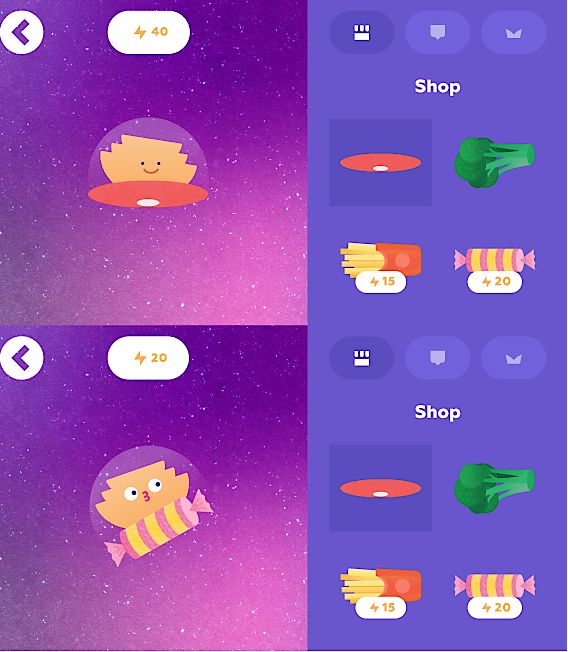
Vehicle customization with the earned points in the Funexpected Math app
This shift in attitude is crucial. Children with dyscalculia often develop math anxiety, which can worsen their difficulties. By creating positive experiences, these apps not only teach concepts but also help build confidence.
Progress Tracking and Feedback
Another key advantage is the instant feedback these apps provide, correcting mistakes as they happen and preventing repeated errors.
Detailed progress reports highlight mastered skills and areas needing improvement, allowing for targeted support and extra practice [10].
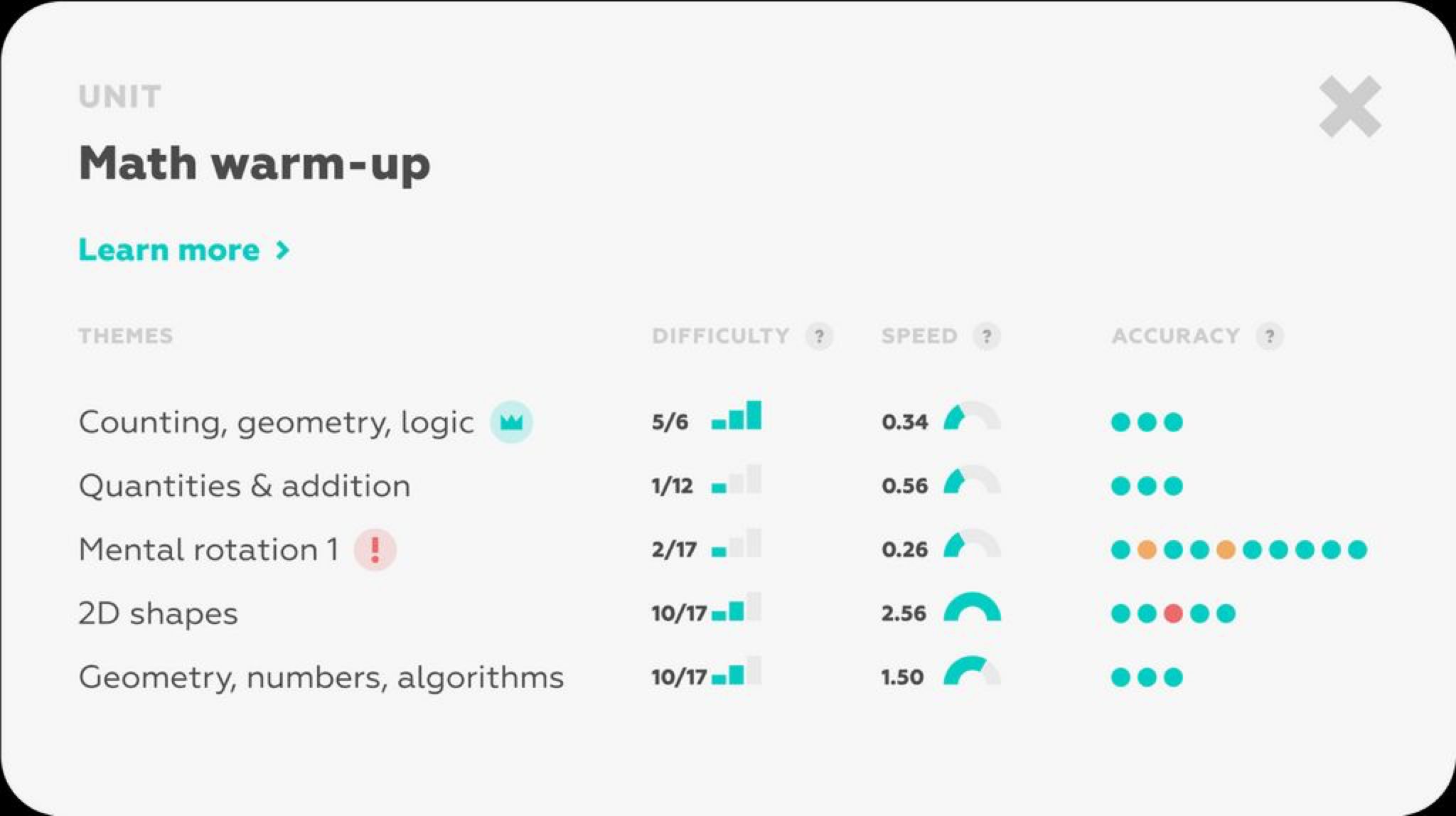
Progress Report in the parents’ section of the Funexpected Math app
To make the most of math learning apps, keep sessions short - 10 to 15 minutes, four times a week - to avoid overwhelming your child while keeping their focus. After each session, encourage your child to explain what they learned; this reinforces the link between visual tools and mathematical language [8].
App Solutions for Dyscalculia
Funexpected Math
Approved by researchers from University College London’s Learning Difficulties Lab and the University of Chicago, Funexpected Math combines academic insights with practical tools to support learners [10]. It brings abstract concepts to life, offering children a way to interact with math in a hands-on, engaging manner.
The app is not focused solely on numbers; it also covers spatial skills, logic, and algorithms. The numeracy tasks are always supported with age-appropriate visual instructions.

The number line is a great tool to make abstract numbers more concrete for children
This approach is especially beneficial for kids with dyscalculia, who often struggle with abstract thinking.
By using tools like visual manipulatives and subitizing exercises, the app helps build a strong foundation in number sense, making math feel more approachable and less overwhelming [10].

The app’s spiraling curriculum emphasizes spaced repetition, which is key for children who have difficulty retaining information.
One parent, Melis, shared her experience:
My daughter's Montessori teacher says her engagement with math themes has increased wildly. I think your product makes a huge difference in children's lives. [10]
By combining interactive tools with a supportive structure, Funexpected Math creates an environment where children can tackle dyscalculia with confidence.
Core Features and Benefits
Funexpected Math features an AI-powered digital tutor, Aika, that guides children through challenges, offering hints and prompts when needed.

This personalized support allows kids to work at their own pace, free from the pressure of countdown timers or punitive elements. Instead, the app fosters a safe, mistake-friendly space where experimentation and learning go hand in hand.
With just two 15-minute sessions per week, children can make meaningful progress [10]. The app includes over 10,000 tasks spread across 675 lessons, covering 50+ topics in six distinct learning tracks.
Feature | How It Helps Children with Dyscalculia |
|---|---|
Subitizing Exercises | Strengthens number sense and quantity recognition |
Visual Manipulatives | Makes math concepts tangible, easing the strain on working memory |
No Timers/Clocks | Reduces anxiety, promoting self-paced exploration |
AI Digital Tutor | Offers tailored assistance and step-by-step guidance |
Spatial & Logic Tasks | Encourages broader mathematical thinking beyond basic counting |
Classroom and Home Use
Funexpected Math adapts seamlessly to both classroom and home settings. For educators, the app offers tools like QR code rostering, which simplifies adding students to a class. Teachers can monitor progress through detailed reports, enabling them to identify and address specific learning challenges [11].
At home, parents can integrate Funexpected Math into busy routines with short, focused sessions. Also for home use Funexpected Math offers printable worksheets and a YouTube channel with educational videos.
Whether used in a classroom’s station rotation model or for independent learning at home, the app provides consistency across environments.
Accessibility and Safety
Funexpected Math prioritizes safety and privacy, complying with COPPA and FERPA regulations. The app creates a "100% safe zone", preventing children from accessing the internet while using it. This feature offers peace of mind to both parents and educators.
Available in 16 languages, it’s also an excellent resource for English Language Learners.
The app has earned multiple accolades, including the Mom's Choice Award Gold Winner and the Webby Award for Best Visual Design. New users can explore its features with a 7-day free trial before deciding on a subscription [12].
Magrid

Magrid is a research-backed, language-free math learning app designed for children aged 3–9. Developed in Luxembourg, the app is specifically designed to support children with diverse learning needs, including those with language barriers or special educational requirements.
Core Features and Learning Approach
Unlike many math apps, Magrid uses a visual and interactive approach, eliminating text and verbal instructions to ensure that children can develop math skills without language obstacles. The app focuses on number sense, spatial reasoning, pattern recognition, and problem-solving through engaging, research-based activities.
Content Structure and Engagement
Magrid offers a structured curriculum tailored to different skill levels:
Age Group | Key Topics Covered |
|---|---|
3–4 years | Basic number sense, recognizing patterns, understanding spatial relationships, and sorting objects. |
5–6 years | Comparing quantities, recognizing numerical symbols, working with simple geometric concepts, and early problem-solving. |
6–9 years | More advanced spatial reasoning, number operations, estimation, and logical thinking. |
The app’s distraction-free design ensures that children can fully focus on mathematical concepts without unnecessary visuals or gamified elements.
Pricing and Accessibility
Magrid offers a free trial for individual users, with paid subscription plans available for families, schools, and educational institutions. The app is accessible on iOS, Android, and web platforms.
User Experience and Results
With endorsements from special education experts, Magrid has been adopted in some schools and therapy centers to support early math development. Studies have shown that regular use of Magrid leads to significant improvements in numerical cognition and spatial awareness.
ST Math
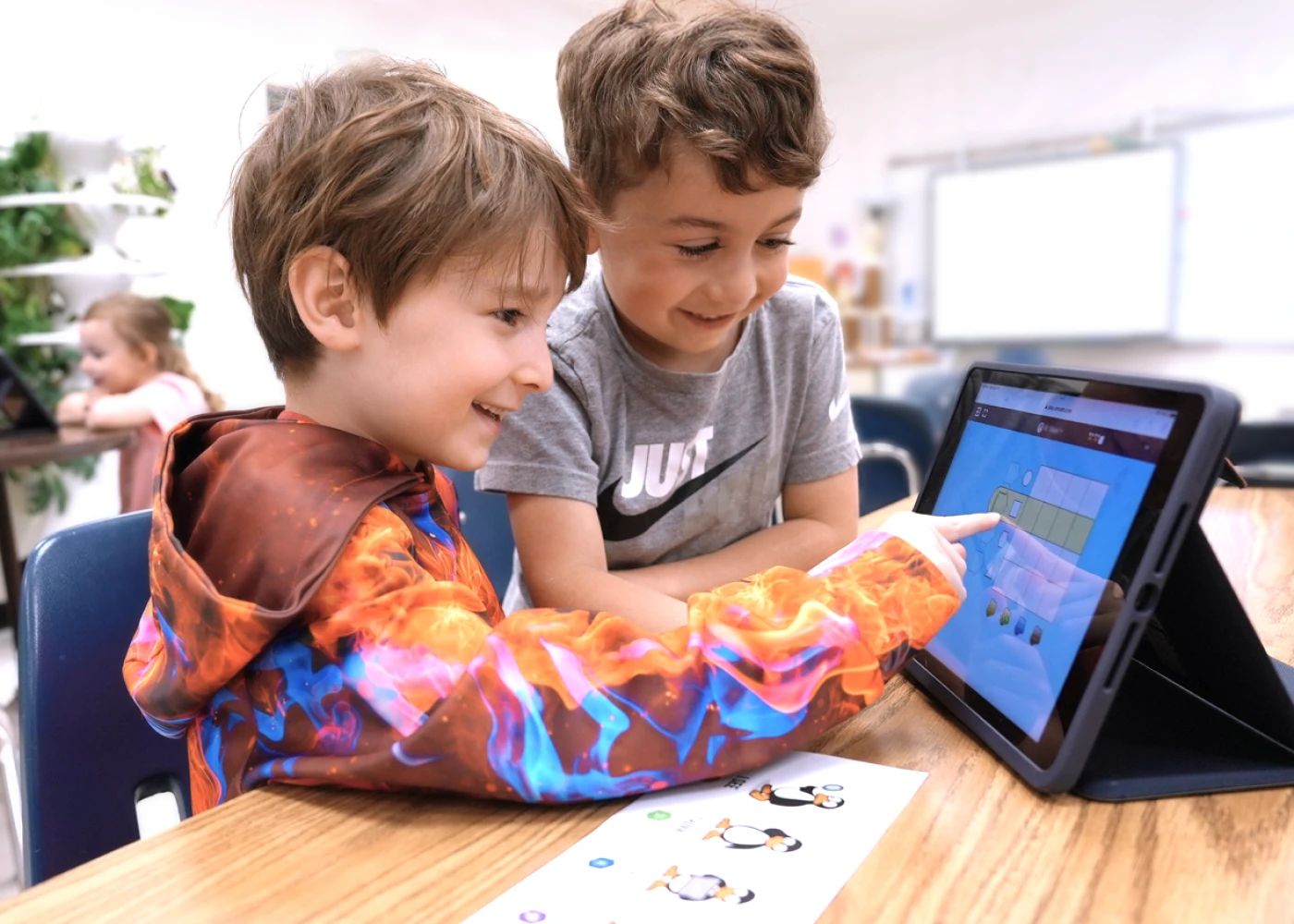
ST Math is a visual, game-based math learning program developed by the nonprofit MIND Research Institute. The program is designed for students from Pre-K through grade 8 and is widely used in schools to support conceptual understanding of mathematics. Its learning model is based on neuroscience research and emphasizes visual reasoning rather than memorization or language-heavy instruction [13].
Core Features and Learning Approach
ST Math uses spatial-temporal reasoning, presenting math ideas through animated puzzles instead of relying primarily on text or verbal explanations. This design can be particularly helpful for learners who struggle with language-based or symbolic math, including students with dyscalculia or other math learning difficulties.
Students solve puzzles to help a penguin character named JiJi move across the screen. Each puzzle visually demonstrates a mathematical relationship, allowing students to experiment and discover solutions rather than simply applying memorized procedures.
Key elements of the learning model include:
Visual representation of math concepts. Problems are presented through animations and spatial puzzles, helping students see relationships between numbers and quantities.
Mastery-based progression. Students move forward only after demonstrating understanding of a concept.
Productive struggle. The puzzles encourage persistence and exploration, which can support the development of problem-solving strategies.
This approach aligns with research suggesting that many students with dyscalculia benefit from visual and conceptual representations of mathematical ideas rather than purely symbolic instruction [14].
Content Structure and Engagement
Age / Grade Range | Key Concepts and Skills |
|---|---|
Pre-K – Grade 1 | Counting, early number sense, patterns, spatial reasoning, and simple addition and subtraction through visual puzzles. |
Grades 2–5 | Place value, arithmetic operations, fractions, and visual models of mathematical relationships. |
Grades 6–8 | More complex reasoning, multi-step problem solving, and conceptual foundations for algebra. |
For students with dyscalculia, the program’s visual puzzle format can support understanding by allowing them to manipulate objects, observe patterns, and test strategies rather than relying solely on numerical symbols.
Instead of multiple-choice answers, students interact directly with animated objects and explore different ways to solve each puzzle.
Pricing and Accessibility
ST Math is typically provided through school or district subscriptions, and pricing is usually arranged directly with the provider.
The program is accessible through web-based platforms and works across various devices used in classrooms, including computers and tablets.
User Experience and Results
ST Math is based on more than two decades of neuroscience and education research into how students learn mathematics. Studies of school implementations have found improvements in math achievement when the program is used consistently.
For example, research conducted by WestEd found that schools implementing ST Math with high fidelity improved their statewide math assessment rankings by an average of 14 percentile points compared to similar schools that did not use the program [15].
While ST Math is not designed exclusively for dyscalculia, its visual, language-light, and concept-focused approach can make mathematical ideas more accessible for students who struggle with traditional symbolic instruction.
Monster Math

Monster Math is a math learning program available both as a mobile app and a web-based platform. It is designed primarily for children in Grades 1–3 (approximately ages 6–8) and uses a game-based approach to help students develop math fact fluency and conceptual understanding while playing an adventure-style game.
Core Features and Learning Approach
Monster Math teaches arithmetic through interactive gameplay and visual representations, allowing children to practice math operations while progressing through a story-driven game world. Players complete puzzles and missions to help characters in a monster-themed adventure, while solving math problems along the way.

Instead of relying only on memorization, the app encourages children to use visual and strategic approaches to arithmetic, gradually moving from concrete representations to more abstract number operations.
For some children with dyscalculia or math learning difficulties, these types of features may be helpful because they:
present math concepts through visual models and interactive puzzles
encourage the use of multiple strategies for solving arithmetic problems
allow students to progress at their own pace through adaptive difficulty
Monster Math uses neuroinclusive design, featuring the absence of time pressure, which may support children who experience anxiety or cognitive overload during timed math drills.
Pricing and Accessibility
Monster Math offers a limited free version, allowing users to try the game before purchasing additional content. Full access to the complete curriculum is available through a subscription model, which typically includes a free trial period before the annual plan begins.
The program is available on iOS devices and through a web browser, making it accessible across multiple learning environments.
Parent Reception and Usability
Monster Math has received multiple ratings on the Apple App Store, averaging around 4.5 stars, reflecting generally positive feedback from parents and children.
Parents often note that the app emphasizes conceptual understanding rather than rote memorization, and its calm, game-based design can be appealing for children who struggle with traditional worksheet-based math practice.
While Monster Math is not specifically designed as a dyscalculia intervention, its visual problem-solving approach, adaptive difficulty, and low-pressure environment may help some learners with math difficulties engage with arithmetic concepts more comfortably than traditional drills.
What makes Monster Math stand out is its engaging, story‐driven gameplay: kids explore “monster-themed” worlds, take on mini-missions, collect badges, and rescue friends while mastering math concepts.
Modmath
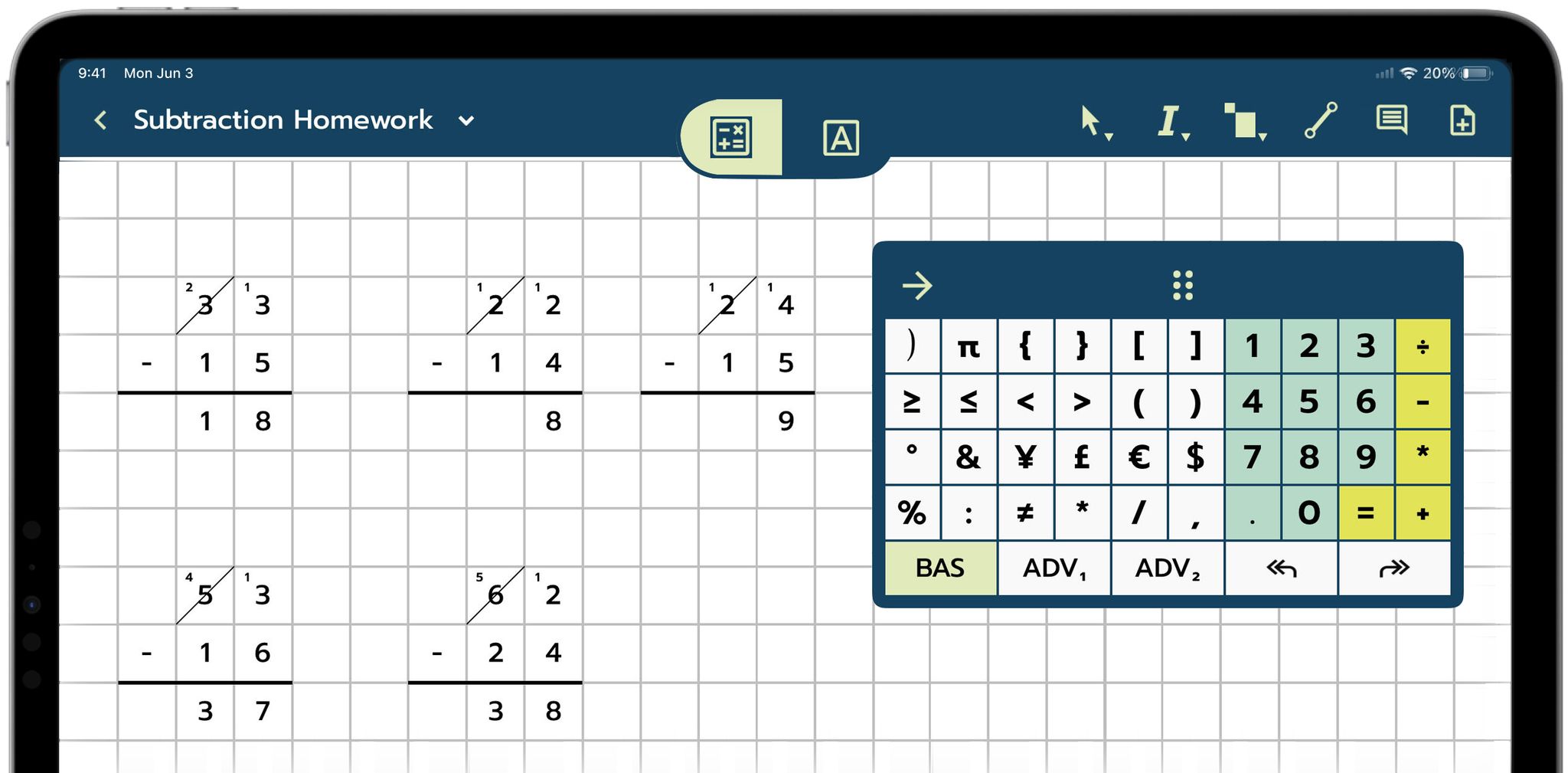
Modmath is an assistive mathematics tool for students of all ages and grade levels. It is available as a mobile app for iPad, MacBook, Chromebook, and Android tablets. Unlike traditional math learning apps, Modmath is designed primarily as assistive technology that helps students write and organize math problems digitally. The app was originally created to support learners with dyslexia, dysgraphia, and other learning differences, and it is often recommended for students who struggle with the written organization of math problems [16].
Core Features and Learning Approach
Modmath does not teach math through games or drills. Instead, it provides a structured digital workspace that allows students to write and solve math problems clearly and accurately.
The core feature of the app is digital graph paper, which helps students align numbers and operations correctly when solving equations. This structured layout reduces mistakes that often occur when numbers are misaligned or steps become disorganized on paper.
Key features include:
Digital graph paper that helps students keep numbers and operations aligned.
Custom math keypad with numbers and mathematical symbols for writing equations.
Importing assignments from photos or cloud storage so students can complete worksheets directly in the app.
Exporting and sharing work with teachers via email or PDF.
Importantly, Modmath is not a calculator. Students still solve the math problems themselves; the app simply provides tools that make it easier to organize and write the steps clearly.
Why It Can Support Students with Dyscalculia
While Modmath was initially developed to help students with dysgraphia (difficulties with handwriting), its structured layout can also benefit some learners with dyscalculia, especially those who struggle with spatial organization of numbers.
Research and special education resources note that many learners with math learning difficulties benefit from clear visual structure when writing equations. The grid format in Modmath helps students:
keep digits aligned in multi-step calculations
clearly track each step of a problem
avoid errors caused by messy handwriting or misplaced numbers
By reducing these organizational barriers, students can focus more on understanding the mathematical process itself rather than the mechanics of writing it down.
Content and Mathematical Scope
Modmath is not limited to a specific age group or curriculum. The app can be used across a wide range of mathematics topics, including:
basic arithmetic (addition, subtraction, multiplication, division)
fractions and decimals
algebraic equations and variables
more advanced symbolic mathematics
Its keypad includes many mathematical symbols, allowing students to work on assignments ranging from elementary arithmetic to algebra and beyond.
Pricing and Accessibility
Modmath offers a free version with core functionality, reflecting the developers’ goal of making assistive math technology widely accessible.
A subscription option unlocks additional advanced symbols and features. Subscriptions include a free trial period.
User Experience and Educational Impact
Mod Math is used by thousands of educators and students worldwide as an assistive tool that helps learners with disabilities complete math assignments more independently.
By removing barriers related to handwriting, spacing, and organization, the app allows students with learning differences to show their mathematical reasoning more clearly. This can improve confidence and help teachers evaluate students’ understanding based on their thinking rather than the legibility of their work.
Although Modmath is not specifically focused on a dyscalculia intervention, its structured digital workspace and visual organization tools can make it a helpful accommodation for some students with math learning difficulties.
Comparison of Apps and Programs Suitable for Students with Dyscalculia
Various apps can help individuals with dyscalculia, offering features that address challenges like number sense and math reasoning. Each app has its own way of tackling difficulties, from visual-spatial processing to recalling math facts.
Comparison of Key Apps
App | Target Age | Key Features for Dyscalculia | Primary Benefit | Subscription Starting from |
|---|---|---|---|---|
Ages | Visual instructions, math manipulatives, personal digital tutor [11] | Builds confidence and skills in number sense, geometry and logic through tailored practice [11] | $10.99 / month | |
Ages | Language-free visual tasks; distraction-free design [17] | Designed to support children with special educational requirements. [17] | $79.99 for | |
PreK–Grade 8 | Language-free, interactive visual puzzles, movement-based logic [13] | Eliminates language dependence and focuses on conceptual understanding [13] | Free for family use (until further notice) | |
Grades 1–3 | Visual puzzles, story-driven missions, CRA-aligned gameplay [18] | Eases the shift from hands-on learning to abstract math [18] | $9.99 / month | |
All ages | Digital graph paper, on-screen keypad, structured workspace [16] | Supports alignment and organization with digital tools [16] | $3.99 / month |
How These Apps Address Dyscalculia Challenges
Funexpected Math offers a way of teaching math not focusing solely on numbers. This approach includes big curriculum with geometry and logic, age-appropriate visual instructions, distraction-free design, and a helpful personal tutor. ST Math takes a unique approach by removing language entirely, allowing children to engage with math through visual puzzles and movement rather than written instructions. Monster Math incorporates a story-based design aligned with the Concrete–Representational–Abstract (CRA) model, guiding children from hands-on learning tools to abstract math concepts. Modmath provides a structured workspace with digital graph paper, addressing issues like column alignment and multi-step problem-solving, which can be particularly tough for those with spatial-reasoning challenges [8].
These apps work alongside traditional teaching methods, helping to strengthen number sense and improve math fluency through engaging, adaptive activities.
Conclusion
Grasping the nuances of dyscalculia is crucial, especially since early math skills are a stronger predictor of academic success than reading abilities [18]. This neurodevelopmental condition, affecting roughly 3–6% of children, disrupts the brain's number-processing systems. However, it’s important to note that this challenge is not tied to a child’s intelligence [8]. Providing timely support is essential, as dyscalculia impacts daily tasks and can lead to enduring difficulties [19].
One effective way to address these challenges is through educational apps. These tools combine visual, auditory, and tactile elements, offering children a multi-sensory way to explore abstract math concepts beyond traditional written methods. With features like AI tutors, these apps adapt to each child’s learning pace, offering hints and guiding questions instead of direct answers. This approach minimizes frustration while building confidence.
Real-world results highlight these benefits. For example, children using Funexpected Math see noticeable progress with just 15 to 20 minutes of practice, three to four times a week - making it a practical solution for busy families [11].
Short, consistent practice sessions are more effective than infrequent, longer study periods. Combining these digital tools with verbal explanations strengthens numerical understanding, allowing children to apply their skills in everyday situations [8]. This steady, manageable approach helps children gain the independence to use their learning in real life.
FAQs
What are the early signs of dyscalculia?
Early signs of dyscalculia usually appear when a child starts learning basic number concepts. Children may have trouble recognizing numbers, counting in order, or understanding that numbers represent quantities. They might struggle to compare amounts (for example, knowing which group has more), remember simple math facts, or follow steps in basic calculations. Even simple tasks like counting objects, telling which number is bigger, or keeping track while counting can be confusing.
As children grow, they may continue to have difficulty with things like telling time or understanding money. These difficulties are usually persistent and appear even when the child has typical intelligence and receives normal instruction.
How to tell the difference between dyscalculia and just being “bad at math”?
The main difference is how persistent and specific the difficulty is. Many children find math challenging at times. But with practice, explanations, and support, most of them gradually improve and start to understand the concepts.
With dyscalculia, the difficulties tend to be deeper and more consistent. A child may continue to struggle with very basic number concepts even after repeated practice and instruction. These problems often appear early, persist over time, and affect everyday tasks involving numbers. In other words, a child who is simply “bad at math” can usually improve with practice, while a child with dyscalculia typically needs specialized teaching strategies and support to make progress.
Related Blog Posts
Transform Math Learning for Kids
Explore Funexpected's interactive math program designed for children aged 3-7. Build math fluency, logic, and problem-solving skills through engaging, hands-on activities and a personalized digital tutor.