6 Best Math Apps for 1st Graders
Early Childhood Education
Mar 5, 2026
Compare six top math apps for 1st graders—features, pricing, accessibility, and which app suits different learning styles.

Looking for the best math apps for your 1st grader? Here’s a quick rundown of six top-rated options designed to make learning math fun and engaging:
Funexpected Math: Offers 10,000+ tasks across 50+ topics, focusing on numeracy, spatial skills, logic, and algorithms. Backed by neuroscience research, it provides self-paced learning with an AI tutor.
SplashLearn: Features 314+ games and 438 worksheets in a gamified environment. Tracks progress and builds confidence in young learners. Aligned with common core.
ToDo Math: Includes 2,000+ activities with special accessibility features. Covers topics like time, money, and place value.
DragonBox Numbers& Big Numbers: Uses interactive Nooms to teach number sense and multi-digit arithmetic through discovery-based learning.
Mathseeds: Combines animated lessons with rewards to teach addition, subtraction, and shapes. Great for K-3 learners.
Fiete Math: Montessori-inspired, hands-on app that teaches counting and number relationships through block-based tasks.
Each app offers unique features, from personalized learning paths to interactive games. Try free trials or explore pricing options to find the perfect fit for your child’s needs.
1. Funexpected Math
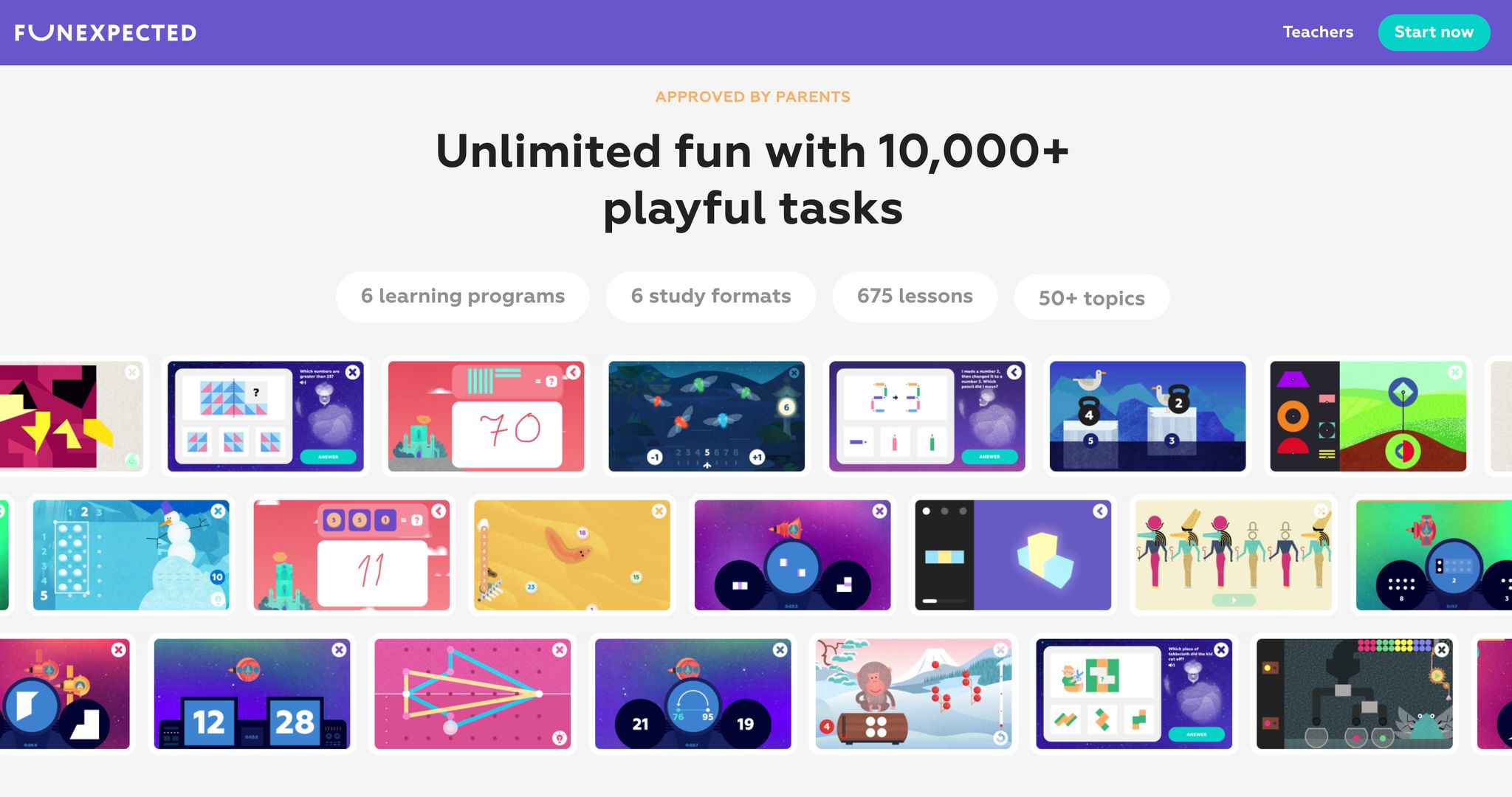
Funexpected Math is designed to help first graders strengthen math skills in an engaging and interactive way. It covers the school program and goes beyond to Olympiad-style tasks to deepen kids’ understanding of math.
Core Features
The app offers over 10,000 interactive tasks spread across 675 lessons and 50+ topics, catering to children aged 3–7.

Aika, a personal digital tutor inside the Funexpected Math app
For first graders (ages 6–7), the focus is on key concepts such as place value, adding and subtracting two-digit numbers, recognizing number patterns, understanding logical operators, and even introducing the basics of coding.

Algorithms / Early coding game in the Funexpected Math app
Unlike traditional drills, Funexpected Math uses a variety of learning activities, such as numeracy exercises, logic puzzles, counting games, and printable worksheets, to keep kids interested. The app’s storyline, featuring a digital tutor and charming characters, helps make abstract math concepts more relatable and fun.
Educational Benefits
Funexpected Math has been shown to accelerate learning progress threefold, translating to 18 months of learning in just 6 months with only two 15-minute sessions per week [1]. Its design encourages kids to experiment and learn from mistakes without the stress of scores or timers. Approved by neuroscience and educational experts from institutions like UCL, the University of Chicago, and UC Berkeley, the app takes a research-based approach to education. It has also won several awards, including Best Original Learning App (Kidscreen Award 2025), Best Math Learning Solution (EdTech Breakthrough Award), and Best Visual Design (The Webby Award) [2].
"My daughter's Montessori teacher says her engagement with math themes has increased wildly. I think your product makes a huge difference in children's lives." – Melis, Parent [1]
This strong foundation makes Funexpected Math a standout tool for young learners.
Personalization & Adaptivity
One of the app’s key features is Aika – a personal AI tutor. She scaffolds learning, asks guiding questions, introduces math terms, and provides hints when needed.
The learning program automatically adapts to each child’s age and skill level. It detects knowledge gaps, patches them, and constantly corrects the difficulty. That’s why Funexpected Math is beneficial for both children who struggle with math and those who excel in it.
For teachers, the app includes classroom tools like easy rostering via QR codes, detailed progress tracking, and analytics to pinpoint learning challenges. Educators can assign lessons in different languages and customize learning paths, making it especially helpful for English Language Learners (ELL). These adaptive features enhance the app’s usefulness in diverse classroom settings.
Pricing & Accessibility
Funexpected Math is available through subscription plans, offering both monthly ($10.99 per month) and annual ($64.99 per year) options. There’s also a free 7-day trial available. The app is ad-free, compliant with COPPA and FERPA standards, and supports 16 languages.
2. SplashLearn
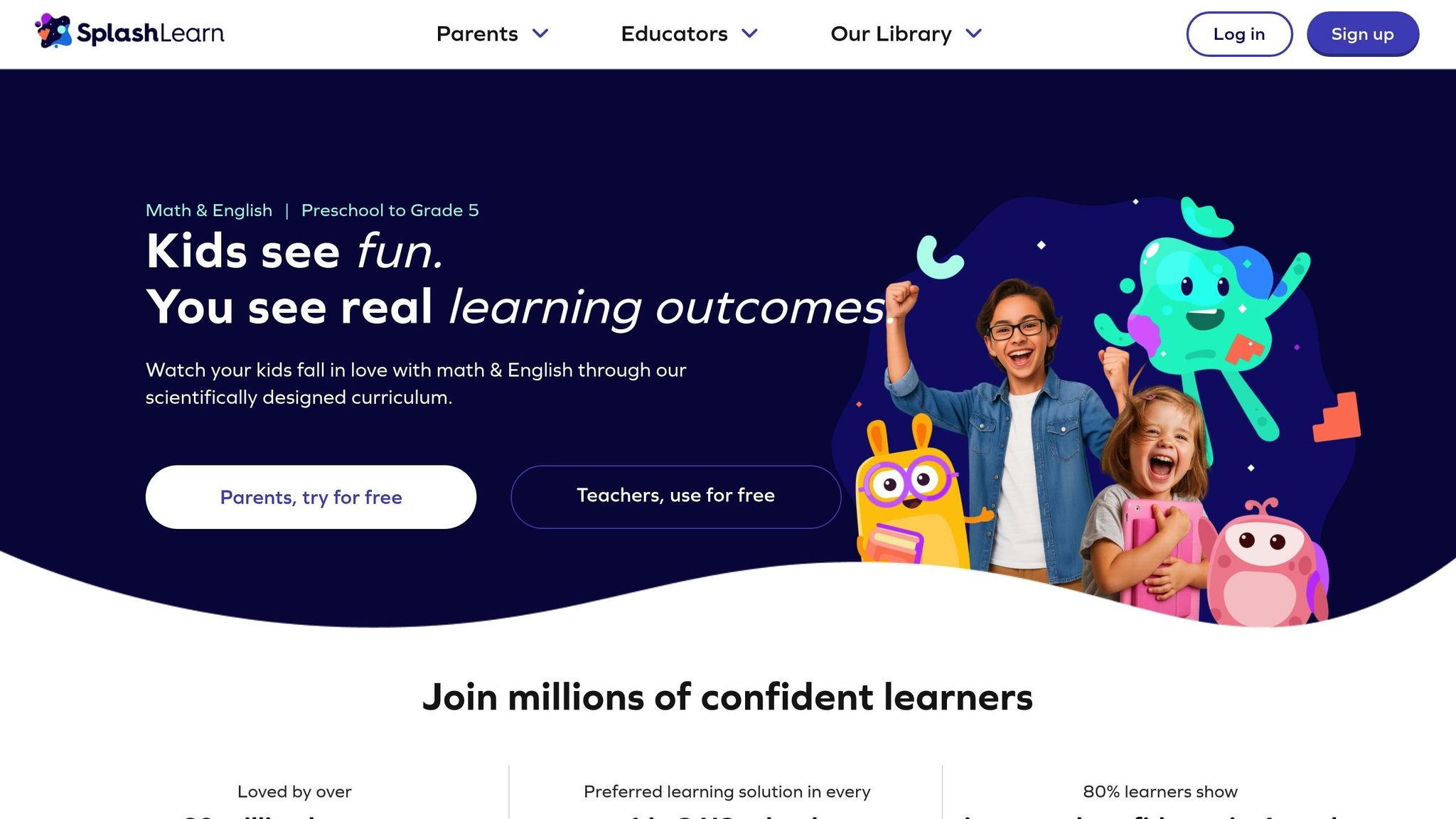
SplashLearn brings math to life for first graders through its "Splashverse", a virtual world filled with interactive activities. With the trust of thousands of teachers globally, the platform has become a go-to resource for young learners [3].
Core Features
SplashLearn is good for developing essential math skills like number sense and basic operations. The platform offers over 314 interactive math games and 438 worksheets aligned with Common Core standards. These activities cover topics such as addition, geometry, and number recognition [3]. Beyond games, SplashLearn includes gamified practice sheets, decodable books, and even bedtime stories to make learning enjoyable. Kids earn rewards like coins and certificates as they progress, keeping them motivated.
Educational Benefits
SplashLearn has shown a noticeable impact on young learners. Within just four weeks, 80% of children report feeling more confident in math. Those who use the app more than four times a week see a learning improvement of over 77% in the first two months [3]. Similar to the Funexpected Math app, Splashlearn adapts to each child's progress, creating a tailored learning path that meets their unique needs.
Personalization & Progress Tracking
The platform customizes learning paths into manageable daily milestones, helping children advance at their own pace without requiring parents to plan lessons. Parents and teachers receive detailed progress reports organized by subject, topic, and skill, along with weekly email updates. This system allows for setting personalized practice goals and reminders, making it easier to stay on top of each child's learning journey [3].
Pricing & Accessibility
Teachers can access SplashLearn for free, including homework assignments for students. Families can explore the platform with a 7-day free trial before committing to a subscription. Monthly plan costs $11.99 per month, yearly plan is $69.99 – $89.99.
3. ToDo Math
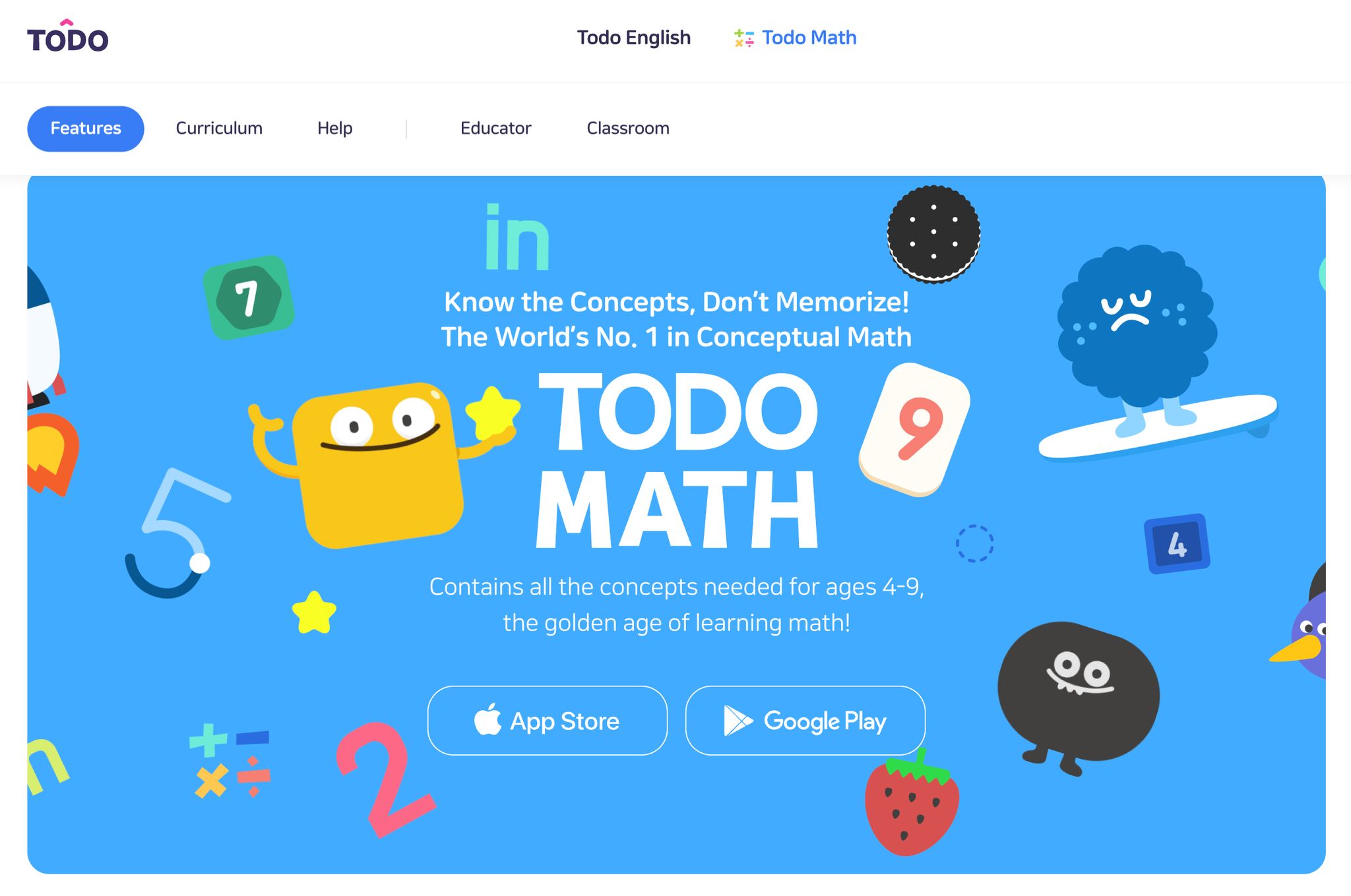
ToDo Math packs over 2,000 interactive activities, created with input from top university experts. With a global user base, it’s become a trusted tool for helping young learners build key math skills [4].
Core Features
The app organizes its curriculum into eight levels (A–H). For first graders, Level D focuses on basics like place value and simple geometry, while Level E tackles more advanced topics like carry-over addition and subtraction. Kids can explore different learning modes, including Daily Adventure, Free Choice, AI Practice, and Brain Power, each targeting specific skill areas [5].
ToDo Math prioritizes accessibility. It includes features like a dyslexic-friendly font, a left-handed mode, a help button for independent use, and support for eight languages. These tools make it inclusive for a wide range of learners [4]. The app is also COPPA-compliant, ad-free, and works offline, offering a safe and convenient experience for families [5].
Educational Benefits
The app’s interactive design delivers results. ToDo Math has earned recognition as a co-winner of the Global Learning XPRIZE and has received Parents' Choice Awards in 2015 and 2018 [4]. It boasts a 4.7/5 rating on the App Store from over 1,100 reviews and 5/5 from Common Sense Media. Parents appreciate the app’s calm, non-distracting graphics and its engaging monster-catching reward system.
"The paid version is pricey for a kids' app, but well worth it for strugglers" - Countriesrfun, App Store Reviewer [5]
Personalization & Adaptivity
ToDo Math ensures a tailored learning experience. It starts with an in-app placement test to determine the right level for each child. Parents can adjust the difficulty and track progress through the Parents Page, which also allows syncing profiles across multiple devices. The developers emphasize their commitment to personalized learning:
"We empower ALL children to learn independently" and "Our personalized learning path dynamically adapts, dynamically adapting to each child's pace" - ToDo Math [5]
Pricing & Accessibility
ToDo Math offers a free version with limited daily play, usually capped at three sessions per day. Families can also try premium features with a 7-day free trial [4][5]. Subscriptions typically allow 2–3 profiles per account, families with more children may need to contact support for additional profiles. One year subscription on ToDo Math is $99.99, two years plan will cost $119.99 [5].
4. DragonBox Numbers & Big Numbers
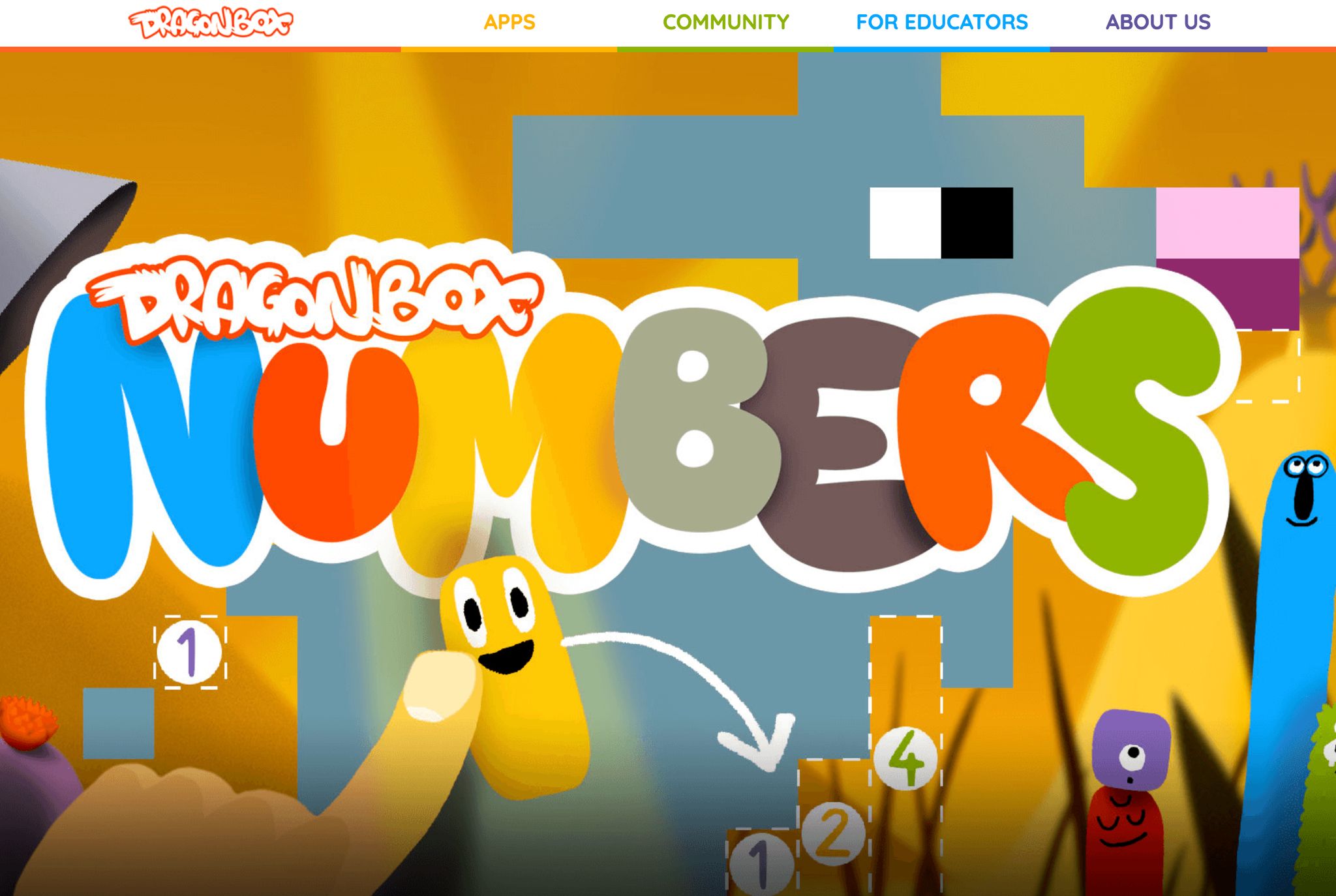
DragonBox continues its mission of making math learning interactive and engaging by offering tools that focus on discovery and hands-on exploration. These apps are designed to help kids build a solid foundation in number skills while keeping the experience fun and immersive.
DragonBox offers two apps targeting different age groups. DragonBox Numbers is designed for children aged 4–8, while DragonBox Big Numbers is aimed at ages 6–9. This makes both apps a good fit for first graders, typically 6–7 years old. Together, they guide kids from basic number concepts to more advanced multi-digit arithmetic.
Core Features
Central to both apps are the Nooms - digital manipulatives that represent numbers 1–10. These Nooms allow children to explore numbers by stacking, slicing, and combining them, moving away from rote memorization and toward a deeper understanding of math concepts [6].
DragonBox Numbers focuses on building number sense up to 20 through four interactive activities.
DragonBox Big Numbers takes the learning further with a story-driven adventure. Kids engage in resource management and strategic problem-solving, tackling 4,000 operations in a game-like format.
Both apps follow a four-step learning model: Engage, Explore, Reflect, Apply. This method encourages kids to discover math concepts through hands-on interaction, reinforcing their understanding in a meaningful way [7].
Educational Benefits
DragonBox has received accolades for its unique approach to math education, including awards like the Games for Change Best Learning Game and the 2016 International Serious Play Awards Gold Winner [6]. By incorporating playful, interactive elements, the apps help kids develop essential math skills without feeling like they're stuck in a traditional classroom setting.
Common Sense Media highlights the apps' intuitive design, which allows children to absorb math concepts naturally, without the pressure of formal exercises [8].
In addition to building basic math skills, DragonBox Big Numbers fosters strategic thinking as kids plan trades and manage resources. USA Today called it:
"a perfect way to interest kids in math" [6]
and recommended it as a must-have for every child's app library.
Pricing & Accessibility
Both apps are available for iOS and Android devices. As part of the Kahoot! family, they provide an ad-free environment, ensuring kids can explore independently without distractions from traditional quizzes or advertisements. The monthly subscription to Kahoot! Kids costs $5.99, and the annual one is $35.99.
5. Mathseeds
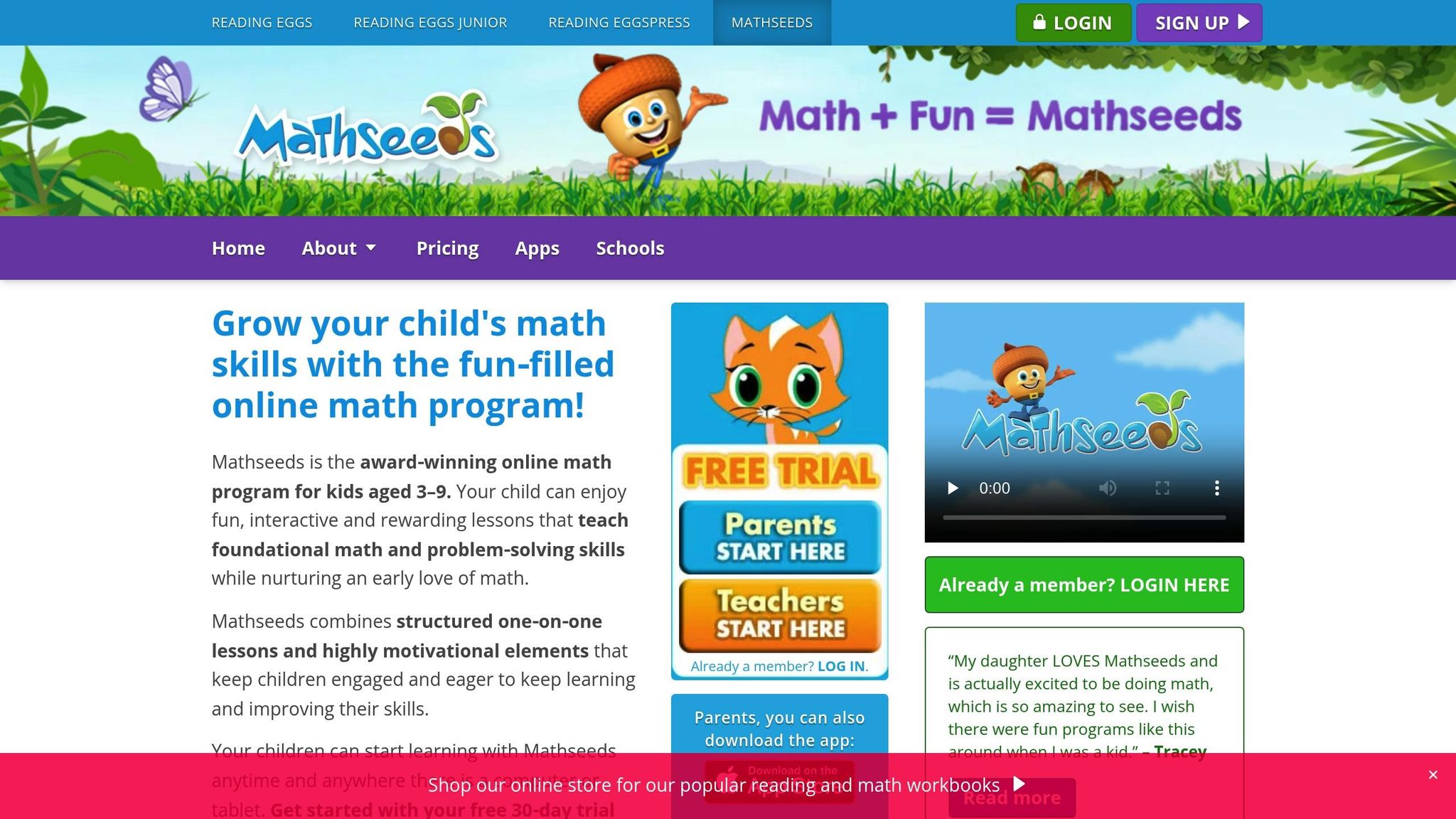
Mathseeds provides a step-by-step, map-based learning journey, designed specifically for kids aged 3–9. For first graders, the program focuses on addition, subtraction, and shapes, aligning well with classroom learning goals [9][10].
Core Features
Mathseeds uses a colorful, stepping-stone map to guide children through sequential lessons, offering clear milestones along the way. Each level includes over 35 guided activities that incorporate virtual manipulatives, songs, animations, and drag-and-drop tasks to make abstract concepts easier to grasp [10].
The lessons are rooted in everyday scenarios - like playgrounds, kitchens, or shopping trips - helping kids connect math to real-life situations. For early readers, audio instructions are included, and printable worksheets provide opportunities for offline practice alongside the digital lessons [9].
Educational Benefits
Parents often highlight how engaging and effective Mathseeds is. Laurine, a parent, shared:
"My child loved the characters and looked forward to his lessons every day. He mastered the concepts quickly and has retained them" [9].
By combining visual, auditory, and interactive elements, Mathseeds helps children build confidence and develop a positive attitude toward math. The activities are designed to grow in complexity as kids progress, ensuring they remain challenged without feeling overwhelmed [10].
Pricing & Accessibility
Families can try Mathseeds with a 30-day free trial before committing. The program works on computers, tablets, and mobile devices (iOS and Android). Subscriptions start at $54.28 per year for Mathseeds alone or $108.57 annually for a bundled package that includes both reading and math programs. Discounts, such as 40% off bundled subscriptions, are offered at various times [9].
6. Fiete Math
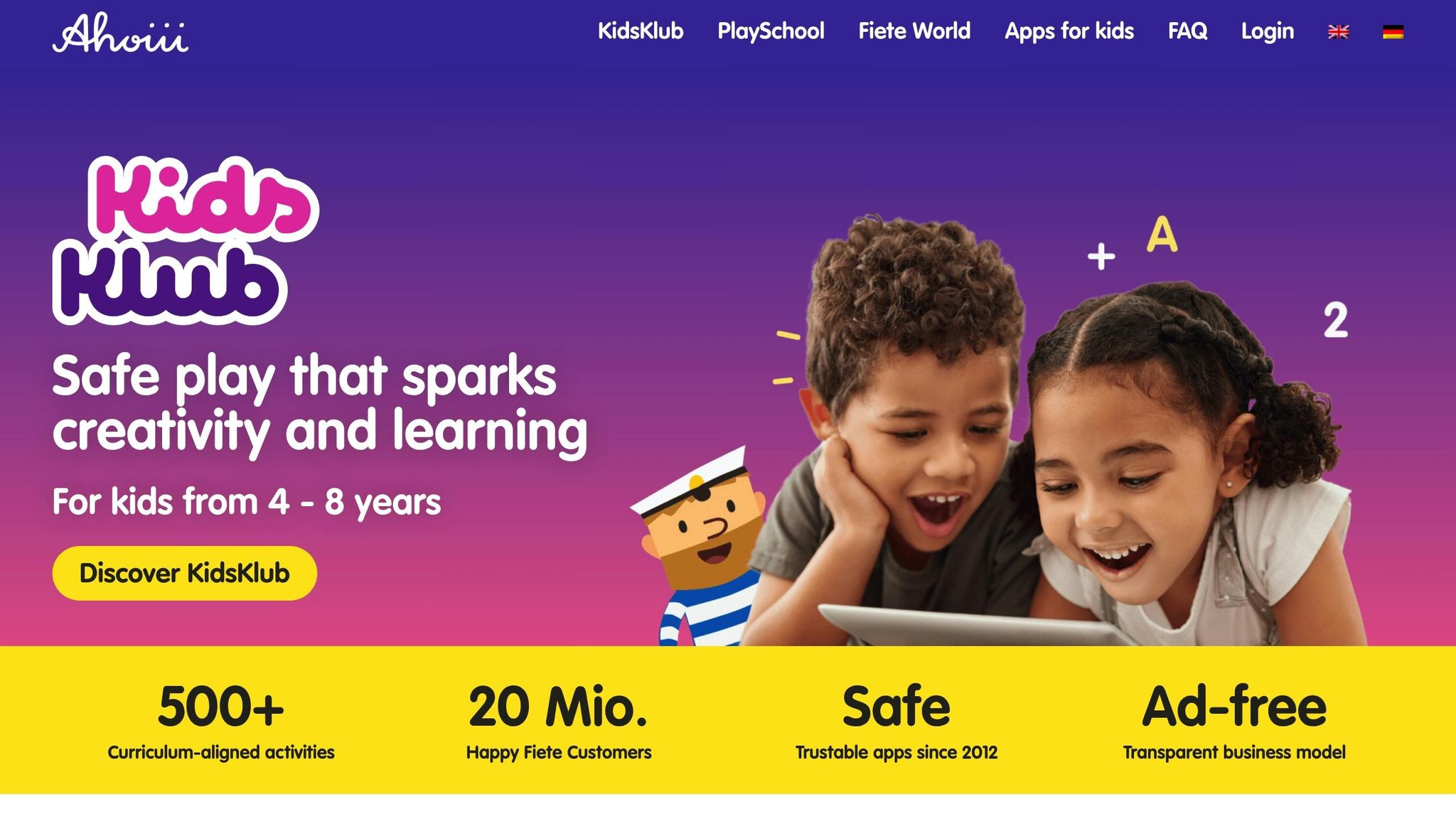
Fiete Math uses a Montessori-inspired approach to make early math concepts more relatable and engaging. Instead of relying on traditional worksheets, it immerses first graders in a harbor-themed world where they load cargo ships by grouping, combining, and splitting blocks to match the requested numbers [11].
Core Features
The app includes over 1,000 tasks designed to teach numbers up to 30. These activities cover counting, splitting numbers, and strategies like doubling, halving, and working with neighboring numbers [11]. As kids progress through various harbors and countries, they earn medals and unlock bigger ships. Importantly, there are no time limits, letting children experiment with splitting and combining blocks at their own pace [15]. This hands-on, exploratory learning approach lays a solid foundation for math skills.
Educational Benefits
One App Store reviewer, Carissaabc, highlighted the app's educational value:
"Developing a deep understanding of the connection between numerals and quantity is an important foundation for all mathematical work. Fiete Math breaks this skill into manageable steps and uses humor to engage learners" [11].
The app boasts a 5.0 out of 5 rating on the App Store. Parents love how the interactive features help kids grasp abstract math concepts, like breaking apart and combining numbers. However, some users have mentioned technical glitches, such as crashes at specific levels and occasional difficulties with the cutting gesture [11].
Personalization & Adaptivity
Fiete Math allows parents to create multiple player accounts, making it easy to track each child's progress individually. After completing the initial 1,000 tasks, the app generates new challenges tailored to the same topics, ensuring kids continue to practice and strengthen their skills. Its self-paced design helps children focus on truly understanding the material rather than rushing through it [11].
Pricing & Accessibility
Fiete Math offers flexible pricing options to suit different needs. The app is free to download with limited content. Families can unlock the full version with a one-time purchase of $19.99 or subscribe to KidsKlub for $6.99 per month or $34.99 per year, which provides ad-free access to several apps from the publisher [11]. It’s compatible with iPhone, iPad, and Mac (with M1 chip or later) and requires iOS 13.0 or newer [11].
Strengths and Weaknesses
After examining the detailed features of these apps, here’s a quick breakdown of their standout qualities and areas where they might fall short, helping you make an informed decision for first graders.
Funexpected Math shines with its blend of STEM content and a personalized digital tutor, promoting a well-rounded approach to math learning. Supporting 16 languages and adhering to COPPA and FERPA standards, it ensures a safe learning environment both at home and in schools. Its widest curriculum, going beyond the school program, makes it a perfect tool for giving children deep understanding of math and strong problem-solving skills.
SplashLearn is a great fit for families focused on mastering the school program. Its adaptive "Splashverse" environment motivates kids through game-based learning. However, some parents have expressed concerns about the potential for overuse due to its gamified nature.
ToDo Math stands out for its inclusive design, making it accessible to a wide range of learners. Its Daily Adventures introduce variety while covering practical topics like time and money. That said, a possible drawback is its lack of detailed feedback when children make mistakes.
DragonBox Numbers & Big Numbers employs a visual-first, Montessori-inspired approach to teach the base-ten system through interactive stacking and slicing. This method minimizes language dependence and avoids repetitive drills.
Mathseeds features a curriculum aligned with Common Core standards, combining animated lessons with clear rewards to keep kids engaged. It’s a comprehensive option for K-3 learners. However, it’s not typically suitable for children beyond third grade.
Fiete Math offers a Montessori-style, hands-on experience with no time limits or scoring, giving kids the freedom to explore math concepts at their own pace. It is available as a one-time purchase. A possible drawback here is its limited curriculum.
App | Primary Strength | Notable Limitation |
|---|---|---|
Funexpected Math | STEM integration, digital tutor, 16-language support | Subscription required for full access |
SplashLearn | Engaging "Splashverse" environment; alignment with the school program | Premium features locked |
ToDo Math | Accessible, inclusive design, and a tailored learning experience | Limited feedback for mistakes |
DragonBox Numbers | Visual-first, Montessori-inspired learning | Subscription required |
Mathseeds | Common Core-aligned with clear rewards | Best for K-3 only; requires ecosystem subscription |
Fiete Math | Montessori-style, hands-on with one-time purchase | Relatively limited curriculum |
This comparison highlights the educational strengths and design choices of each app, helping you choose the best fit for your child.
Conclusion
Helping your first grader build math skills starts with picking tools that suit their individual learning style. The best math app for your child will depend on your priorities - whether that's reinforcing essential skills, keeping your child engaged, addressing specific learning needs, or finding an option that fits your budget.
SplashLearn and Mathseeds offer a solid mix of Common Core-aligned lessons and detailed progress tracking. If you're looking for something interactive and tailored, Funexpected Math creates personalized learning experiences that keep kids motivated. For families needing accessibility features, ToDo Math shines with its dyslexia-friendly fonts, left-handed mode, and multilingual support, earning high praise from Common Sense Media. Meanwhile, DragonBox Numbers and Fiete Math take a hands-on approach, using Montessori-inspired techniques to teach number relationships through active exploration.
For budget-conscious families, Fiete Math stands out with its one-time purchase price of $19.99, while Funexpected Math offers a yearly plan at $64.99, packed with extras like logic puzzles, STEM activities, early coding tasks and printable worksheets.
The key is finding an app that fits your child’s needs and your family’s goals. Starting with a free trial can help you figure out what works best for your first grader. Explore a trial today and discover which app sparks your child’s love for learning!
FAQs
How do I choose the right app for my 1st grader?
To find the best app for your 1st grader, think about their age, how they learn, and the specific math skills you'd like them to build. For example, Funexpected Math is designed for kids aged 3–7, providing interactive lessons, a personalized approach, and a friendly digital tutor. Focus on apps with features like adaptive learning, progress tracking, and content that aligns with your child’s interests. These elements can help make math both effective and fun for your little learner.
How much screen time is best for math apps?
For first graders, keeping screen time to 20 to 30 minutes per session works well. This strikes a good balance between learning and staying within healthy screen time guidelines. Many popular math apps, like Funexpected Math, are built for short, engaging sessions that encourage active participation. Experts suggest setting clear limits and pairing screen use with plenty of offline activities to support a child's overall growth.
Related Blog Posts
Transform Math Learning for Kids
Explore Funexpected's interactive math program designed for children aged 3-7. Build math fluency, logic, and problem-solving skills through engaging, hands-on activities and a personalized digital tutor.