How to Teach Kids Fractions
Early Childhood Education
Sep 11, 2026
Hands-on methods to teach halves, thirds, and fourths using equal sharing, paper folding, fraction bars, and daily routines.

Fractions make more sense when kids can see and share equal parts first. If you need to teach a child aged 3–7, skip long worksheets at the start and use snacks, paper folding, blocks, and measuring cups instead.
Here’s the short version:
Start with equal sharing
Use one whole like a pizza, apple, or paper strip
Ask one main question: “Are the parts the same size?”
Show halves, thirds, and fourths with hands-on models
Connect pictures to symbols like 1/2 and 1/4
Keep practice short: 5–15 minutes, about 3–4 times a week
One stat stands out: many 5- and 6-year-olds can already split a whole into equal parts before they learn fraction symbols. That means early fraction learning can begin during snack time, baking, or play.

Learning halves on the Funexpected Math app
What works best is simple: share first, show the same whole, compare side by side, and practice a little at a time. From there, kids can start to see that fractions are not just pieces of food on a plate - they are numbers that describe part of one whole.

How to Teach Kids Fractions: Visual Learning Method
How To Teach Fractions in 1st and 2nd Grade // HANDS ON Fraction Activities in the Classroom
Step 1: Teach Fractions Through Equal Sharing
Start with equal sharing, then turn that idea into simple sharing jobs. Long before a child can write 1/2, they already spot when someone gets a bigger piece. That gut reaction is the right place to start.
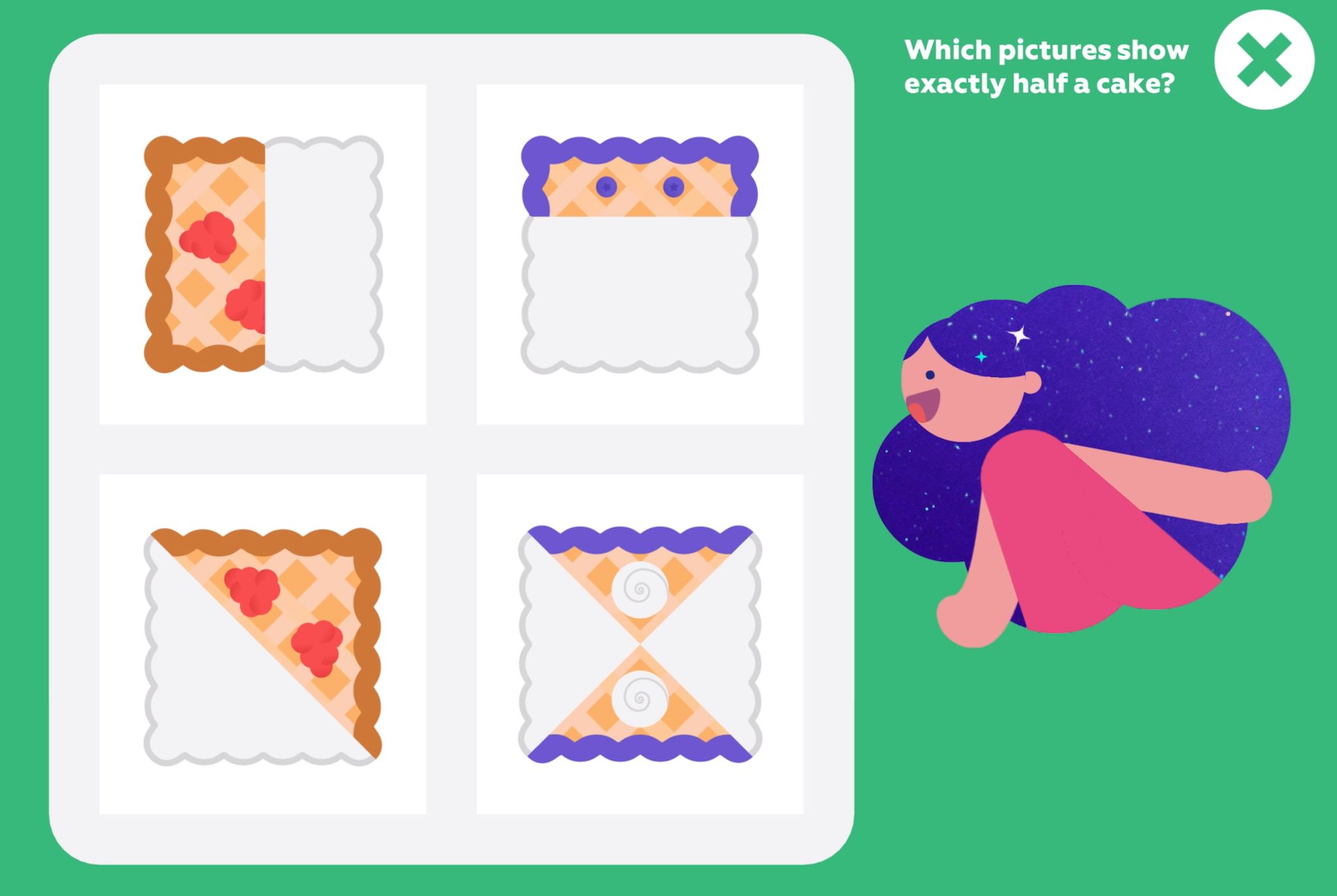
Learning equal sharing and the basics of fractions on the Funexpected Math app
Share groups first, then split one whole
Begin with a group of objects instead of one item. Gather 12 building blocks and tell your child that 4 kids need to share them fairly. Have them hand out one block at a time to each person until all 12 are gone. Each child ends up with 3 blocks. That shows the set was divided into 4 equal shares.
The point is simple: kids need to see that equal shares matter before fraction symbols like 1/2 mean anything. Once they get that, move to one whole item. Cut an apple into 2 equal pieces, or split a paper circle into 4 equal parts. Then ask if each part is the same size.
That move - from sharing a group to cutting one whole - matters a lot. It’s where children start to see that fractions describe parts of one thing, not just how many objects each person gets.
Use everyday routines like snacks and playtime
Some of the best fraction lessons happen in tiny 1–3-minute moments. At breakfast, cut a piece of toast into 2 equal halves and point out that each person gets one half. On pizza night, divide a small pizza into 4 equal slices, then ask your child to check whether the slices look the same size before anyone takes one.
Here are a few easy daily examples:
Routine | Sharing Example | Fraction Idea |
|---|---|---|
Breakfast | Cut toast into 2 equal halves | Halves (1/2) |
Snack time | Share 12 crackers equally among 3 kids | Thirds (1/3) |
Pizza night | Divide a small pizza into 4 slices | Fourths (1/4) |
Playtime | Divide 20 LEGO bricks among 4 siblings | Fourths (1/4) |
If 5 cookies are shared between 2 children, let each child take 2 cookies first. Then cut the last cookie into 2 equal halves so each child gets 1/2.
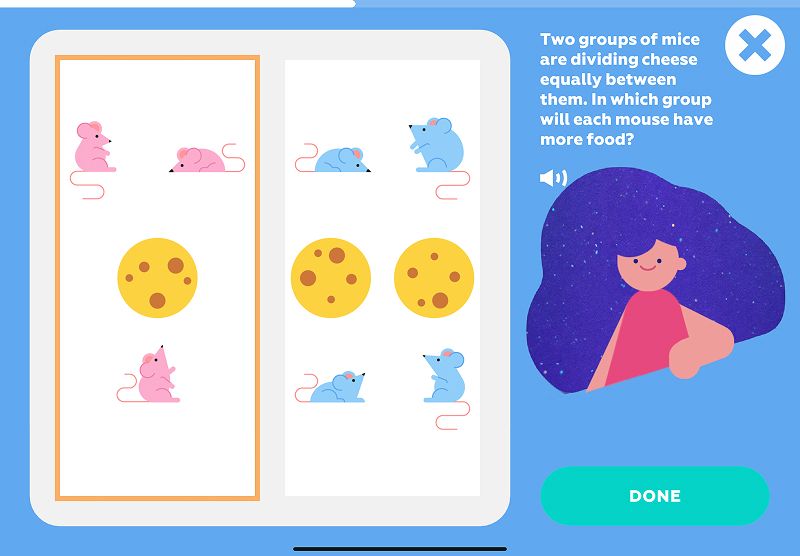
Across all of these moments, keep coming back to one question: Does everyone have the same amount? That one question teaches more about fractions than most worksheets.
Once kids can see equal shares clearly, paper folding and fraction bars make a lot more sense next.
Next, show the same equal shares with paper folding and fraction bars.
Step 2: Use Visual Models to Show How Fractions Work
Once kids can share things equally, the next step is helping them compare fractions. The key is to keep using the same whole in objects, drawings, and symbols so kids can link all three. Start with real items, then move to pictures, then to symbols like 1/2 and 1/4.
Build halves, thirds, and fourths with paper folding and fraction bars
Paper folding is one of the easiest places to begin. Give a child a rectangular strip of paper and ask them to fold it so both sides line up exactly. When they open it, they’ll see 2 equal parts. Each part is one half. Write 1/2 on one part together.
Then take a second strip of the same size, fold it into 4 equal parts, and label one section 1/4. Put both strips next to each other. The difference jumps out right away: 1/4 is smaller than 1/2. That helps kids see a big idea early on: a bigger denominator means smaller pieces.
Fraction bars show the same idea in a clean, visual way. Line up a 1/2 bar and a 1/4 bar under a “one whole” bar, and kids can spot the size difference without doing any math. Matching bars or circles also help show equal fractions, like 1/2 and 2/4.
Once children can see and compare the sizes, add the words and symbols that go with those parts.
Use pizza slices, brownies, and measuring cups as fraction models
Food models make fractions feel concrete. Cut a small brownie pan into 4 equal squares and you have fourths. Then ask, “If you take 2 squares, what fraction of the pan did you take?” That keeps attention on equal-sized pieces, not just the number of pieces.
The kitchen works well for this too. Show that two 1/4-cup scoops of flour equal exactly 1/2 cup. Let kids pour the 1/4 cup twice into a measuring cup and watch the flour reach the 1/2-cup line. It’s a small moment, but it helps connect the symbol to something they can see.
Name the whole first: one pan, one cup, one pizza.
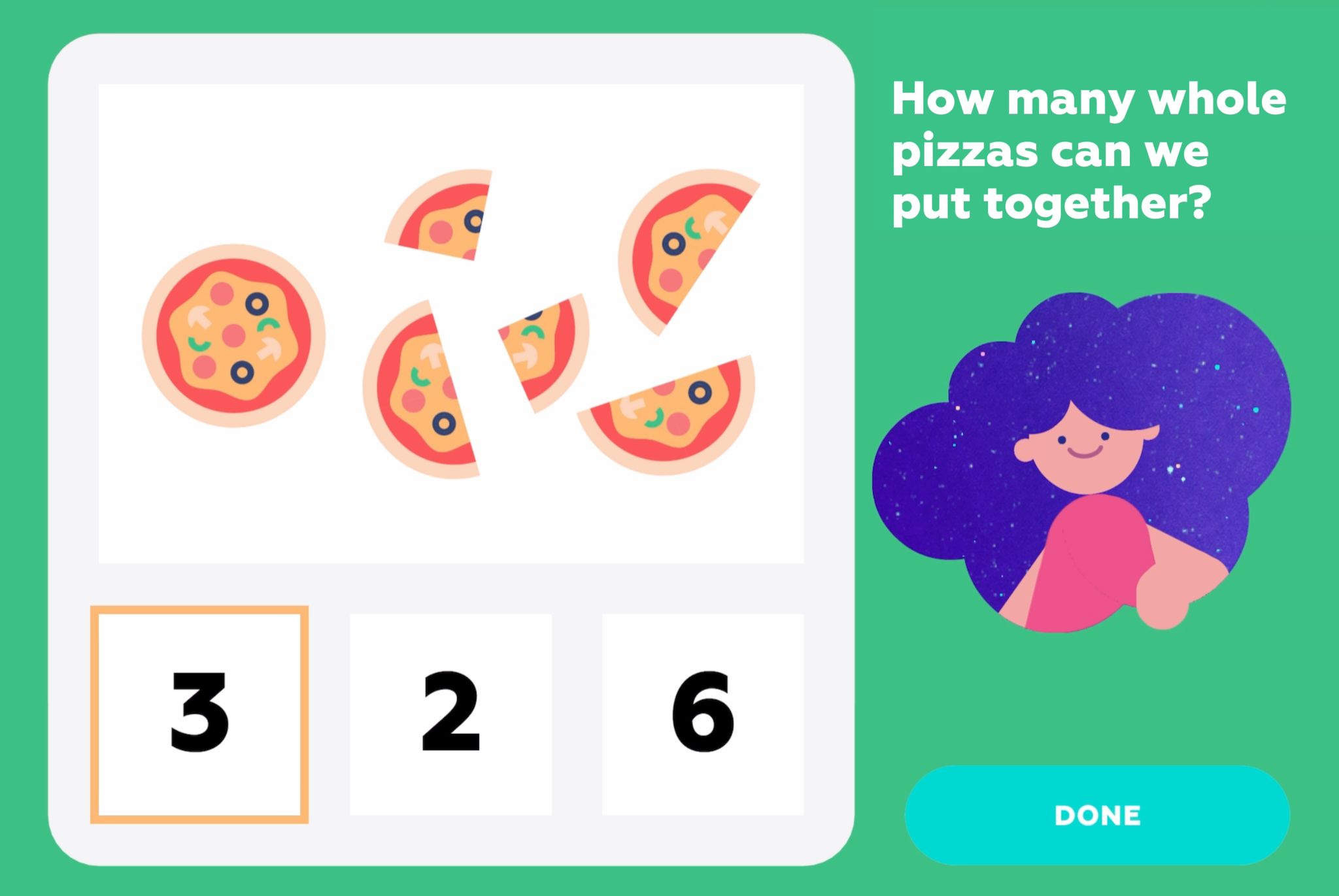
Place simple fractions on a number line from 0 to 1
After kids see fractions in objects and pictures, show that fractions also belong on a number line. Draw a simple horizontal line. Put 0 on the left and 1 on the right, and explain that the space between them is one whole. Split that space into two equal parts and mark the middle as 1/2.
Then draw a second line the same length, split it into four equal spaces, and mark 1/4 closer to 0. Putting the two lines one above the other makes comparison easier. Kids can see that 1/4 is closer to zero than 1/2, so it represents a smaller amount.
Keep it simple. Use only two or three fractions at first. This helps children see that fractions are numbers, not just pieces.
Visual Model | What It Shows Best |
|---|---|
Paper folding | Size difference between halves, thirds, and fourths |
Fraction bars | Side-by-side size comparison; simple equivalence |
Pizza / brownies | Parts of one whole area; fair sharing in context |
Measuring cups | Fractions as real volumes using U.S. customary units |
Number line (0–1) | Fractions as numbers with size and order |
With these models in place, fraction words and symbols usually click much faster.
Step 3: Introduce Fraction Words, Symbols, and Comparison
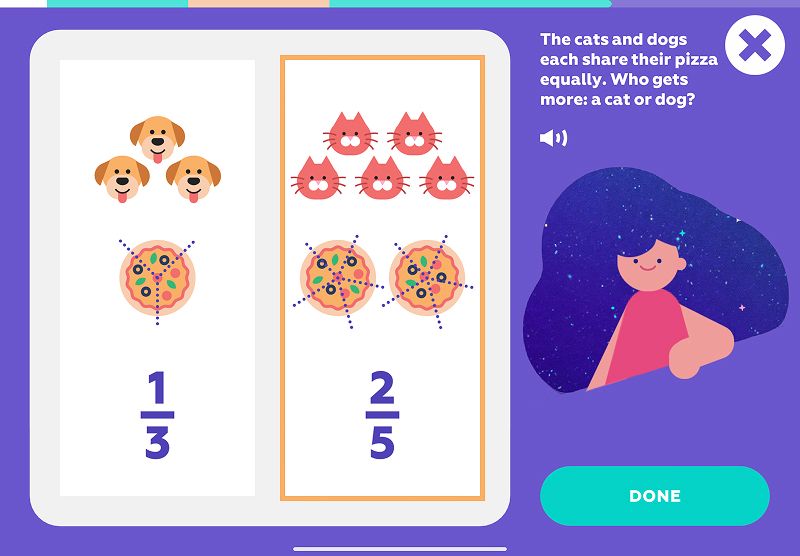
Exercising fraction words and fraction comparison in the Funexpected Math app
Once kids can see fractions, it’s time to give those pictures names and symbols. The goal here is simple: connect fraction words and numbers to models they already understand.
Teach numerator and denominator with one clear example
Start with one model and stick with it. A paper strip divided into 4 equal parts works well. Show the full strip first and say it represents one whole. Then shade one part and write 1/4 beside it.
Explain it in plain language: the bottom number, 4, shows how many equal parts the whole has. The top number, 1, shows how many parts you’re counting. Keep it short and concrete: 4 equal parts total, 1 part shaded.
Fraction Term | Pizza Model | Folded Paper Strip |
|---|---|---|
Denominator (bottom) | Total number of slices the pizza is cut into | Total number of equal sections after folding |
Numerator (top) | Number of slices on your plate | Number of sections that are shaded or counted |
Use this same example a few times before switching to another fraction. That repetition helps the idea sink in.
Compare simple fractions with matching visuals
Begin with 1/4 and 3/4 on the same fraction bar. Kids can spot the difference fast: 3 shaded parts take up more space than 1 shaded part. This is a good first comparison because the denominators are the same.
Next, move to 1/2 and 1/4 using the same whole. This is where many kids get tripped up. They may think 1/4 is bigger because 4 is larger than 2. A side-by-side visual clears that up. When the whole stays the same, cutting it into more equal parts makes each part smaller.
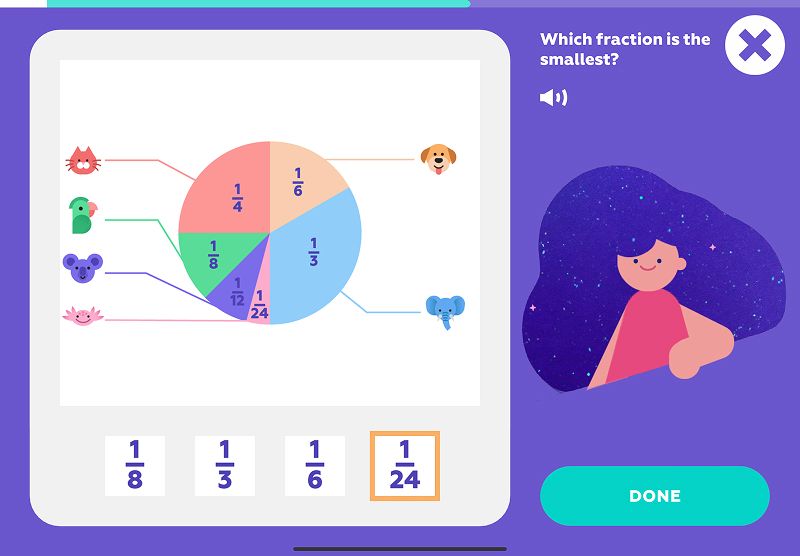
Illustrating the idea that a bigger denominator means a smaller part
Instead of focusing on the numbers alone, point to the shaded area. That brings the idea back to fair sharing, not rule memorizing.
Show simple equivalence with halves and quarters
Use two identical paper rectangles. Fold the first into 2 equal parts and shade one half. Fold the second into 4 equal parts and shade two quarters. Then place them side by side.
The shaded parts line up exactly.
At this stage, that’s all kids need to know about equal fractions: same size, different name. The folds make it easy to see that 1/2 and 2/4 cover the same area.
Once kids can name and compare fractions, practice at home and in class gets a lot easier.
Step 4: Make Fraction Practice Easy at Home and in Class
Use short, visual practice to help kids turn what they saw into something they can do.
Use printable manipulatives, beginner books, and hands-on games
Start with fraction circles and fraction bars. Print them on cardstock, cut them out, and let kids build one whole by fitting pieces together. You can also try a simple swap game: trade two 1/4 pieces for one 1/2 while building a whole. These visual tools help kids make sense of fractions better than worksheets alone.[1]
For a quick game, try Fraction Memory Match. Make pairs of cards: one card shows a picture, like a brownie cut into fourths, and the other shows the symbol 1/4. Kids flip two cards at a time and try to match the picture to the symbol. Another option is Fair Share Challenge. Kids use fraction bars to give equal shares to 2 or 3 people, then check whether each share is the same size.[1]
After manipulatives and games, add a read-aloud and look for equal shares in the story. Read Give Me Half, pause to name the fraction in each split, and act it out with a snack.[2]
Keep practice blocks short - about 5 to 15 minutes, 3 to 4 times a week. Tie each session to something that's already part of the day, like snack time, cooking, or a quick game before bed. That steady rhythm matters more than making any one session long.[3]
Use Funexpected Math to support early fraction thinking
After hands-on practice, use a short app session to review the same fraction ideas. Funexpected Math gives children ages 3–7 short, adaptive practice with splitting sets, matching parts to wholes, and comparing simple fractions.
A simple blended routine works well: 10 minutes of offline work - folding paper, playing with fraction circles, or sharing a snack equally - followed by 10 minutes in the app.[3] This keeps practice hands-on, interactive and fun while adding a short digital follow-up.
Conclusion: Keep Fractions Visual, Fair, and Part of Daily Life
Fractions click when kids can see equal parts. Start with fair sharing. Then connect that same idea to food, paper folds, and simple symbols. When children begin to notice what “fair” looks like, the visuals help the lesson stay with them.
Tie each fraction lesson to something the child can look at and touch: a folded strip, a cup, or a sliced pizza. Then bring that same idea into daily life. Short fraction moments during meals, snacks, and play help the concept feel normal instead of abstract.
Fractions get easier when kids share fairly, see each part clearly, and practice often. If 1/4 seems bigger than 1/2, place both on the same whole and compare them side by side.
FAQs
What if my child still doesn’t understand equal parts?
Shift the focus away from formal fractions and toward fair sharing. Start with everyday examples like pizza, sandwiches, or brownies to show that equal parts means each piece is the same size.
You can also draw or split circles and rectangles into halves or quarters. That visual, hands-on approach helps kids see the idea first before you bring in numbers or symbols.
When should I teach fraction symbols like 1/2?
Introduce fraction symbols like 1/2 only after a child gets the idea of equal sharing and parts of a whole through hands-on practice.
Use the CRA method: begin with physical objects, then move to pictures or other visual models, and only then bring in symbols. Before formal notation, stick with words like halves and quarters. Then connect the object or picture to the written fraction with simple pointing gestures.
How do I know if my child is ready to compare fractions?
Your child may be ready to compare fractions once they understand equal sharing. That means they get the idea that a whole can be split into equal parts, and that when you divide that same whole into more equal pieces, each piece gets smaller.
It also helps if they’re at ease with hands-on examples, like sharing food or using manipulatives. And they should know simple comparison words like more, less, bigger, and smaller.
Related Blog Posts
Transform Math Learning for Kids
Explore Funexpected's interactive math program designed for children aged 3-7. Build math fluency, logic, and problem-solving skills through engaging, hands-on activities and a personalized digital tutor.