Best Math Programs for Gifted Kids: from Kindergarten to High School
Gifted Education
Jan 12, 2026
Explore top math programs tailored for gifted learners, enhancing their skills from early childhood through high school.

What are the Top Picks for Gifted Math Learners?
Funexpected Math: Ages 3–7. AI-powered lessons with over 10,000 tasks. Boosts math engagement and scores with just 15 minutes twice a week. ($10.99/month)
Beast Academy: Ages 6–13. Comic-style books + online platform with 1,000+ lessons. ($99.99/year)
Art of Problem SolvingBooks and Courses: Grades 5–12. Prepares students for math competitions. (~$60/book, ~$150 – $895/course)
IMACSMath Logic: Middle to high school. Small classes, developing logical reasoning. ($985/40-week program)
Stanford OHSMath Program: High school. College-level, live online classes. ($6,195+/course)
Davidson AcademyMath Courses: Grades 6–12. Ability-based small classes for personalized learning. ($2,750/course)
Quick Comparison:
Program | Age/Grade Range | Key Features | Cost |
|---|---|---|---|
Funexpected Math | Ages 3–7 | AI tutor, 10,000+ tasks | $64.99/year |
Beast Academy | Ages 6–13 | Comic books and online courses, 1,000+ lessons | $99.99/year |
Art of Problem Solving | Grades 5–12 | Competitive math prep with books and live online courses | $150 – $895/course |
Davidson Academy | Grades 6–12 | Ability-based grouping, small classes | $2,750/course |
IMACS Math Logic | Middle-High | Logical reasoning, small classes | $985/40-week program |
Stanford OHS | High School | College-level online classes | $6,195+/course |
Each program caters to different age groups and learning styles. For younger kids, Funexpected Math is an excellent start [1]. Older students can excel with AoPS, Beast Academy, or Davidson Academy. Choose based on your child’s age, interests, and math goals.
1. Funexpected Math
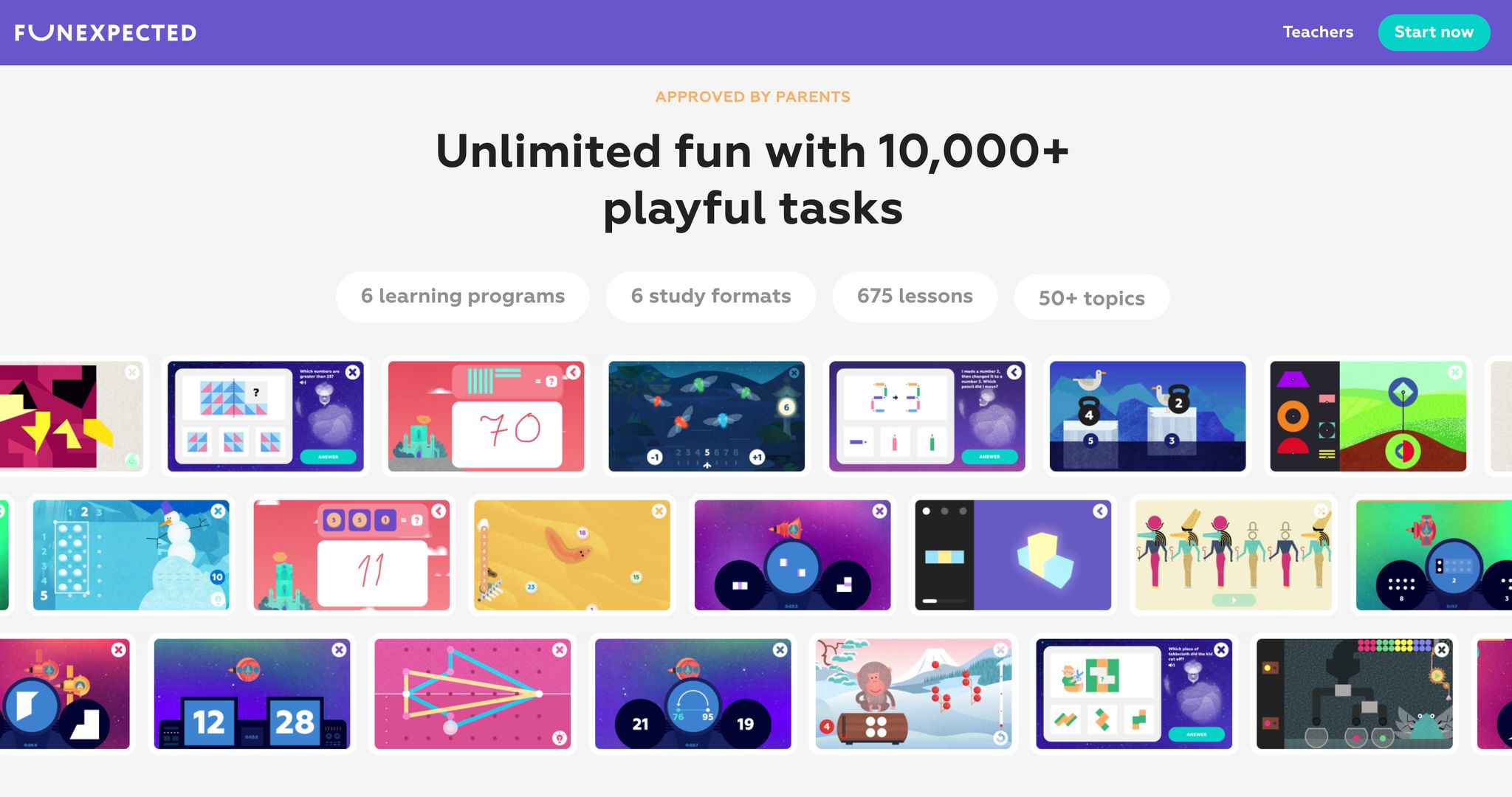
Funexpected Math is a learning app perfectly suitable for gifted children aged 3 to 7. It offers an impressive range of over 10,000 interactive tasks spread across 675 lessons, covering 50+ advanced math topics - far exceeding the typical PreK-2 curriculum[2].
The AI tutor in the app is personified as an older friend of the child named Aika. She asks engaging, thought-provoking questions, and if a task turns out to be too difficult, she doesn’t give a ready-made answer. Instead, she offers a guiding question or a hint that helps the child move forward.

The app’s tutor carefully tailors the curriculum to different age groups, focusing on foundational and advanced concepts:
Age | Core Focus Areas |
|---|---|
3-4 | • Number recognition |
5-6 | • Addition/subtraction strategies |
6-7 | • Place value concepts |
The app’s mistake-friendly approach helps children build confidence as they tackle challenging problems. It uses multiple study formats, including numeracy practice, math manipulatives, logic puzzles, printables and videos to keep learning engaging and thought-provoking [3].
Funexpected Math’s curriculum includes multiple topics and tasks typically found in tests for gifted children. So, if you aim to prepare your child for these tests, the app can be a great support.
Parents have praised the program’s effectiveness. Jon Favertt969, a parent with a background in mathematics, shared his experience:
"I have a math background myself and I wanted to find an app with a wide curriculum. Something about logic and geometry, not just counting. And this one was the perfect choice. I see how my daughter starts to understand even complex concepts." [1]
The results speak for themselves: just two 15-minute sessions per week can help a child rise to the top of their age group in math. Funexpected Math has also earned industry and users’ recognition, winning the Kidscreen 2025 Award for Best Original Learning App and the EdTech Breakthrough Award for Best Math Learning Solution[3].
To support blended learning, the platform provides handcrafted tutorials and printable worksheets, ensuring a well-rounded educational experience[4].
2. Beast Academy
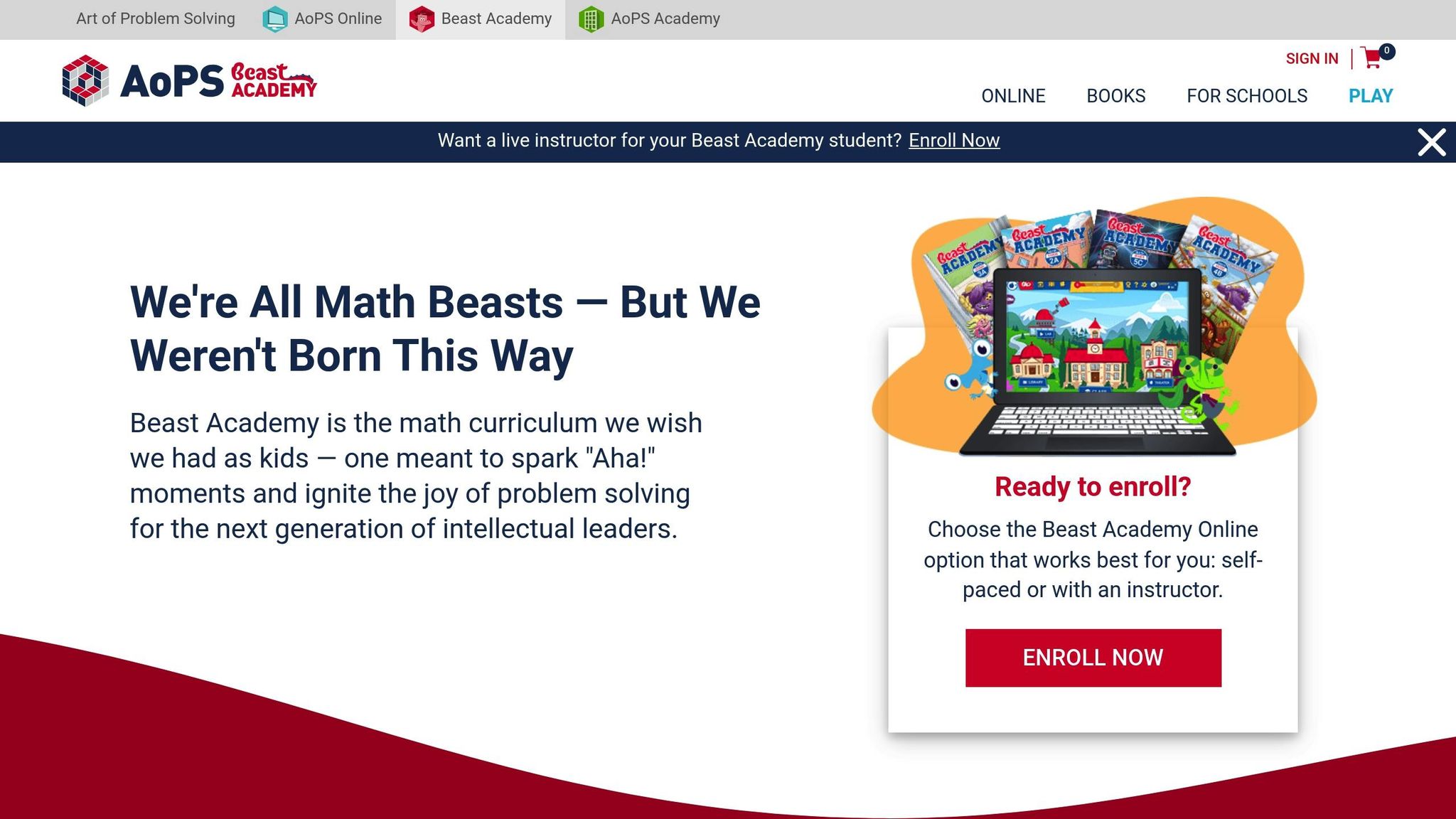
Beast Academy offers an advanced math curriculum tailored for gifted children aged 6–13. It combines comic-style books with a robust online platform featuring over 1,000 lessons and 20,000 problems, each with detailed solutions [5].
The curriculum is divided into four units (1A–1D) and follows a mastery-based approach. Students can move through topics at their own pace, reinforcing advanced math concepts as they go [6]. This structure has shown strong results in building both skills and confidence.
Component | Features |
|---|---|
Online Platform | • 1,000+ instructional videos |
Books | • Comic-style guides |
Assessment | • Placement tests tailored to each unit |
The program has been widely praised for its rigor and ability to engage young learners, boasting a 97% customer satisfaction rate [7]. Parents frequently highlight its ability to challenge students without overwhelming them. Jessie Mathisen, a parent, shared:
"I'm pretty sure they are the most engaging math books I've ever encountered, and they pull this off without watering down the content at all (quite the contrary, in fact)." [8]
Subscription plans include a monthly option at $15.99 (with additional siblings at $10.99) and an annual plan for $99.99 (additional siblings at $64.99) [5]. Beast Academy recommends starting students a grade level below the typical expectation, and placement tests help identify the best starting point for each child [5].
For the best outcomes, experts suggest:
Starting at a level below the current grade level
Committing at least 3 hours per week for primary curriculum users
Using placement tests to find the right starting point
The subscription costs $99.99 annually, with sibling discounts available at $64.99. Families who want both digital access and physical books can choose a bundled option for $160 per year [5].
With a 97% customer satisfaction rate, Beast Academy is a game-changer for gifted students, blending rigorous content with an engaging format. It’s a powerful tool for learners who thrive on advanced mathematical challenges beyond what the traditional curriculum typically offers.
3. Art of Problem Solving (AoPS)
Designed for students in grades 5–12, this platform was developed by former math and science Olympians to introduce higher-level problem-solving techniques [9].
Unlike Funexpected Math and Beast Academy, which use interactive and visual methods, AoPS Primers emphasize a deep, problem-first approach. The program’s centerpiece, Art of Problem Solving, Volume 1: The Basics, features over 500 examples and exercises that go well beyond most standard curricula [10].
Component | Description |
|---|---|
Learning Structure | • Problem-first approach |
Core Skills Development | • Algebraic techniques |
Format Options | • Physical textbook: ~$60.00 |
The program flips the traditional teaching model by presenting problems first, encouraging students to explore independently before diving into formal instruction. This method equips learners to tackle challenges like MATHCOUNTS, AMC 8/10/12 contests, and advanced math courses [10].
Dr. Richard Rusczyk, the founder of AoPS, explains the philosophy behind the program:
"We use math to teach problem-solving because it is the most fundamental logical discipline. The language of mathematics is precise, and success/failure is immediate and indisputable." [12]
AoPS Intermediate Courses take Algebra 2 and Precalculus concepts to the next level by blending them with advanced problem-solving techniques often seen in math competitions like AMC and AIME [13].
Here’s a snapshot of the curriculum:
Topic Area | Key Concepts Covered |
|---|---|
Core Mathematics | Complex numbers, Quadratics, Polynomials |
Advanced Functions | Piecewise-defined functions, Functional equations |
Mathematical Analysis | Sequences and series, Inequalities |
Applied Concepts | Exponents, Logarithms, Conic sections |
Each lesson kicks off with thought-provoking problems designed to spark independent thinking. Only after tackling these challenges do students dive into detailed explanations and problem-solving techniques [13].
Richard Rusczyk, the course creator, describes it as:
"A comprehensive textbook covering Algebra 2 and topics in Precalculus. This book is the follow-up to the acclaimed Introduction to Algebra textbook. The text includes those problem-solving strategies required for success on the AMC and AIME competitions." [13]
The accompanying textbook is no lightweight - it spans 720 pages of instructional material, includes 336 pages of meticulously worked-out solutions, and features over 1,600 challenging problems [13].
Example: Intermediate Algebra Course Details
Prerequisites: Proficiency in basic algebra and quadratic equations.
Duration: 24 weeks.
Cost: $715 for the course, or $789 if you include the required textbook and solutions manual [14].
Course Outline
The course follows a structured progression:
Start with foundational topics like complex numbers and quadratic equations.
Move into deeper explorations of conic sections and polynomials.
Dive into sequences, series, and functional equations.
Wrap up with a focus on mastering problem-solving techniques.
While the material is demanding, the course provides support through detailed solutions, making it an excellent stepping stone for students aiming to tackle advanced mathematics and competitive challenges [13].
For students to excel, a strong grasp of basic algebra is essential, along with a focus on understanding problem-solving strategies rather than relying on rote memorization. Progressing step-by-step is key to success [15][16]. AoPS is particularly suited for gifted students, helping them build the problem-solving foundation needed for competitive academics and demanding careers [15].
4. IMACS Math Logic
IMACS Math Logic is a challenging program for middle and high school students who excel in math reasoning. Based on the acclaimed Elements of Mathematics series, it introduces college-level logic concepts to advanced learners, making it a standout option for those eager to push their intellectual boundaries [17].
Program Structure
The program is carefully organized to ensure a deep dive into logical reasoning:
Component | Details |
|---|---|
Class Size | Maximum of 12 students |
Session Length | 120 minutes per session |
School Year Format | Four 8-week sessions ($655 per session) |
Summer Format | One-week intensive sessions ($359 per session) |
Core Topics | Propositional Logic, Predicate Logic, Axiomatic Set Theory |
This structure provides a progressive framework that allows students to expand their logical thinking step by step.
Advanced Mathematical Logic Track
The curriculum is divided into three sequential courses, each building on the last to enhance abstract reasoning and problem-solving skills [18].
Logic for Mathematics I
Logic for Mathematics II
Set Theory
These courses foster advanced mathematical thinking, preparing students for complex challenges [17].
Student Stories
The program's impact is evident in its alumni's achievements [19].
"IMACS helped me to discover my passion with courses that encourage creative problem solving and offer a deep, meaningful understanding of the material. If it weren't for IMACS, I might never have realized that I like math!" – Naomi Spargo, IMACS Alumna [20]
Other success stories include Brett, who achieved a perfect 800 on the SAT Math section and earned a scholarship covering two-thirds of his tuition at Emory University. Similarly, Jennifer scored a perfect 800 on the SAT Math section and gained admission to prestigious institutions like MIT, the Wharton School of the University of Pennsylvania, the University of Chicago, and Duke University [20].
These examples highlight how IMACS equips students with the skills needed for academic and professional success.
Enrollment Requirements
To join the program, applicants must meet specific criteria:
Obtain a recommendation from an IMACS instructor
Pass the free IMACS Aptitude Test [21]
IMACS focuses on teaching the logical foundations of mathematics, emphasizing creative and critical thinking over rote memorization [18]. It encourages students to explore concepts through exercises that build both logical and creative problem-solving abilities [19].
Summer Intensive Options
For those looking to accelerate their learning, IMACS offers one-week intensive summer courses. These daily classes (Monday through Friday) cover the same comprehensive curriculum in a shorter time frame, making them ideal for students eager to dive deeper into advanced topics [22].
The program is particularly suited for gifted students, leveraging their ability to learn quickly, retain information, and think abstractly [23]. This makes IMACS an excellent choice for those aiming to excel in advanced mathematical studies.
5. Stanford OHS Math Program
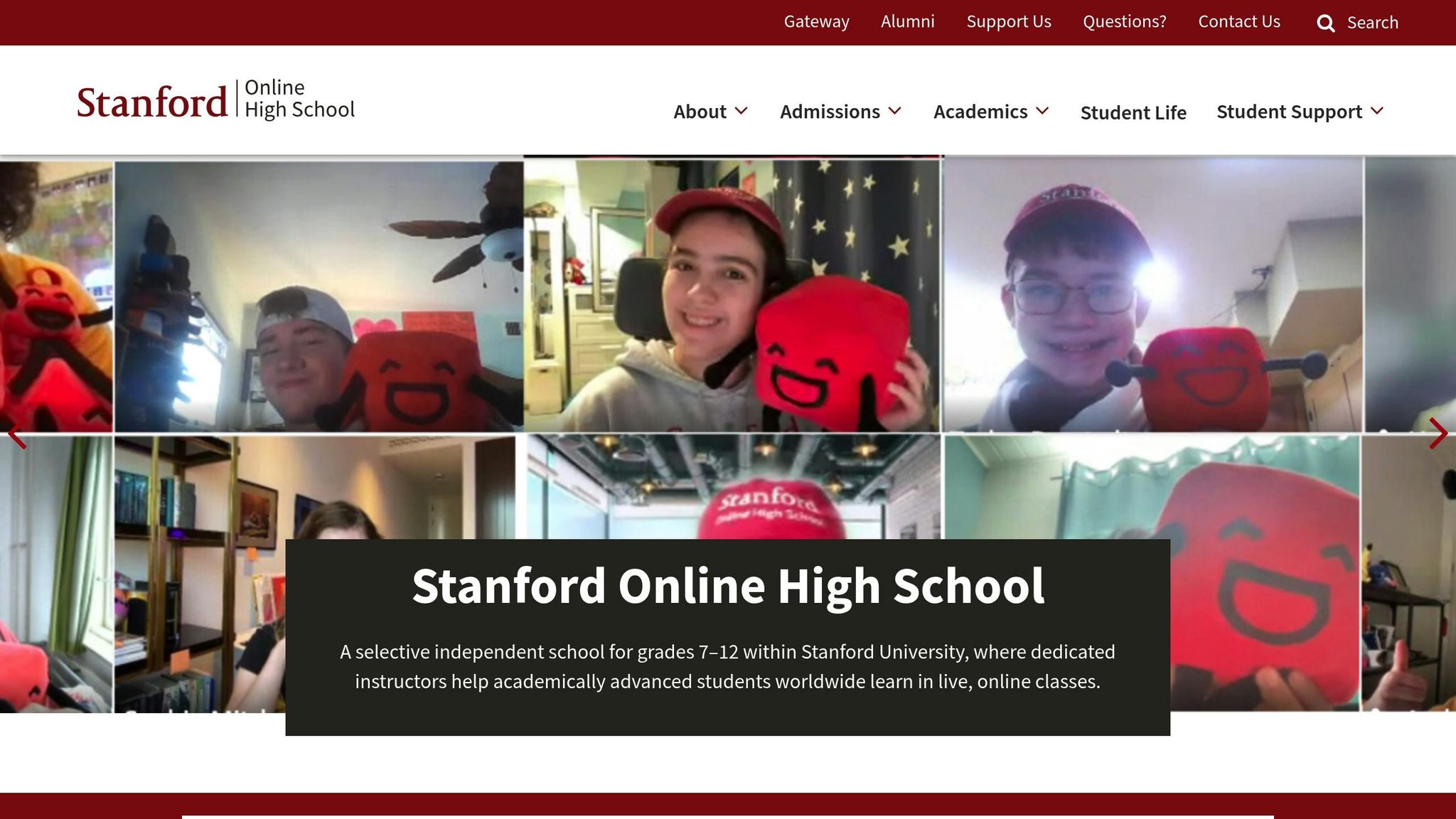
Stanford Online High School offers a challenging curriculum designed for gifted students, with 65% of its instructors holding Ph.D. degrees [24]. The program combines foundational courses with advanced, university-level content in small, interactive classes - typically averaging just 12 students. This setup ensures personalized attention and a unique academic experience [25][26].
Program Structure and Curriculum
Program Component | Details |
|---|---|
Class Format | Live online seminars |
Average Class Size | 12 students |
Course Schedule | College-style |
Instructor Qualifications | 65% Ph.D. holders |
Geographic Reach | 48 U.S. states, 45 countries |
Academic Approach
Stanford OHS is focusing on a curriculum that emphasizes mathematical theory, practical applications, critical thinking, independent research, and problem-solving skills [27].
"The Division emphasizes vertical integration of courses from foundational secondary mathematics courses through advanced university-level offerings, and is committed to working to ensure that students adapt a sequence of study that includes both depth and breadth in mathematics." - Stanford Online High School [27]
Investment and Accessibility
For the 2025–26 academic year, the tuition options are as follows:
Enrollment Type | Annual Tuition |
|---|---|
Full-time (4+ courses) | $30,970 |
Part-time (2-3 courses) | $18,580 |
Single course | $6,195 |
Stanford OHS provides over $2.5 million in financial aid annually, with 13% of students receiving assistance that covers 75% or more of their tuition costs [28].
Unique Features
Stanford OHS employs innovative teaching methods to support accelerated learning in mathematics. The program uses a flipped classroom model [29], allowing students to progress at their own pace, engage in dynamic discussions, and enroll in courses through placement testing.
This mathematics program equips students with a strong foundation in both theory and application, preparing them for success in advanced academic settings [30].
6. Davidson Academy Math Courses
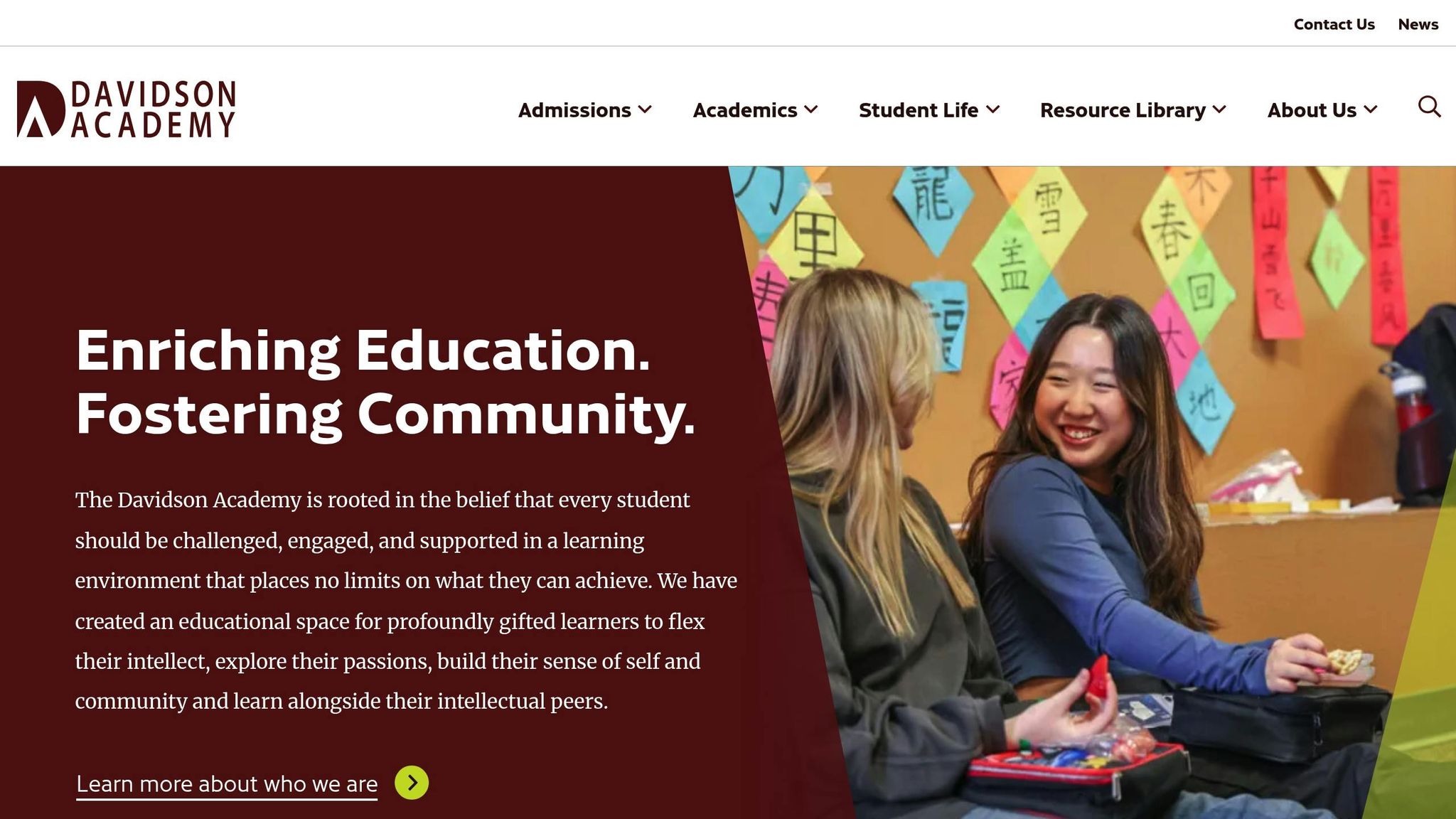
Davidson Academy stands out by grouping students based on their abilities rather than their age, creating a learning environment tailored to individual strengths and potential [31].
Program Structure
Component | Details |
|---|---|
Average Class Size | 10 students |
Required Math Credits | Included within the 28 total graduation credits |
Course Levels | Pre-Algebra through Calculus |
Teaching Format | Discussion-based classes |
Special Features | Independent study options, university partnerships |
This approach allows students to follow a personalized and accelerated curriculum, progressing from basic concepts to more advanced mathematical theories.
Curriculum and Instruction
The Academy’s math curriculum is designed to foster critical thinking and problem-solving. With an average class size of just ten students, teachers can focus on individualized instruction and engage students in discussion-based learning. The coursework spans a range of levels, including Pre-Algebra, Geometry, Advanced Algebra, Calculus, Introduction to Proofs, and Statistics [32].
Advanced Learning Features
Davidson Academy incorporates several unique elements to support gifted learners.
Feature | Implementation |
|---|---|
Problem-Solving Approach | Encourages exploration of various solution methods and group discussions |
Learning Resources | Includes primary source analysis and hands-on projects |
Student Support | Peer Advising Liaisons (PALs) program provides mentorship |
Extended Learning | Offers independent study and internship opportunities |
College Preparation | Advanced coursework and mentorship programs prepare students for higher education |
The Academy’s program challenges profoundly gifted students with a high school-level curriculum starting in middle school. This structure lets students progress at their own pace while maintaining a rigorous academic standard [33].
The Academy emphasizes critical thinking and adapts its teaching methods in order to meet the needs of each learner, ensuring a supportive and enriching educational experience [32].
Program Comparison
Choosing the right math program can make a significant difference in fostering gifted mathematical talent. Below, we’ve broken down some of the top programs by age group, content focus, and teaching style to help educators and parents make informed decisions.
Early Learning and Elementary School Programs (Ages 2-8)
Program | Age Range | Key Features | Annual Cost |
|---|---|---|---|
Funexpected Math | 3-7 | Digital tutor, 10,000+ tasks, 675 lessons, adaptive learning | $64.99 |
Beast Academy | K-2 grade | Comic-based learning, interactive platform | $99.99 |
Elementary & Middle School Programs
Program | Grade Level | Core Components | Annual Cost |
|---|---|---|---|
Beast Academy | 3-5 | Problem-solving focus, engaging storylines | $99.99 |
AoPS | 5-7 | Olympic-level instruction, advanced concepts | ~$290/course |
High School and Advanced Programs
Program | Grade Level | Distinguished Features | Annual Cost |
|---|---|---|---|
AoPS | 8-12 | Taught by former math Olympians, honors math pathway | ~$400/course |
IMACS Math Logic | 6-12 | 40-week comprehensive program | $985 |
Stanford OHS | 7-12 | College-level online classes | $6,195+/course |
Davidson Academy | 6-12 | Ability-based grouping, small classes (10 students) | $2,750/course* |
* Davidson Academy offers a $500 discount for Davidson Young Scholars and free tuition for Nevada residents [34].
Key Insights on Program Features
Each program stands out for its unique approach to teaching math. AoPS courses emphasize rigorous problem-solving, often led by former Olympians. Beast Academy captivates younger students with comic-style lessons and interactive activities. Davidson Academy focuses on small, ability-based classes to ensure personalized learning paths.
Teaching Methodologies and Their Impact
These programs use strategies designed to nurture critical thinking and problem-solving skills in gifted learners.
Teaching Approach | Programs Using | Benefits for Gifted Learners |
|---|---|---|
Interactive Digital | Funexpected Math, Beast Academy | Visual engagement and immediate feedback |
Problem-Based | AoPS, IMACS | Encourages critical thinking and problem-solving |
Discussion-Based | Davidson Academy | Promotes peer collaboration and deeper understanding |
Adaptive Learning | Funexpected Math | Tailored progression based on individual needs |
The programs offer a wide range of options, from free resources to premium courses, ensuring there is something for every gifted learner. Through interactive platforms, rigorous problem-solving, or personalized instruction, each program brings a distinctive approach to nurturing mathematical talent.
Recommendations
Early Elementary (Ages 3–7)
For young learners, Funexpected Math is a great choice. Its curriculum spans over 50 topics, offering a wide range of activities that keep kids engaged while challenging their growing skills. The platform’s variety ensures continuous interest and learning.
Elementary School (Ages 8–11)
Beast Academy stands out for this age group with its comic-style approach. The visuals and storytelling make abstract math concepts easier to grasp, and the interactive format encourages critical thinking and problem-solving.
Middle School (Ages 12–14)
Gifted middle schoolers can benefit from combining AoPS, which dives deep into advanced concepts, with IMACS Math Logic, which sharpens reasoning skills. This pairing is especially effective for students who excel in rapid problem-solving and enjoy exploring the “why” behind mathematical ideas.
High School (Ages 14–18)
For older students, Davidson Academy offers a rigorous, customized curriculum. With small class sizes and ability-based grouping, it provides personalized instruction that adapts to each student’s strengths and goals.
Key Selection Criteria
When picking a program, match the student’s traits with these features [35]:
Student Strengths | Ideal Program Features |
|---|---|
Quick Pattern Recognition | Fast-paced programs with challenging, complex problems |
Abstract Thinking | Courses focused on theory, proofs, and deep concepts |
Creative Problem-Solving | Activities with open-ended questions and multiple solutions |
Advanced Understanding | Options for skipping grades or compacting the curriculum |
Special Considerations
To ensure the best outcomes, use these strategies:
Use pretesting to skip topics the student has already mastered.
Group students by their math proficiency instead of their age.
Explore cross-grade acceleration if the student is ready for more advanced material.
Encourage technology-based, open-ended problem-solving activities.
These recommendations aim to align each student’s unique abilities with programs that nurture their mathematical potential.
FAQs
What should parents look for in a math program for their gifted child?
When selecting a math program for a gifted child, it’s essential to factor in their current abilities, enthusiasm for particular math topics, and willingness to tackle more advanced material. Opt for programs that emphasize in-depth exploration, open-ended problem-solving, and opportunities to approach concepts in imaginative ways.
It is also important to find a program that matches your child’s learning style and promotes analytical thinking and creativity. The right program should keep up with their pace, offering engaging and challenging content suitable for their age and intellectual level.
What’s the best way to combine different math programs to support a gifted child’s learning?
To help a gifted child excel in math, blend structured programs with interactive, tailored tools. For example, using Funexpected Math alongside advanced curricula or enrichment activities can create a balanced learning experience. This combination supports both conceptual understanding and practical problem-solving skills.
By keeping the material engaging and appropriately challenging, this method encourages growth while nurturing a genuine enjoyment of math.
Related Blog Posts
Transform Math Learning for Kids
Explore Funexpected's interactive math program designed for children aged 3-7. Build math fluency, logic, and problem-solving skills through engaging, hands-on activities and a personalized digital tutor.