How to Teach Kids Logical Reasoning: Core Principles
Early Childhood Education
Jul 24, 2026
Practical tips to build kids' logical reasoning through play, open-ended questions, experiments and age-appropriate activities based on Piaget's stages (ages 2–11).

Logical reasoning helps kids process information, solve problems, and develop skills such as analyzing and making inferences. It begins with hands-on activities and slowly shifts toward more abstract thinking. So, how can you help kids learn logical reasoning?
Hands-on learning: Activities such as stacking blocks or sorting toys help children understand cause and effect and practice problem-solving.
Asking open-ended questions: Encourage children to think critically by using prompts like, “What do you think will happen if...?”
Play-based learning: Puzzles, pretend play, and simple experiments, like testing what floats, make learning reasoning skills enjoyable.
Piaget’s stages of development: Adjust activities to fit your child’s age and stage of growth.
Ages 2–7: Focus on activities like symbolic play and simple sorting tasks.
Ages 7–11: Try introducing logic puzzles, strategy games, and hands-on experiments.
Daily interactions, like discussing why steps in cooking matter or asking “What do you think happens next?” during storytime, help children develop reasoning skills. Logical thinking supports early cognitive growth and helps kids succeed in subjects like math and science.Mind Boosting Logic Activities for Preschool & Toddlers
Basic Principles for Teaching Logical Reasoning
Helping children develop logical reasoning means mixing everyday exploration with structured learning. This approach is built on three main ideas: hands-on learning, asking strategic questions, and slowly moving from concrete experiences to abstract thinking.
Hands-On Learning and Curiosity
Kids naturally learn by doing. For instance, when a toddler stacks blocks, they’re not just playing - they’re learning about balance, gravity, and spatial relationships. These hands-on experiences teach cause-and-effect and problem-solving skills [1][2][3]. Children are like "little scientists", constantly testing ideas and drawing conclusions from their observations [3][4][5].
"I find myself opposed to the view of knowledge as a passive copy of reality. I believe that knowing an object means acting upon it, constructing systems of transformations that can be carried out on or with this object. Knowing reality means constructing systems of transformations that correspond, more or less adequately, to reality." - Jean Piaget [5]
To encourage curiosity, give children activities that use their senses. Let them pour water between containers, sort toys by color or size, or build towers that might fall down. These simple experiences help lay the foundation for stronger reasoning skills.
Physical exploration is only the first step. Helping children think about their actions and ideas can deepen their understanding of logic.
Using Questions to Guide Thinking
Asking thoughtful questions can spark a child’s reasoning abilities. Instead of yes-or-no questions, use open-ended ones like, "What do you think will happen if...?" or "Why do you think that happened?"
These kinds of questions encourage children to explain their thoughts and consider different options. For example, when reading a story, pause and ask, "What do you think the character should do next?" and give them time to answer. Asking, "What other solutions could we try?" shows them that problems can have more than one answer, promoting flexible thinking [6].
Gradually moving from hands-on activities to talking about ideas helps build a strong base for abstract thinking.
Moving from Physical Objects to Abstract Ideas
Logical reasoning grows in stages, beginning with hands-on experiences and later moving to abstract ideas. Young children need to see and touch real objects to understand new concepts [7]. For instance, a four-year-old will understand "more" and "less" better by comparing piles of berries than by just talking about the ideas.
As they grow, kids begin to use symbolic thought - like pretending a cardboard box is a spaceship [7]. This ability to use one thing to represent another is a critical bridge to abstract reasoning.
By the time they reach the concrete operational stage (ages 7–11), children can apply logical rules to real-world situations. They start to understand ideas like reversibility (e.g., if 3 + 2 = 5, then 5 - 2 = 3) [8][2][3]. These skills, rooted in early hands-on learning, are necessary for tackling more complicated concepts later on.
Piaget's Cognitive Development Stages and Logical Reasoning
Jean Piaget's theory, considered a classic in developmental psychology, outlines cognitive development as a journey through four key stages: sensorimotor (0–2 years), pre-operational (2–7 years), concrete-operational (7–11 years), and formal-operational (12 years and up).
Each stage represents a different way of thinking, with children learning through two main processes: assimilation, where they fit new information into their existing knowledge, and accommodation, where they adjust their understanding to incorporate new information. Logical reasoning evolves over time, beginning with an understanding of cause-and-effect in infancy and advancing to the ability to think abstractly during adolescence.
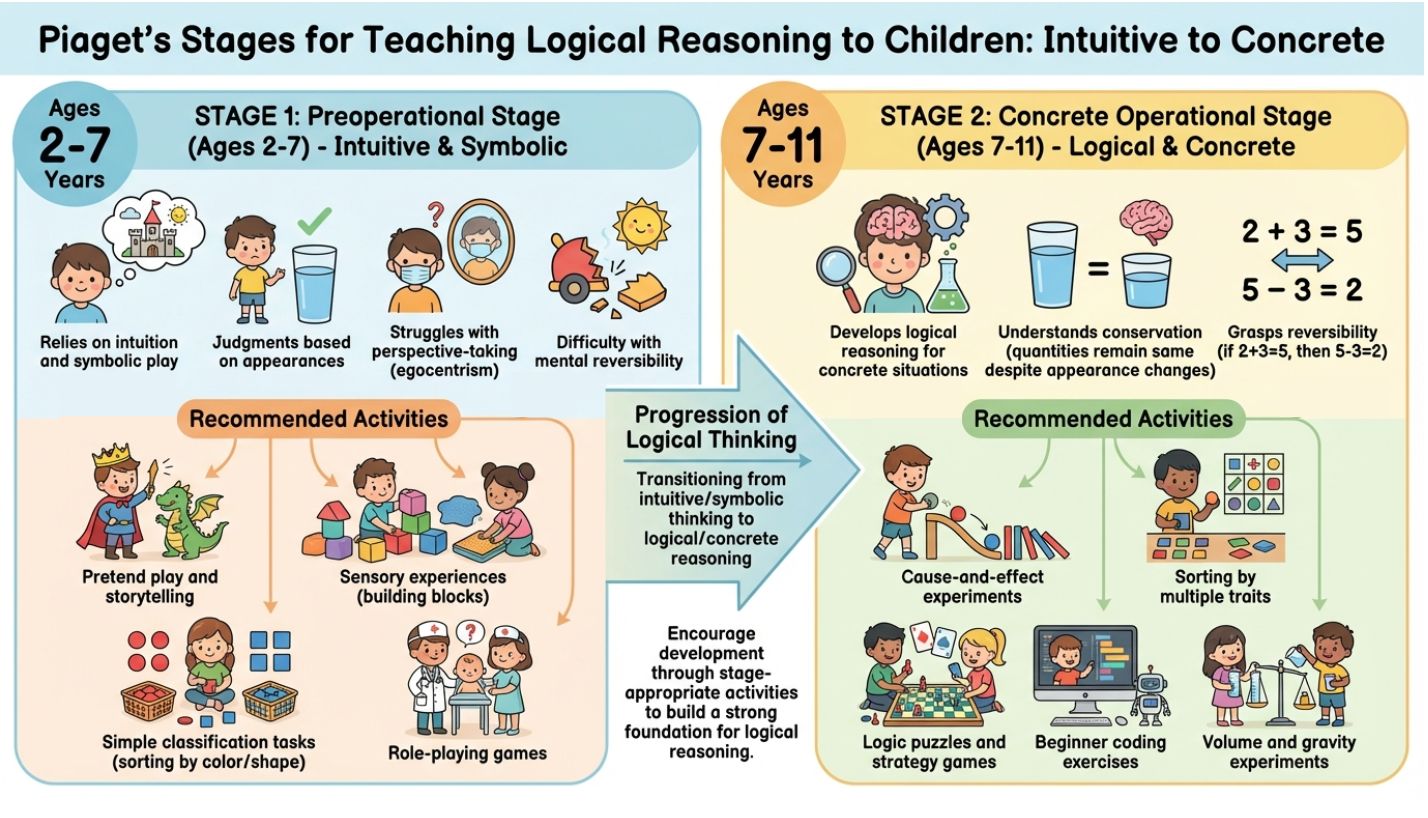
Piaget's Cognitive Development Stages for Teaching Logical Reasoning (Ages 2-11)
Piaget's stages of cognitive development give parents and teachers a helpful guide for teaching logical reasoning in ways that match a child’s mental readiness.
Each stage affects how children think and learn, so what works for a seven-year-old may not work for a three-year-old. Introducing ideas too soon can cause frustration for both the child and the adult.
"Piaget viewed learning as an active process where children construct knowledge through interaction with their environment. His stages guide educators to align teaching with cognitive readiness, ensuring lessons match developmental capabilities." [9]
Children build reasoning skills in a certain order. Respecting this natural process helps them learn new ideas more easily. When teaching matches a child's current stage, they can add new information to what they already know or adjust their thinking to fit new ideas [3]. Here’s a closer look at these stages.
Preoperational Stage (Ages 2–7)
During this stage, children rely heavily on intuition and symbolic play rather than logical reasoning [9]. Their judgments are often based on appearances rather than rules of logic. For instance, a four-year-old might insist that a flattened piece of clay is "more" than a compact ball of the same size simply because it looks bigger [5]. They also struggle with seeing things from another person’s perspective (a trait known as egocentrism) and have difficulty mentally reversing actions.
To help children grow, encourage activities that build symbolic thinking, like pretend play, storytelling, and building with blocks. You can also use role-playing games to help them see things from another point of view. Simple sorting tasks, such as grouping toys by color or shape, prepare them for more advanced reasoning later on.
Concrete Operational Stage (Ages 7–11)
By around age 7, children begin to develop logical reasoning for real-life, concrete situations [9]. They understand concepts like conservation - the idea that quantities remain the same even when their appearance changes. For example, they realize that pouring water into a differently shaped container doesn’t change its volume [8]. They also grasp reversibility.
To support these skills, offer hands-on activities and simple challenges. Try cause-and-effect experiments, such as dropping objects to see how gravity works or comparing volumes with different containers. Sorting items by more than one trait or arranging objects by size also helps build reasoning skills.

Sorting by two traits task in the Funexpected Math app
Adding logic puzzles, strategy games, or simple coding activities can help children think more systematically and get ready for abstract ideas as they grow. These activities strengthen logical reasoning and prepare them for more complex thinking later on.

Algorithms / Early Coding task in the Funexpected Math app
Creating simple plans is important for developing algorithmic thinking. Here, too, asking the right questions can help – for example, “What can we do ahead of time so we don’t miss the bus to Grandma’s?”
Daily Conversations That Build Logic Skills
Everyday situations are great opportunities to build logical reasoning. Rather than just giving answers, help your child find solutions on their own. For example, if your child asks, "Why does our dog Sparky stay warm even when it's cold out?" you might say, "That's a great question. How do you think you and Sparky are different?"[10] This approach encourages curiosity and active thinking. These daily conversations help prepare children for more complex questions and playful learning.
Asking Questions That Encourage Deeper Thinking
Open-ended questions are a powerful way to help children explain their reasoning, rather than just recall facts.
A good question is one that encourages a child to form hypotheses. It doesn’t have to be something complicated or disconnected from everyday life. For example, you could ask, “Why do you think I came home early?” – and just like that, your child’s brain starts reasoning.
Sanjay Raghav from the Center for Teaching and Learning Mathematics, USA, explains, "Logic is based on observation. The more you ask logical thinking questions, the more chances you give your child to build, train, and solidify cognitive pathways."[6]
Give your child enough time to think and reply thoughtfully. During story time or while watching a video together, pause and ask questions that make them consider different possibilities and form hypotheses.[6] Even if they arrive at the wrong conclusion, understanding their thought process is an important step in cognitive growth.[3] Listen with genuine interest and respect for their ideas - this builds their confidence and encourages them to share more.[10]
Teaching Logic Through Everyday Activities
Daily tasks are full of opportunities to teach logical sequences and cause-and-effect relationships. Activities like cooking, cleaning, and shopping naturally involve these concepts. For example, when sorting laundry, ask your child to group "all the blue items" or sort clothes by owner. While preparing meals, explain why some steps come first: "We need to wash the vegetables before cutting them. Why do you think that is?"
Everyday objects can be used as teaching tools. Show your child picture cards, such as a small house and a giraffe, and ask, "This is a small house. Can the big giraffe fit inside? Why not?"[6] These simple questions help children process information, make connections, and draw conclusions. Pretend play is also a great chance to ask about their stories, like "What is the doggy doing?" or "Is the doggy a doctor?" to encourage reasoning skills.[11]
Thinking Out Loud as a Teaching Method
Children learn by watching how adults solve problems. When you talk through your thought process, you're giving them a live demonstration of logical reasoning.[7] This strategy, often called scaffolding, helps children understand problem-solving steps they may not figure out on their own yet. For example, if your child says, "I goed there!" you can gently correct them by saying, "You went there?" This helps improve their language and reasoning without making them feel bad.
Encourage creative thinking by asking, "What other solutions could we try?" or "Can we think of different ways to solve this?"[6] These conversations teach logic and build confidence in problem-solving.
Learning Through Play and Simple Experiments
Play is a natural way for children to build logical thinking. Activities like building with blocks, solving puzzles, or playing with water let them test ideas, make guesses, and find patterns. Here are some hands-on activities to help grow these skills.

A logic puzzle in the Funexpected Math app
Puzzles, Patterns, and Construction Toys
Toys that challenge kids to solve problems encourage systematic thinking and spatial awareness. Start with easy patterns, like alternating block colors, and gradually increase the difficulty by adding more elements or introducing new features, such as size or shape. Ask open-ended questions like, "What do you think comes next?" or "Can you explain this pattern?"

A pattern game within the Funexpected Math app
These questions help children build logical reasoning and explain their thinking. Combine these activities with simple experiments to show clear cause-and-effect relationships.
Basic Cause-and-Effect Experiments
Playing with water is a great way to explore cause and effect. For example, fill a water table with ice cubes and let children sprinkle salt on them to see how it makes the ice melt faster. This introduces them to changes in states of matter.
Another fun experiment is poking holes in a 2-liter soda bottle. As water sprays out at different angles, children can see how pressure and gravity work. You can also use fruits like oranges, lemons, and apples to guess and test which ones will float or sink. These activities give quick, hands-on results that make learning engaging [12].
Sorting and Grouping Activities
Sorting objects by color, size, or use helps children learn to categorize, which is important for logical thinking. For younger kids, start with one trait, such as grouping all the red toys or separating big items from small ones.
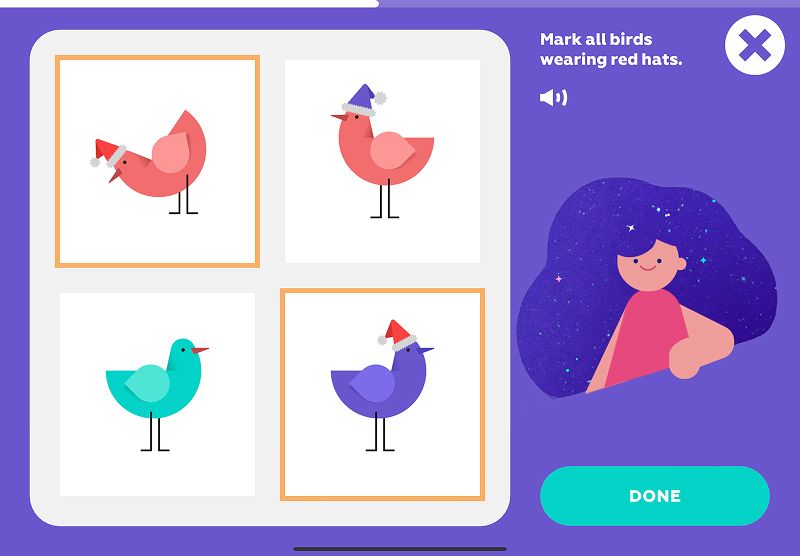
Sorting by 1 trait task in the Funexpected Math app
As children get better at sorting, combine traits, like finding objects that are both blue and round. These simple activities help prepare them for more complex logical ideas later.
Age-Appropriate Methods for Different Developmental Stages
Children grow and learn at their own pace, so what captivates a 3-year-old might not resonate with a 7-year-old. Choosing activities that fit their stage helps build confidence and steadily improves their thinking skills.
Ages 2–3: Toddlers and Young Preschoolers
At this age, children are little explorers who learn by copying and doing things with their hands. They are just beginning to understand cause and effect, so keep activities simple and fun. Sorting games are a good start—ask your toddler to group red blocks or separate big toys from small ones. Pretend play with simple props also helps them connect imagination with real objects [11].
While playing, talk about what is happening to show cause and effect. For example, say, "When you push the ball, it rolls away," or "The tower fell because the bottom block moved." These simple explanations help children connect actions to results in a way they understand.
Ages 3–5: Preschoolers
Preschoolers thrive on hands-on experiences and can handle slightly harder tasks. Teach them to recognize patterns by having them continue sequences with blocks or beads. Start with alternating colors, then add changes like size or shape.

Beads pattern task in the Funexpected Math app
Treasure hunts are another fantastic activity; use simple maps or colorful markers to guide them toward a small prize, encouraging problem-solving and direction-following along the way [6][11].
When reading with your child, pause to ask questions like, "What do you think will happen next?" or "Why did the character do that?" These questions encourage curiosity and logical thinking. You can also give them a few familiar objects and guide them through step-by-step instructions to teach logical order.
Ages 5–7: Early Elementary Children
At this stage, children are ready for more challenging activities and start to think about their own thinking. Try simple Sudoku puzzles, Tangram, or Lego building projects that require planning are excellent choices[13].

Tangram game within the Funexpected Math app
Open-ended questions like, "What other solutions might work?" help children think critically and independently.
Rather than giving answers right away, encourage children to test their ideas and improve their approach. They will also enjoy more advanced sorting tasks that build on earlier games, helping them handle more complex categories and logical connections. These activities help develop reasoning skills they will use in the years ahead.
Conclusion: Building Strong Logical Reasoning Skills for the Future
Teaching logical reasoning gives children daily opportunities to think critically, explore their world, and connect ideas in meaningful ways. By matching activities to their stage of development and including logical thinking in everyday life, you help them build skills that last beyond the classroom.
Also, logical reasoning lets children solve problems methodically rather than reacting emotionally. That habit improves problem-solving and decision-making, helping them adapt to new environments and situations.
Children with strong logical reasoning skills are better at managing their emotions. They are less likely to react impulsively and can better understand their feelings. Logical thinking also builds resilience, helping children handle setbacks and disappointments more effectively.
However, it isn't something we're born with - it’s a skill that grows stronger with persistent practice and guided experiences [14]. Studies reveal that 90% of a child’s brain development happens before the age of 5, making these early years a crucial time for shaping reasoning abilities [15]. These small, everyday efforts lay the groundwork for academic achievement and future success.
Simple actions, such as asking, "Why do you think that happened?" at breakfast or playing a sorting game with household items, can have a big impact. These moments encourage curiosity and support cognitive growth. In fact, children with strong logical reasoning skills are 43% more likely to do well in STEM subjects and creative areas like music and art [14].
To complement these activities, consider using tools like Funexpected Math, which offers over 10,000 tasks and 675 lessons designed for children ages 3–7.
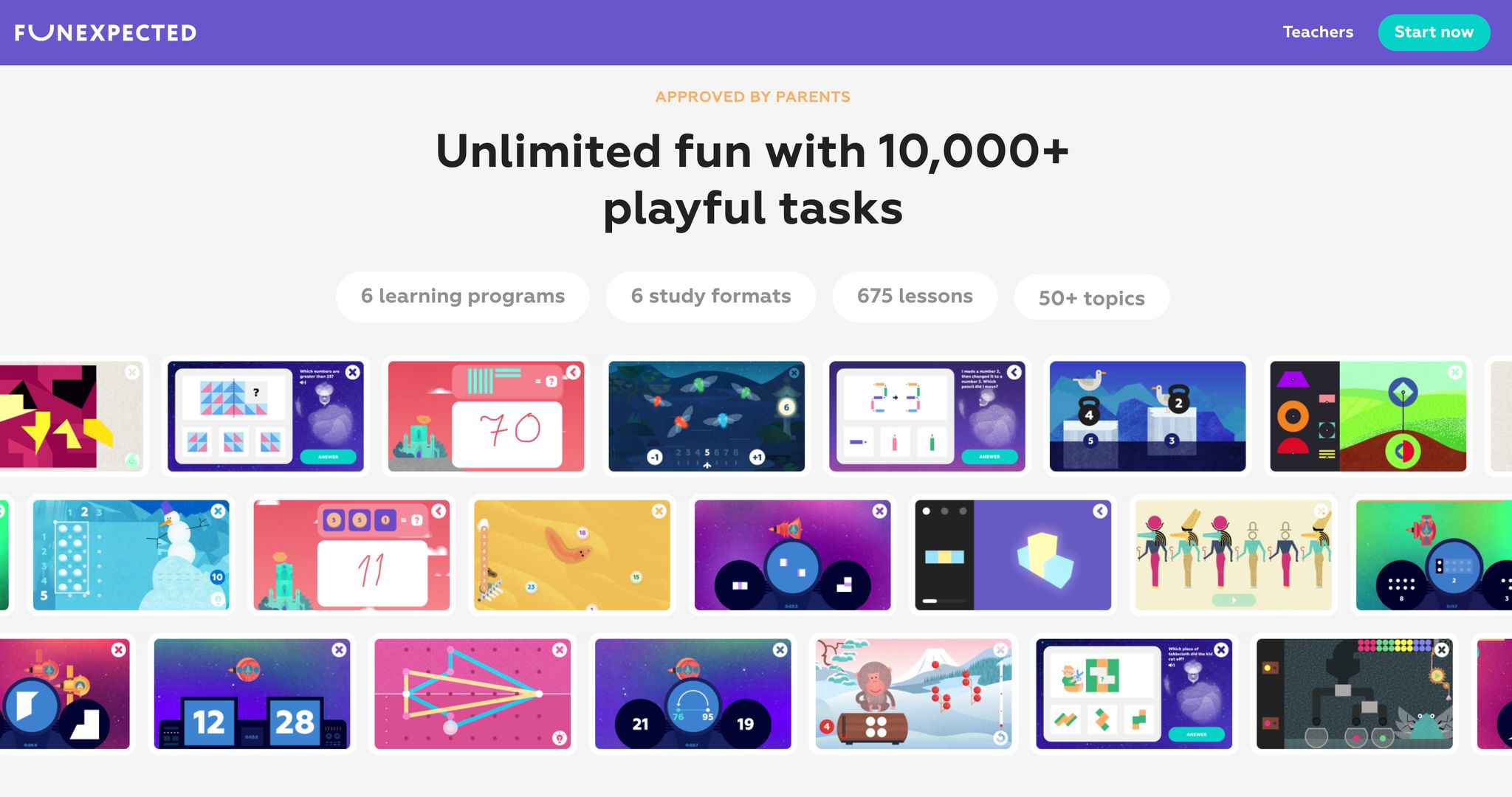
The app adapts to each child’s developmental stage, strengthening the logical reasoning skills you’re already nurturing through everyday interactions and play.
FAQs
How can I tailor logical reasoning activities to different age groups?
Adapting logical reasoning activities to a child’s age implies selecting tasks that fit their stage of development. This includes changing how complex the activity is, the words you use, and how much you interact, so it matches their abilities and interests.
For toddlers (about 1–3 years old), keep activities simple and focused on the senses. Everyday routines can be chances to explore. Try cause-and-effect experiments, like dropping objects to see which falls faster or mixing water with sand to feel different textures. Sorting toys by color or size is also helpful. Even asking, “What happens if we roll this ball down the ramp?” can trigger curiosity and basic reasoning.
Preschoolers (about 3–5 years old) are starting to use symbols and language but still think in concrete ways. Encourage them to group objects by shape or use, find patterns, and answer simple “why” questions. Activities like planting seeds to watch them grow or putting story events in order help them make logical connections and build reasoning skills.
For school-age children (about 6–11 years old), concentrate on more complex tasks that use several steps and real-life situations. They are ready for activities like sorting data, solving word problems, or doing experiments with different variables. Making tasks harder over time helps them think critically and face difficulties with confidence.
By matching activities to your child’s stage of development, you help logical reasoning grow naturally and keep them interested.
What are some fun play-based activities to help kids develop logical reasoning?
Play-based activities are a great way to help young children build logical reasoning through hands-on learning. For toddlers, simple sorting games – like organizing toys or blocks by color, shape, or size – help them see patterns and relationships. Building towers with blocks teaches cause and effect, as children guess if their tower will stand, test their ideas, and adjust based on what happens.
Preschoolers can explore logical thinking with simple experiments. Dropping objects into water to see if they sink or float, or using a magnet to find out what it attracts, helps them make guesses and test their ideas. Pattern games, like arranging beads in a sequence and asking, “What comes next?” also build reasoning skills.
Everyday playtime is full of learning opportunities. Asking open-ended “what-if” questions, such as, “What happens if we mix red and blue paint?” encourages children to think critically, make predictions, and explain their ideas. These activities are fun and effective ways to build logical reasoning skills early.
Related Blog Posts
Transform Math Learning for Kids
Explore Funexpected's interactive math program designed for children aged 3-7. Build math fluency, logic, and problem-solving skills through engaging, hands-on activities and a personalized digital tutor.