How to Build a Comprehensive, Consistent Math Curriculum for Ages 4-8: A Guide for Homeschool Parents
Early Childhood Education
Jul 4, 2026
Build a simple, standards-based K-2 math plan: one standards map, one curriculum spine, hands-on progression prioritizing number sense.

If we had to boil this down to one answer, it’s this: build the homeschool math plan around one standards map, one main curriculum spine, and a slow, skill-by-skill sequence that puts number sense first, but also includes geometry and logic.
Early math matters more than many parents think. Number sense in kindergarten and 1st grade strongly predicts later math success. So for ages 4–8, it’s better to keep the plan simple, steady, and tied to what schools expect by grade level - without trying to copy a classroom at home.
Here’s the short version of what you can do at home:
Pick one main reference:Common Core, state standards, or the local district scope and sequence
Use one main curriculum base: not five different programs at once
Cover the main domains: counting, addition and subtraction, place value, measurement, time, money, geometry, patterns, and problem solving
Teach in order: from hands-on work to drawings to written numbers
Keep lessons short: about 20–30 minutes for many young children, with more time for older kids if needed
Track mastery: don’t move on just because the calendar says so
Stay aligned with school goals: check district benchmarks once or twice a year
For gifted kids: move faster only after mastery, and go deeper with logic, patterns, and multi-step problems
Quick Comparison
Area | What to use as the base | What to watch for |
|---|---|---|
Standards | Common Core, state DOE, local district map | Don’t mix too many maps |
Main topics | Number sense, operations, place value, measurement, geometry, time, money, logic and patterns | Don’t let number work crowd out the rest |
Daily routine | Warm-up, mini-lesson, hands-on practice, short written work, review | Don’t overload with worksheets |
Pacing | Mastery first, grade level second | Don’t rush weak skills |
School alignment | Standards codes, checklist, district benchmarks | Check for gaps before re-entry |
Gifted learners | Same skill order, faster pace, deeper tasks | Don’t skip concrete learning |
In short: It makes sense to use school standards as the map, keep the material list small, teach the big early skills in a clear order, and change the pace based on the child - not the grade label.
Step 1: Choose your reference points, goals, and base materials
Use Common Core, state standards, and local school scope-and-sequence as your map
Start with one main standards source. Let that source guide every lesson and resource you use. Before you pick materials, look at your state Department of Education site and your local district curriculum maps for grade-level checklists by domain [1].
For ages 4–8, the main domains are Counting and Cardinality, Operations and Algebraic Thinking, Number and Operations in Base Ten, Measurement and Data, and Geometry [2]. You can compare other sources too, but it helps to build from one main reference so you don’t double up on goals or skip skills [3].
It also helps to tag each activity with its standard code, like 1.OA.C.6, so you can match lessons to exact skills and see whether you’re teaching the right topic at the right time [2].
Once you have that map in place, picking materials and lining up skills feels much less messy.
Set realistic goals, time limits, and mastery expectations
A good daily target is 20–30 minutes of focused math [3]. That time can include short direct practice plus hands-on math play.
What matters most is mastery, not speed. If a child is pushed to memorize procedures before they have solid number sense, gaps can show up later, especially in 3rd and 4th grade [4]. Here are the grade-level milestones to watch:
Grade | End-of-year target | Fluency |
|---|---|---|
Kindergarten | Count to 100; write numerals 0–20; compare quantities | Add and subtract within 5 [3] |
1st Grade | Place value (tens and ones); tell time to the half-hour | Add and subtract within 10 [2] |
2nd Grade | Add/subtract within 1,000; skip-count by 5s, 10s, 100s | Know all sums of two one-digit numbers from memory [2] |
Before you jump into lessons, spend a week just watching how your child uses math in daily life. Maybe they sort toys, count snacks, or notice when one piece is bigger than another. That gives you a clearer picture of their actual starting point, which may not match their calendar grade [3].
Build a small core toolkit to use as your base
Keep your toolkit small. Think of it like building around one main spine: a primary curriculum that sets the lesson order and keeps skills in sequence. Everything else should support that plan [4].
For hands-on materials, the basics are counters, ten-frames, base-ten blocks, pattern blocks, a ruler, an analog clock, and a set of U.S. coins - pennies, nickels, dimes, and quarters [4]. These let kids work with math in a concrete way before moving to worksheets or symbols. It also helps to keep a printed copy of your grade-level standards and a simple skill checklist you update as your child masters each topic [3].
You can round things out with a few math picture books and one interactive math app. Funexpected Math can work well as a digital add-on for ages 3–8, helping with early number sense, logic, spatial reasoning, and even algorithm concepts through interactive practice.
Learning math is cumulative – each topic or concept builds on the previous one and, in turn, provides the foundation for the topics that follow. So it’s very important to keep only the tools that follow the same skill sequence. Funexpected Math app fully complies with the school curriculum. Built by top educators, it accurately follows the skill mastering sequence.
With your standards and materials set, the next move is to map the skills in order.
Step 2: Cover the core math domains for ages 4–8
With your standards map and toolkit in place, this step is about turning that plan into lessons kids can actually learn from. Start with number sense, then add the other domains in a steady sequence.
Number sense, counting, operations, and place value
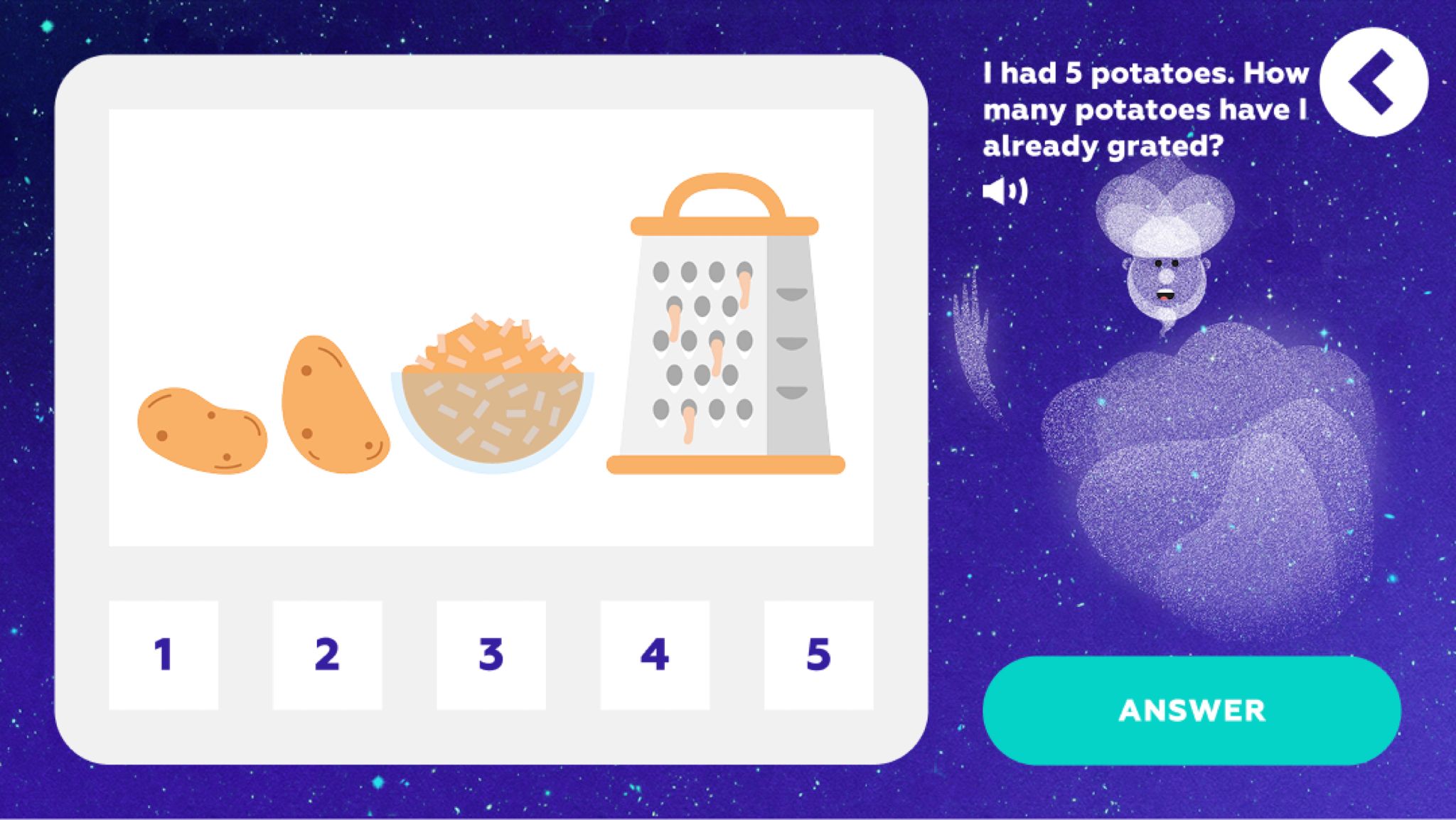
This is the heart of early math, so it should get the most time. Begin with subitizing - seeing a small amount right away without counting - and one-to-one correspondence, where a child matches each object to one count. Then build toward the idea that the last number counted tells you how many there are in all.
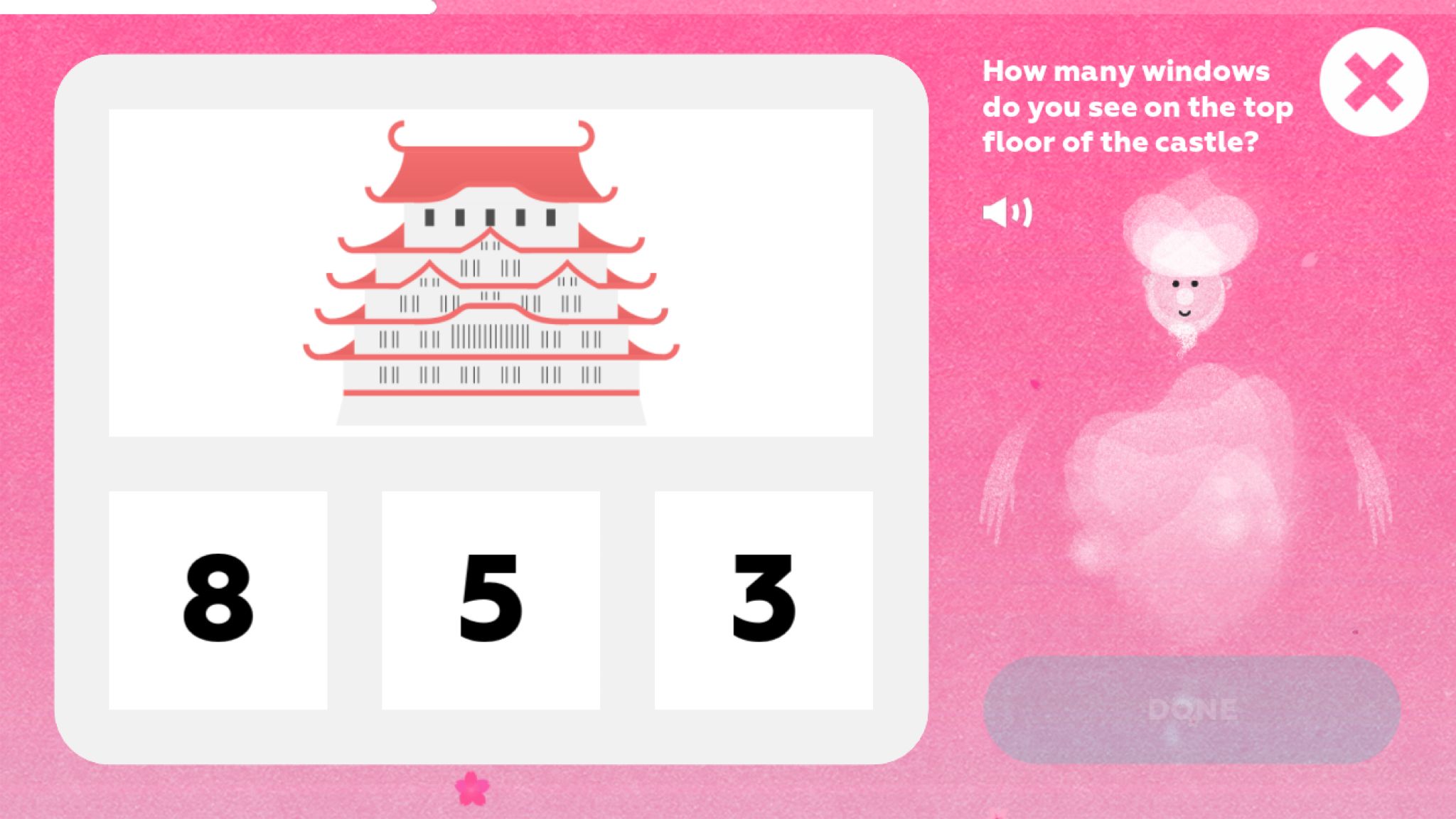
A task in the Funexpected Math app
After that, move into comparing groups, seeing how numbers split into parts and come back together.
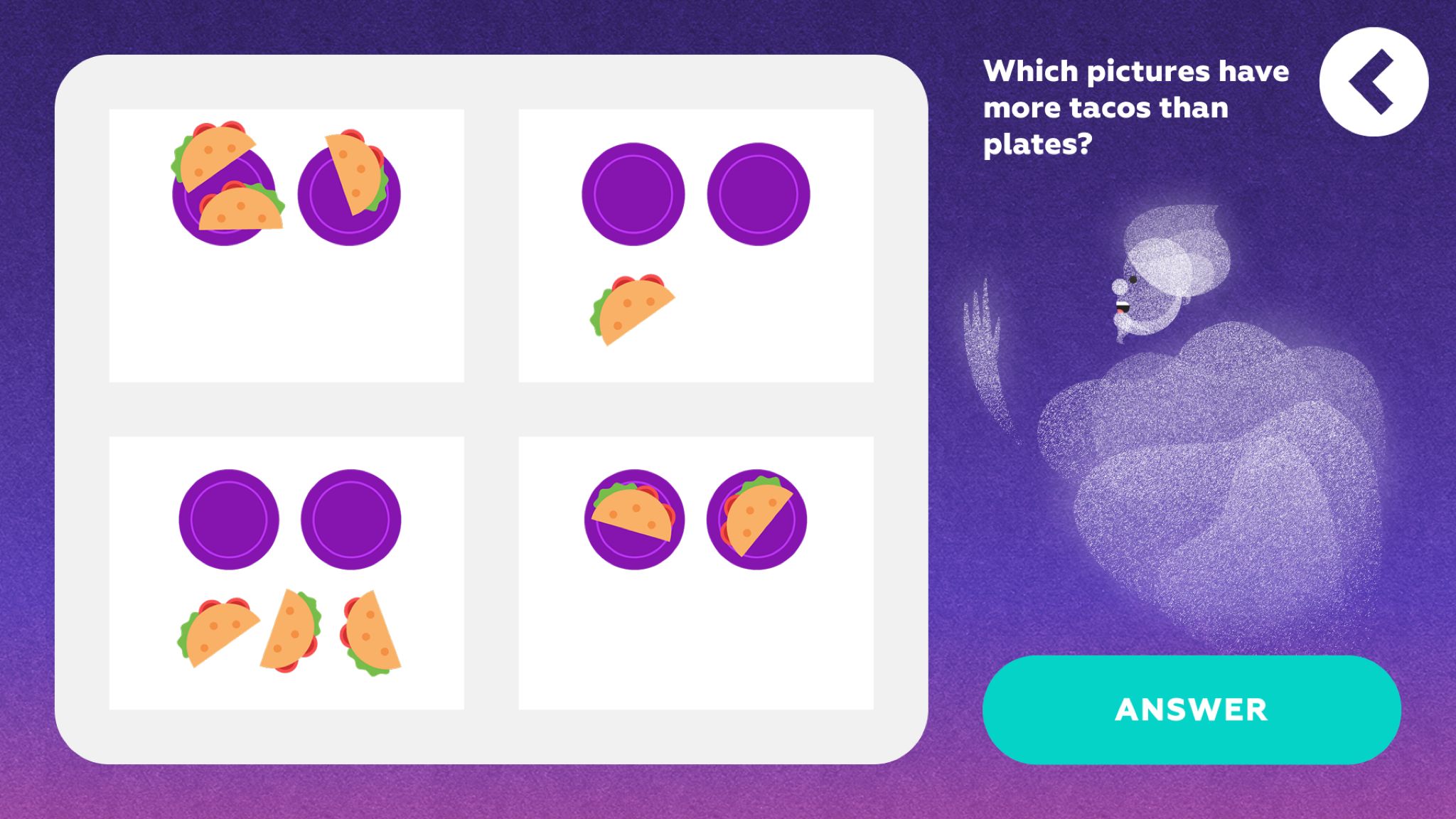
Comparing groups in the Funexpected Math app
Then, addition and subtraction. Start with objects, shift to drawings, and then move to numerals.
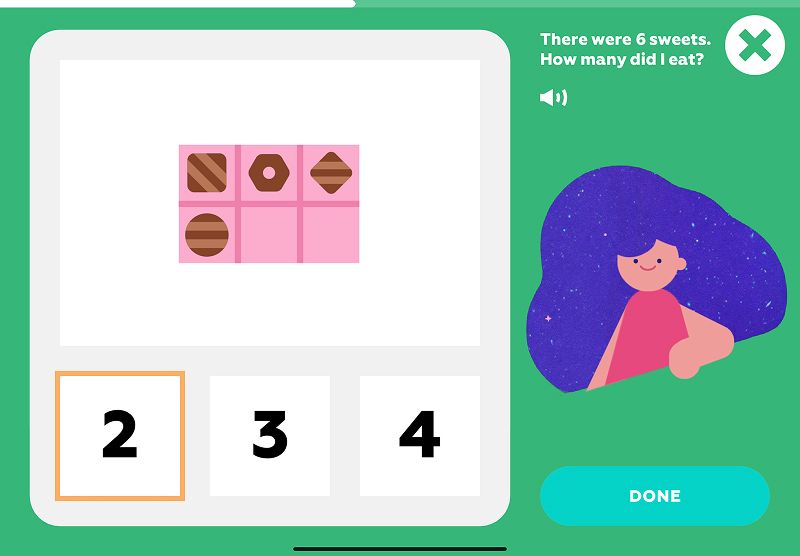
Exercising the basics of subtraction in the Funexpected Math app
Once children can count and compare with consistency, move into tens, ones, and simple composing and decomposing. A child shows place value knowledge when they can explain why 24 and 42 are different using tens and ones, not just by naming digits. The path here is pretty clear: counting and comparing first, tens-and-ones next, then work with numbers up to 1,000.

A task on tens and ones in the Funexpected Math app
Patterns, measurement, time, money, geometry, and spatial reasoning
These areas often get pushed aside when number lessons run long. That’s a mistake. They matter.
Patterns such as AB, ABC, and AAB repeating sequences help build early algebraic thinking and logical reasoning.

Learning AB-patterns within the Funexpected Math app
Sorting and classifying objects by color, size, or shape also set up later work in data analysis and reasoning [5].

Sorting by shape with Aika, the digital tutor within the Funexpected Math app
For measurement, begin with non-standard units like paper clips, blocks, and hand spans before moving to standard units such as inches and centimeters.
Let children compare objects by length, weight, and capacity, and tie the work to daily life. Cooking is a good fit here because kids can see the idea in action [5].
Time also builds in stages. In 1st grade, children move into telling time to the hour and half-hour. In 2nd grade, that shifts to telling time to the nearest 5 minutes [6]. Money enters in 2nd grade too: identifying pennies, nickels, dimes, and quarters, then counting combinations.
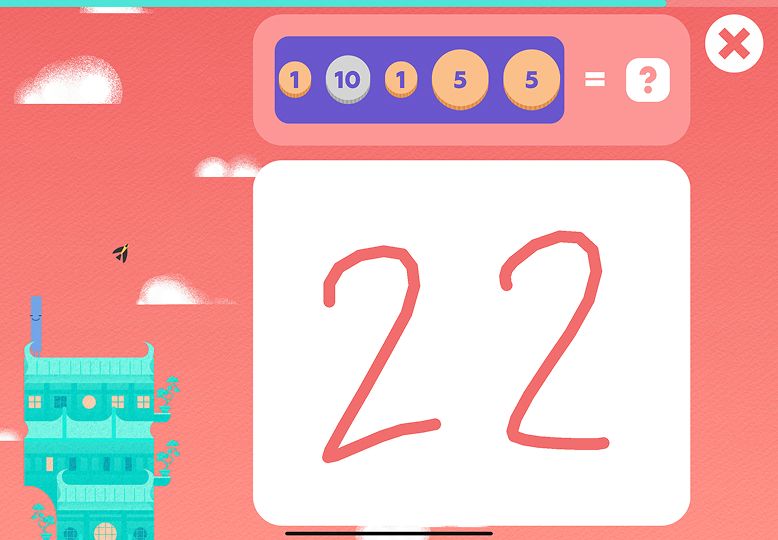
Counting the coins combination in the Funexpected Math app
Geometry should go past simple shape naming. Kids need to describe shapes by their attributes. They should identify and describe 2D and 3D shapes such as squares, triangles, rectangles, hexagons, cubes, cones, and cylinders using their properties. A child who can say "a rectangle has 4 sides and 4 corners" shows more understanding than a child who only knows it by sight. Pair that work with spatial words like above, below, next to, and between. Puzzles and building play help children see how shapes and positions connect in a hands-on way [7].

Connecting spatial reasoning with number sense in the Funexpected Math app
Problem solving, math language, and explaining thinking
A curriculum that teaches only steps and rules will leave holes. Children need chances to talk through math in their own words. Ask things like "How do you know?" or "What comes next in the pattern, and why?" on a regular basis [7]. That kind of talk builds reasoning in a way a worksheet can’t.
Math vocabulary matters too. Words like more, less, equal, total, difference, longer, and shorter should show up in everyday conversation, not only in sit-down lessons. Simple word problems - "You have 6 grapes and eat 2, how many are left?" - help children use math in situations that feel normal and familiar. Cooking, grocery trips, and daily schedules all give you easy ways to work this in.
Across all of these domains, the focus is the same: understanding first, fluency second. Once these pieces are in place, the next move is to lay them out in a simple year plan.
Step 3: Build a clear skill progression without gaps or overload
Create a yearly map and short units based on skill order
Once you know the core skills, the next step is to put them in an order that builds cleanly, without holes. Math stacks. Teach skills out of sequence, and you end up with the same struggles you're trying to prevent.
Start with the priority standards for your child's current level. Then line them up so each idea leads into the next one. Keep the sequence simple: prerequisite skills first, then the concepts that rely on them, then the more complex uses of those ideas. Each unit should last about 4–6 weeks. That's usually enough time for solid understanding without letting things stall.
Think of the map as a guide, not a rigid plan. If your child needs an extra week before the next idea makes sense, take it. Moving on too soon can leave weak spots that show up later. Once the sequence is in place, a steady weekly routine helps keep things moving.
Use a simple weekly routine with hands-on practice, short written work, and review
For ages 4–6, 20–40 minutes of focused math each day is enough. For ages 7–8, aim for 45–60 minutes [5].
A good daily routine can move through four simple parts:
A short warm-up, like skip-counting, a quick pattern, or an oral review question
A mini-lesson that introduces one concept with manipulatives
Hands-on practice with manipulatives or games
A brief written task with a few problems to connect the concrete work to symbols [3]

Learning the concept of symmetry with ‘Geoboard’ manipulative in the Funexpected Math app
Funexpected Math fits well in the practice part of the routine. It gives you game-based practice tied to the skill you're working on, without piling on extra seatwork. And don't save review for the end of a unit. Spiral review works best when you weave it into each week in small ways, using older concepts in new formats [7].
Check mastery and compare your plan to school expectations
Use daily work to see if a skill is firm enough to keep going. Count a skill as mastered only when your child can solve it without prompts or manipulatives. Keep updating your grade-level checklist as you watch your child work. That checklist should help you decide what comes next, not just show what you've already covered.
If your child can finish a worksheet problem but gets stuck when asked to show the same idea with blocks, the skill hasn't transferred yet. In most cases, that means the concept still isn't solid [6].
If school re-entry might happen, compare your checklist with your district's benchmark expectations once or twice a year. Use fluency as one checkpoint, not the whole picture.
From there, you can slow the pace for kids who need more time or move ahead when a child is ready.
Step 4: Adjust for different learning speeds, including gifted children, and keep the plan on track
Use your mastery checklist to decide when to slow down, go deeper, or move ahead.
What to do when a child needs more time
Go back to manipulatives, trim new material, and review one familiar skill each day until the idea feels steady. Hold off on harder topics until the base is firm. If math starts to feel stuck, switch the way you show the idea or change the routine before piling on more work.
What to do when a child is advanced or gifted
For advanced learners, keep the same sequence. Change the pace and the depth.
Gifted children often need deeper thinking, not extra worksheets. Put the focus on work that makes them think harder:
logic puzzles
spatial tasks
multi-step problems
pattern work
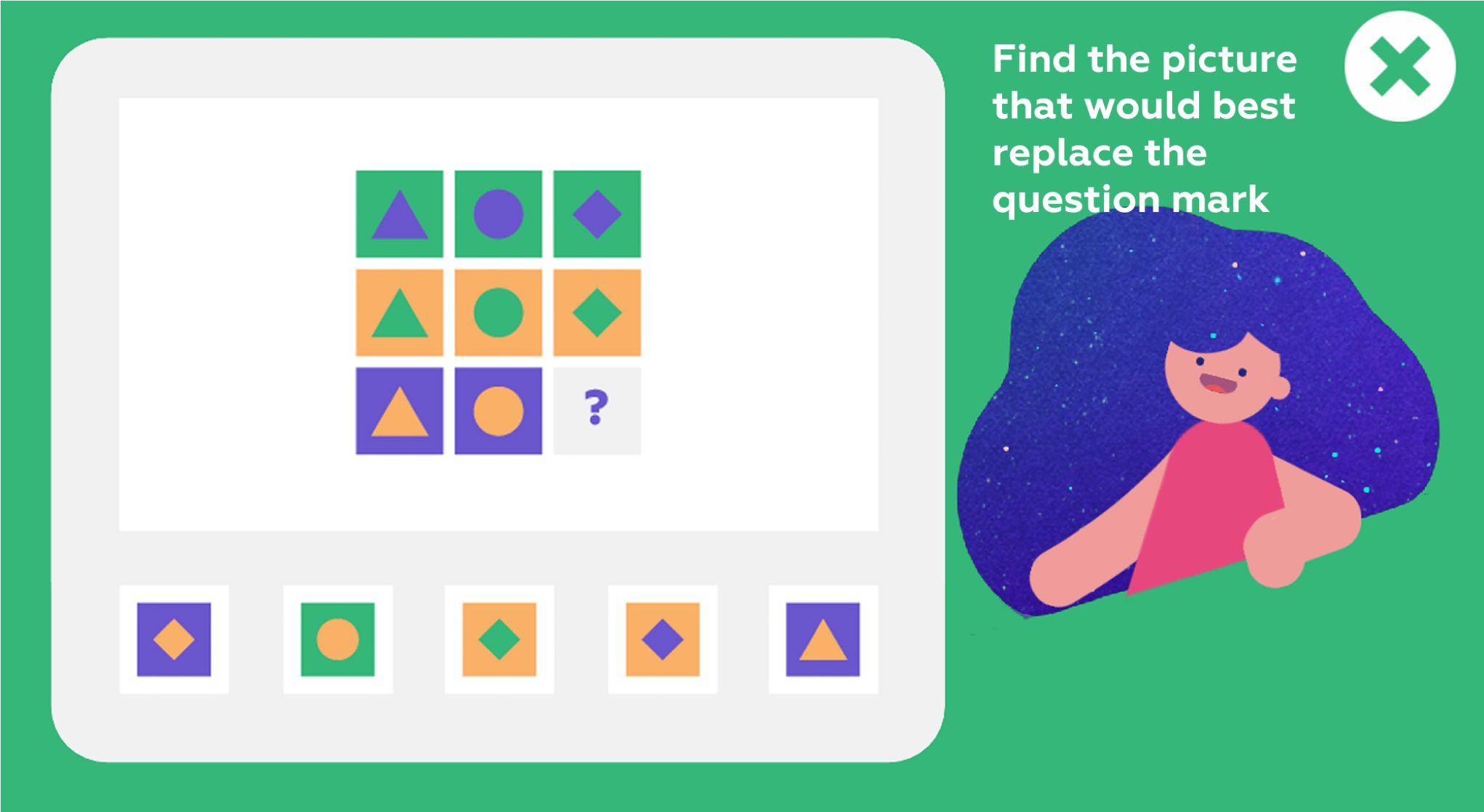
A task similar to a gifted test task in the Funexpected Math (Advanced learning program)
Deepen first. Accelerate only when mastery is clear.
"Your curriculum should adapt to your child, not the other way around. If your 7-year-old needs more time with single-digit addition, give it. If your 5-year-old is ready for skip counting patterns, don't hold back." [5]
Acceleration changes speed, but it doesn't remove the need for concrete understanding. Even advanced children should begin new concepts with physical manipulatives before moving to symbols. They may move through the hands-on stage faster, but they shouldn't skip it [5]. Funexpected Math can support richer practice in logic, patterns, and spatial reasoning for advanced learners.
Conclusion: Keep the curriculum simple, aligned, and responsive to your child
Across all learners, the same rule applies: make decisions based on clear signs of mastery, not age or how fast other kids are moving. Start with Common Core or your state's standards as your map, use that map to guide the sequence, and keep practice steady. That helps you stay aligned, avoid gaps, and respond to your child's actual progress.
FAQs
How do I know my child is ready to move to the next math skill?
Look for mastery, not rote recall. Your child is likely ready when they can explain the idea in their own words, solve problems without leaning on manipulatives, and use it in everyday situations.
A few other signs matter too. They can explain why a rule works, count with ease from different starting points, break apart numbers in more than one way, and use the same skill on new but similar tasks.
What should I do if my child is below grade level in math?
If your child is below grade level, focus on mastery instead of age-based expectations. The goal is simple: make sure they get it before moving on.
Pay attention to signs that the struggle may be sticking around. That can look like staying stuck on the same topic for more than three weeks, showing emotional distress every day, or failing to use a concept from one lesson in the next.
To fill in gaps, shift the approach a bit:
Try a different curriculum style
Use hands-on manipulatives to rebuild number sense
Ask your child to explain ideas in their own words
Break harder tasks into smaller, more manageable steps
Sometimes a small change in how you teach makes a big difference in how a child learns.
How can I keep my homeschool math plan aligned for school re-entry?
Use the Common Core State Standards (CCSS) as your main roadmap. Check your child’s grade-level benchmarks to spot gaps and decide what needs attention.
When you review schoolwork, look for the CCSS code, such as 3.OA.A.1, to see which skills are being tested.
Related Blog Posts
Transform Math Learning for Kids
Explore Funexpected's interactive math program designed for children aged 3-7. Build math fluency, logic, and problem-solving skills through engaging, hands-on activities and a personalized digital tutor.