Research: Everyday Objects in Early Math Learning
Early Childhood Education
Feb 25, 2026
Research shows familiar household items and playful routines help toddlers learn counting, sorting, spatial skills and patterns through hands-on math talk.
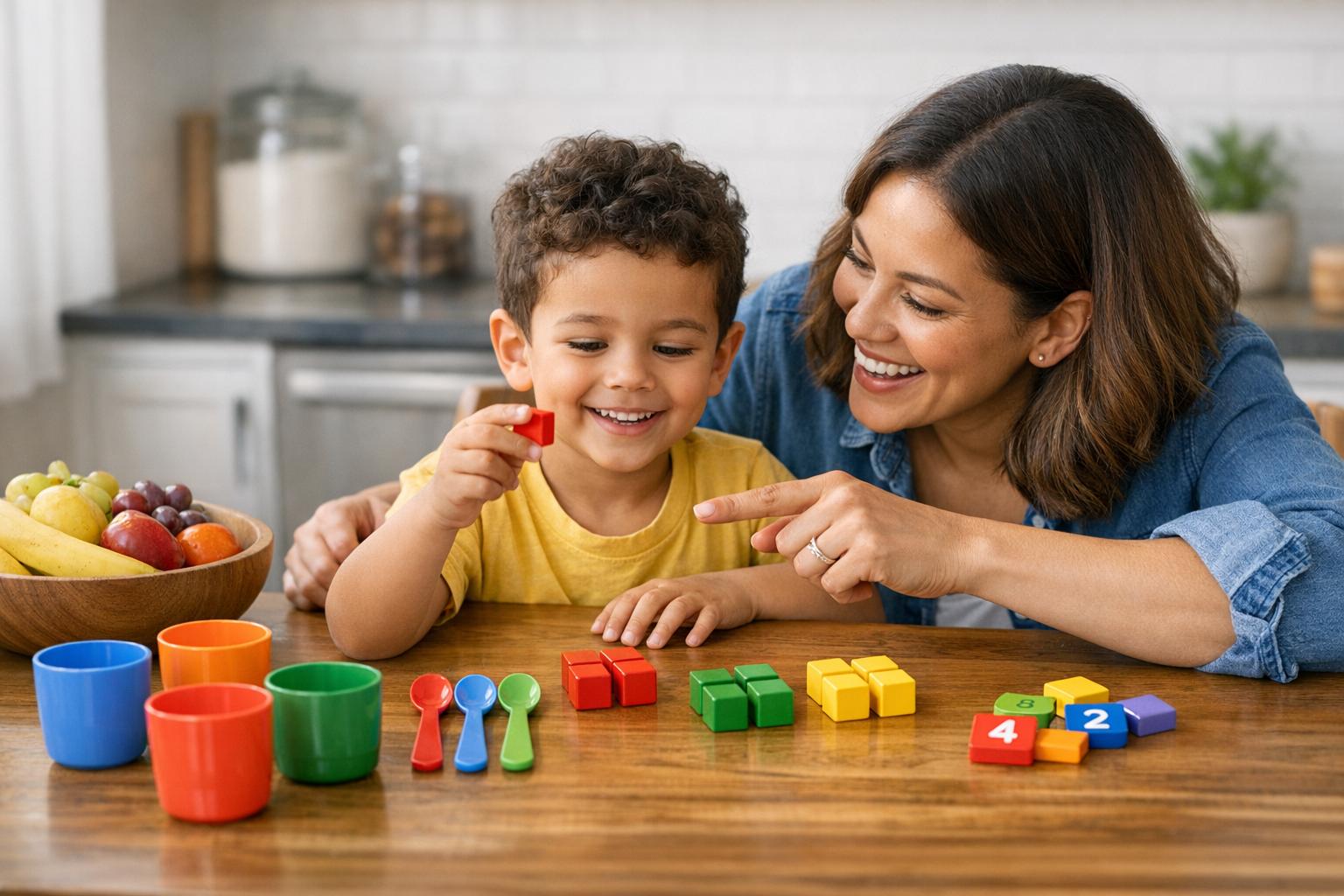
Everyday items like spoons, blocks, or grocery items are great in helping children grasp early math concepts. The works of Jerome Bruner, considered the classics of developmental psychology, postulate that math instruction for a child should proceed through the Concrete–Representational–Abstract (CRA) phases. Physical objects make abstract ideas easier to understand, especially for toddlers and preschoolers. Activities like counting apple slices, sorting laundry, or playing with building blocks naturally teach math skills such as counting, spatial reasoning, and pattern recognition.
Key takeaways:
Familiar objects simplify learning: Kids learn better using items they know, like kitchen tools or toys.
Daily activitiesbuild skills: Sorting socks or counting steps can teach numbers, sizes, and patterns.
Play encourages math talk: Activities like pretend shopping or hopscotch help children explore math concepts.
Hands-on learning improves understanding: Manipulating objects helps kids connect physical actions to abstract math ideas.
Everyday routines, paired with simple math conversations, create powerful learning moments that prepare children for future academic success.
What Research Reveals About Using Everyday Objects for Math
Teaching Counting and Quantities Through Daily Activities
A study from the University of Pittsburgh observed 157 parents and toddlers during simulated shopping sessions on Zoom. Using toy cash registers, play food, and magnet board puzzles, researchers discovered a strong connection between parent-child interactions in these everyday play scenarios and toddlers' number and spatial skills [1].
This highlights how daily routines, like pretend shopping, naturally encourage counting and basic math skills. These tactile experiences also enhance sensory learning, laying a foundation for deeper understanding.
You can learn more about how to organize a “Grocery Store“ game at home from this article.
How Physical Objects Support Sensory Learning
Research published in Early Childhood Research Quarterly in 2020 examined 45 parent-child pairs (children aged 2–4) during semi-structured play sessions. The study compared how Duplo blocks and kitchen playsets influenced mathematical thinking.
Both toys encouraged conversations about numbers and spatial features like size, shape, and location. These "implicit prompts" helped children explore math concepts through touch and manipulation [2]. This demonstrates how the physical properties of everyday objects can guide children toward specific mathematical ideas.
Building Math Skills Through Play
Sensory learning is just the beginning - play takes math skills to the next level. Research on Spontaneous Focus on Numerosity (SFON), which refers to the natural tendency to notice numbers without being prompted, shows that this skill is a strong predictor of future math success.
The type of play matters too: kitchen sets encourage conversations about quantities, while building blocks enhance spatial reasoning [2]. The takeaway? Choose everyday objects that naturally draw attention to the math concepts you want kids to practice.
How to Use Everyday Objects for Teaching Math
Research shows that physical objects can make math learning more engaging and effective. Here are some practical ways to incorporate everyday items into math activities at home and outdoors.
Kitchen Activities for Math Learning
Your kitchen is full of hidden math tools. For example, take a muffin tin and label each cup from 1 to 12. Challenge your child to place the correct number of buttons, beans, or pebbles in each cup. This simple task helps reinforce the concept of cardinality - the idea that the last number counted represents the total quantity.
You can also label the cups of an egg carton from 1 to 12, hide 12 small items like cotton balls, and have your child place them in the correct order. Even setting the table can become a math lesson when kids count forks, spoons, and plates. At the grocery store, let them count apples or potatoes as they place them in a bag. These everyday activities naturally build number sense.
"With a little creativity, simple household items can become powerful tools for learning math. Open your kitchen cupboards and open your child's mind to thinking and learning about math!" - Dr. Carrie Cutler [3]
These hands-on kitchen activities lay the groundwork for more complex math skills, including sorting, pattern recognition, and outdoor math exploration.
Teaching Sorting, Patterns, and Classification
Everyday chores, like sorting laundry, can teach classification. Ask your child to group socks by color or size, introducing comparison terms like "bigger" and "smaller." Stack empty food boxes by height to practice seriation, or arranging objects by size.

Sorting by one attribute in the Funexpected Math app

Sorting by two attributes in the Funexpected Math app
Patterns are everywhere, and you can help your child notice them. Point out stripes on clothing or designs on rugs, then create your own patterns using toys, colored paper, or blocks. For instance, arrange objects in an AB pattern (red block, blue block, red block), and ask your child to predict what comes next.
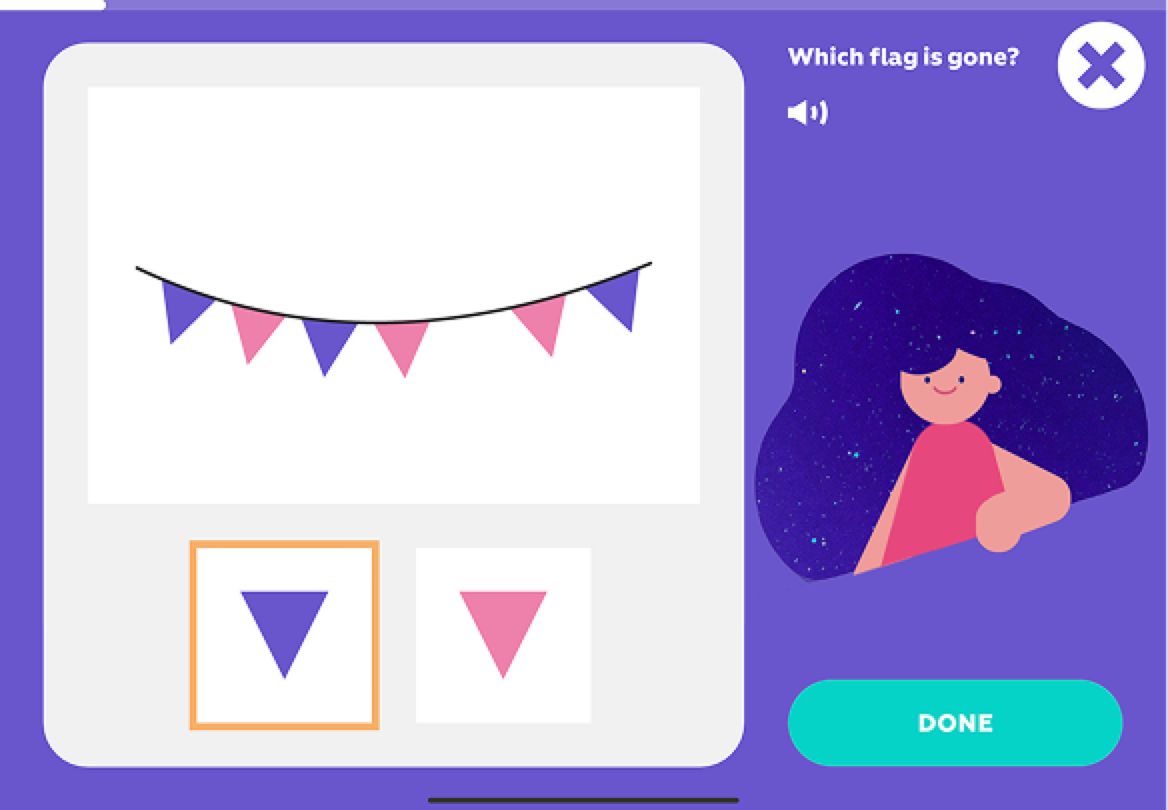
A task on AB patterns in the Funexpected Math app
Recognizing and anticipating patterns is a key step toward understanding algebra.
Outdoor Activities for Math Practice
Nature offers endless ways to practice math. Send your child on a number hunt to collect specific quantities - like three rocks, five leaves, or ten acorns - and match these items to written numerals. This activity bridges the gap between physical objects and abstract numbers.
Another idea is step-counting: measure the distance from your door to a tree by counting steps. Experiment with "giant leaps" and "tiny steps" to show how the size of a step changes the total count.
Hopscotch can also double as a skip-counting game. Have your child jump only on multiples of three or five. Gather sticks in groups of five to practice tallying, which makes counting larger quantities easier. Even counting flower petals can reveal fascinating natural patterns, like the Fibonacci sequence.
"Mathematics is indeed all around us... Nature exploits every pattern there is." - Nazreen Ichhaporia [4]
Advantages of Using Everyday Objects for Early Math
Everyday Objects vs. Abstract Methods
For children aged 3–7, physical objects consistently outperform abstract methods. When materials are arranged in a linear fashion, they help activate a child’s internal mental number line, making fundamental math concepts easier to grasp.
For example, a study involving low-income kindergartners found that using linear-spatial materials more than doubled the use of the "count-on" strategy compared to irregularly arranged items [5]. This early adoption of efficient counting methods is strongly associated with better long-term math performance.
Skill Developed | Everyday Objects Example | Research Evidence | Observed Gains |
|---|---|---|---|
Counting | Snack counting | Spatial organization activates the mental number line [5] | Shift from "count-all" to efficient "count-on" strategies [5] |
Spatial Transformation | Solving jigsaw puzzles | Regular play predicts improved mental rotation skills by age 4.5 [6] | Enhanced visualization and STEM readiness [6] |
Number Composition | Building target numbers with blocks | Hands-on interaction fosters complex problem-solving strategies [7] | Better understanding of additive composition [7] |
Mathematical Logic | Sorting objects by color or size | Physical sets reinforce comprehension of base-10 systems [8] | Mastery of mathematical relationships [7] |
These findings emphasize how everyday objects help bridge the gap between physical manipulation and abstract thinking. Interestingly, research suggests that simple, plain objects are more effective than colorful, toy-like manipulatives, as decorative items can distract children from focusing on core math concepts. Tools like plain blocks or beads direct attention to the task at hand, fostering a stronger understanding of numbers.
How Everyday Math Activities Support Brain Development
Everyday objects do more than teach counting - they play a significant role in cognitive development. Activities like grasping, pointing, and moving objects engage embodied cognition, a process where physical actions provide a foundation for abstract ideas [7]. This hands-on approach reduces cognitive load, preserving working memory for problem-solving. For instance, when a child physically combines two groups of blocks, the action becomes a concrete representation of addition (e.g., 2 + 3 = 5) [7].
Spatial skills developed through object play are also strong indicators of later success in math and STEM fields. Puzzle play between 26 and 46 months of age, for example, significantly improved spatial transformation skills by 54 months [6]. In another study, a 13-day intervention using tangible manipulatives led to a measurable improvement in children’s math abilities (p = 0.044) compared to a control group [7].
"Using the same or similar manipulatives to repeatedly solve problems leads to a deeper understanding... because it allows for an understanding of the two to co-evolve." [8]
The most effective teaching strategies start with physical objects, then transition to visuals, and finally introduce abstract symbols [8]. A meta-analysis of 55 studies found that manipulatives are most effective when used consistently over an extended period, such as an entire school year, allowing children to naturally connect physical materials to abstract concepts [8].
Counting Activities with Everyday Objects for a Preschool Classroom
Conclusion
Research highlights how everyday objects act as a natural link between hands-on experiences and formal math learning. Studies show that common household items are excellent tools for teaching counting, measurement, sorting, and spatial skills, as they help connect physical actions to abstract mathematical ideas [9]. There’s no need for expensive materials - simple, familiar items can lay the groundwork for building math skills.
Using these everyday objects consistently, paired with engaging in "math talk", turns ordinary activities into powerful learning opportunities. These moments help strengthen foundational skills that are key predictors of future academic achievement [9].
"The more math language children hear each day, the greater the growth of their math knowledge." - Head Start [9]
The combination of hands-on activities and meaningful conversation is especially effective. As Herbert P. Ginsburg explained:
"The teacher needs to 'mathematize' children's everyday, personal math; that is, help children connect their informal system with the formal mathematics taught in school." [10]
Funexpected Math builds on this approach offering over 10,000 tasks, 50+ topics, and 675 lessons designed for children aged 3–7.
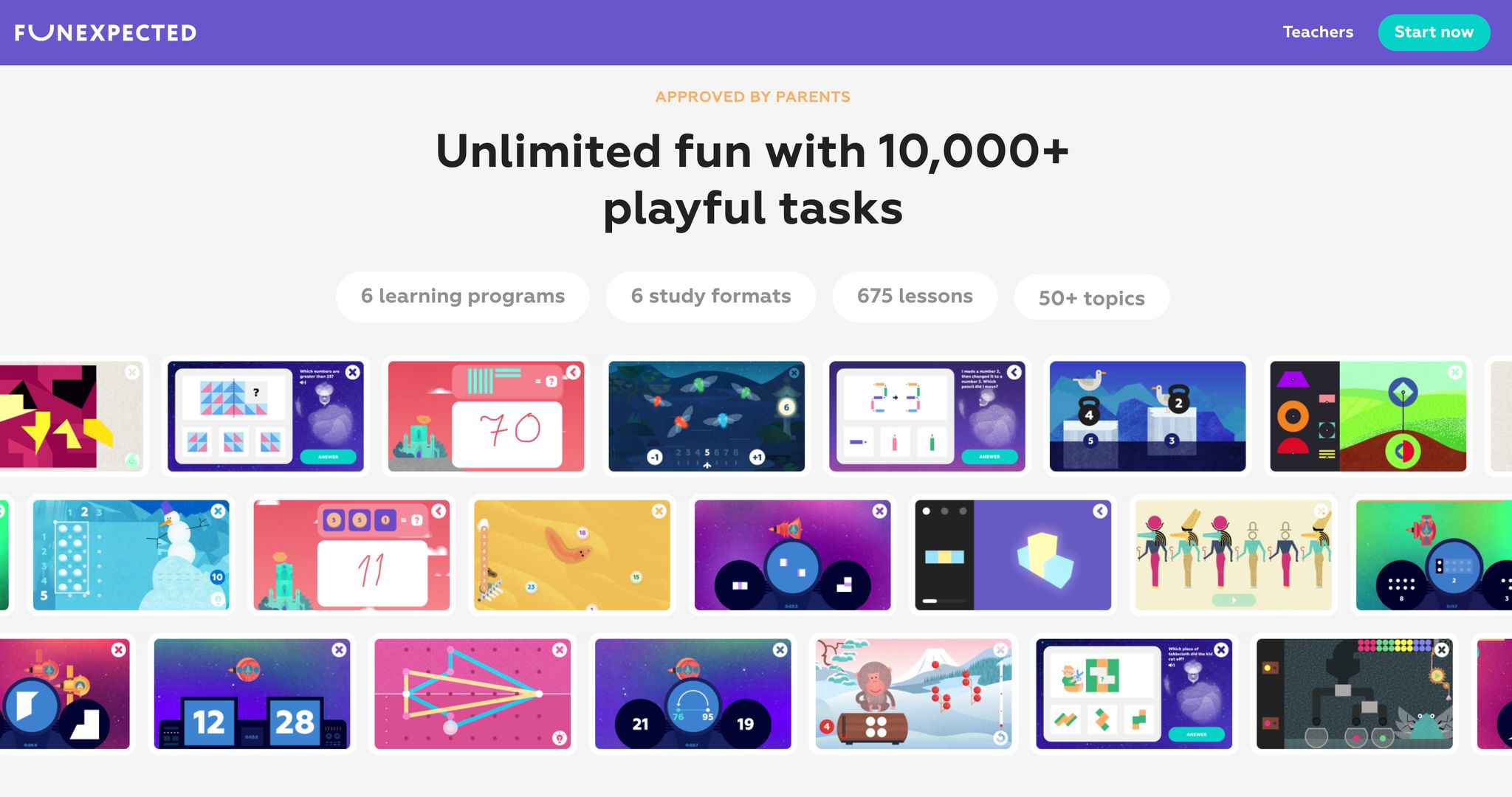
These lessons guide kids from physical counting to abstract reasoning, blending tangible experiences with digital learning.
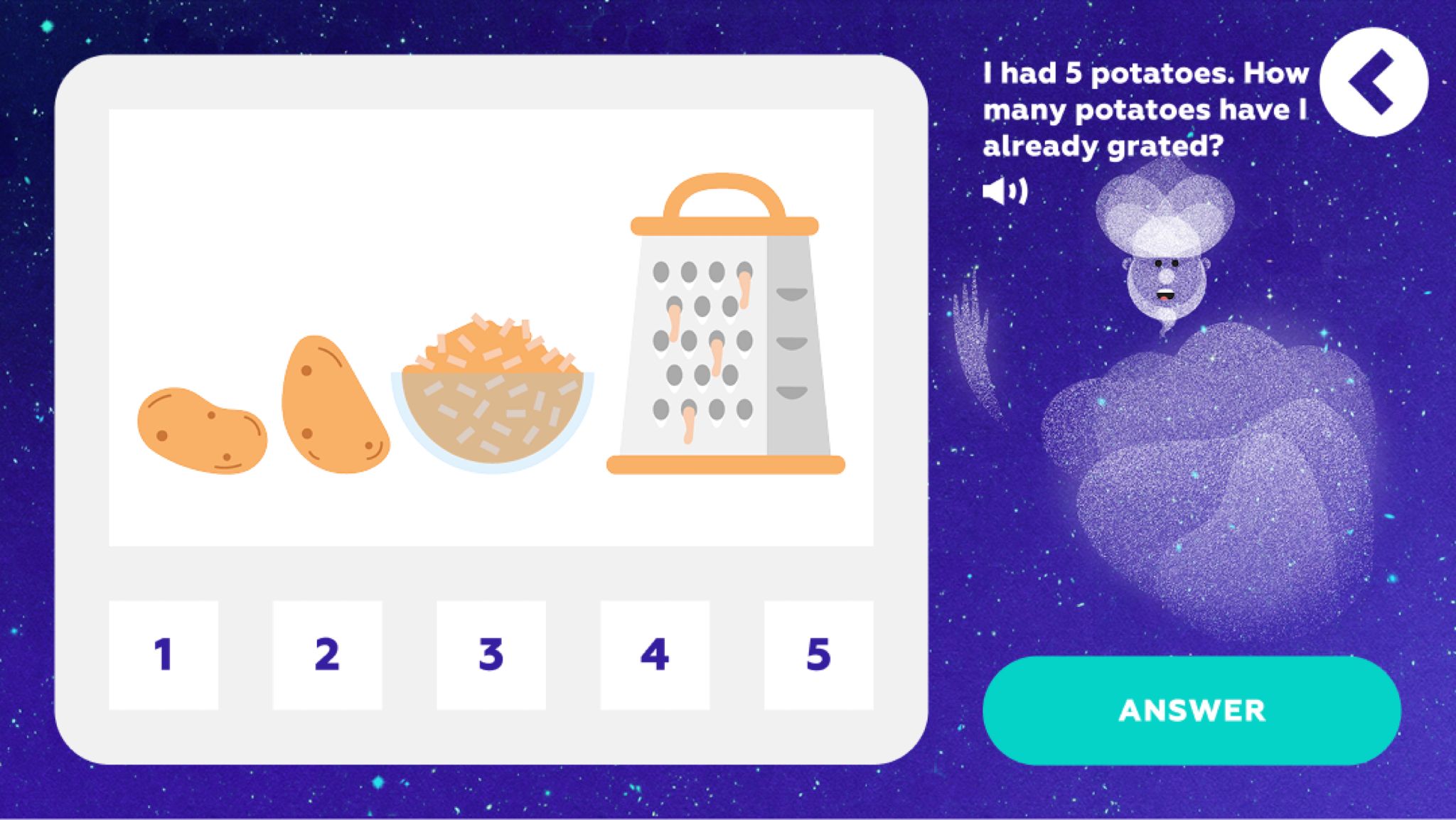
This method mirrors the benefits of everyday routines, providing a well-rounded early math education that sets the stage for long-term success.
FAQs
How to use everyday items to teach my child basic math skills?
Everyday items in your home can double as excellent teaching tools for introducing young children to math concepts like counting, shapes, and basic operations. Take a shoelace or a piece of string, for instance - you can use it to outline shapes like triangles or circles. This not only helps kids learn shape names but also gives them a chance to practice one-to-one correspondence. Got some food cans in the pantry? Their circular tops are perfect for tracing, comparing sizes, or matching with paper cutouts.
Counting can become a game too. Small objects like cotton balls or bottle caps are great for sorting, grouping, or even simple addition and subtraction activities. Everyday routines are another goldmine for math practice - count the steps as you climb the stairs, or count toothbrush strokes during your child’s morning routine. Even kitchen tools like measuring cups and spoons can turn into playful lessons on sorting, grouping, or basic math operations.
Funexpected Math takes these kinds of practical, research-backed activities and enhances them with interactive lessons. Designed for kids aged 3–7, it offers real-life tasks with everyday objects, helping parents transform ordinary moments into fun and meaningful math adventures.
Why are everyday objects so effective for teaching math to young children?
Everyday objects play a key role in helping young children grasp abstract math concepts by tying them to familiar, real-world experiences. When kids use physical items like blocks or buttons, they can see and interact with numbers and quantities, which makes understanding ideas like counting, addition, and subtraction much simpler. Studies have found that structured arrangements - like objects lined up in rows - can boost accuracy and problem-solving by engaging children's spatial awareness.
Using tangible materials works so well because it’s interactive, fun, and provides instant feedback. These hands-on experiences help children develop a solid understanding of numbers and hold onto math skills longer. This method matches how young children naturally learn - through touch, movement, and play - making everyday items a surprisingly effective tool for early math learning.
Related Blog Posts
Transform Math Learning for Kids
Explore Funexpected's interactive math program designed for children aged 3-7. Build math fluency, logic, and problem-solving skills through engaging, hands-on activities and a personalized digital tutor.