Grade 1
Common Core math standards
The Common Core math standards for first grade build directly on what children learned in kindergarten. If kindergarten focused on discovering numbers, first grade is about learning how numbers work together. Children begin to operate confidently within 100, understand place value more deeply, and use addition and subtraction as meaningful tools — not just procedures.
In first grade, math becomes more structured, but it is still rooted in hands-on experiences, drawings, and reasoning. The standards are organized into four main domains, each focusing on a key area of mathematical development.
Operations and Algebraic Thinking
Developing fluency with addition and subtraction and understanding how operations relate.
1.OA
Number and Operations in Base Ten
Building place value understanding within 100.
1.NBT
Measurement and Data
Measuring, comparing, and organizing data.
1.MD
Geometry
Reasoning about shapes and their attributes.
1.G
Each domain includes specific standards that guide teaching and learning. Below, you’ll find a detailed breakdown of each domain, with explanations and examples to help parents understand what children are learning and why it matters.
Operations and Algebraic Thinking
1.OA
The Operations and Algebraic Thinking domain is the heart of first grade math. Here, children move beyond counting and begin to use addition and subtraction as tools for solving problems, reasoning about quantities, and making sense of situations.
Rather than memorizing facts in isolation, first graders are encouraged to understand how and why addition and subtraction work. Research in math education consistently shows that children who develop conceptual strategies early (such as making ten or decomposing numbers) build stronger long-term fluency than those who rely only on rote memorization.
This domain includes eight standards (1.OA.1–1.OA.8).
Represent and solve problems involving addition and subtraction
In this section, children learn to use addition and subtraction to understand and solve everyday situations. They work with story problems that involve adding to, taking away, putting together, taking apart, and comparing quantities. The focus is on making sense of the situation first—what is happening in the story—and only then choosing how to represent it using objects, drawings, numbers, or equations.
By solving problems in different ways, children begin to see addition and subtraction as meaningful tools for thinking, not just as written calculations. This approach supports strong problem-solving skills and helps children connect math to real life, which research shows is especially important for building deep and lasting understanding in the early grades.
Use addition and subtraction within 20 to solve word problems involving situations of adding to, taking from, putting together, taking apart, and comparing, with unknowns in all positions, e.g., by using objects, drawings, and equations with a symbol for the unknown number to represent the problem.
1.OA.A.1
Standard 1.OA.A.1 helps children solve real-life story problems using addition and subtraction. The emphasis is on understanding the situation, not choosing the “right operation” by keyword. Children may use drawings, objects, number lines, or equations to represent their thinking.
Examples for 1.OA.A.1:
Emma has 7 apples. She gets 5 more. How many apples does she have now?
There are 12 birds in a tree. 4 fly away. How many are left?
Liam has 9 toy cars. His friend gives him 6 more. How many toy cars does Liam have now?
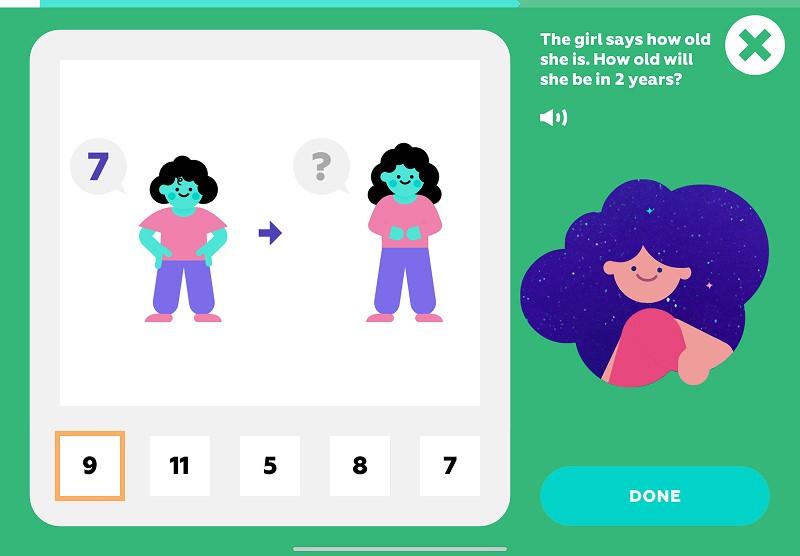
Age word problems
Age
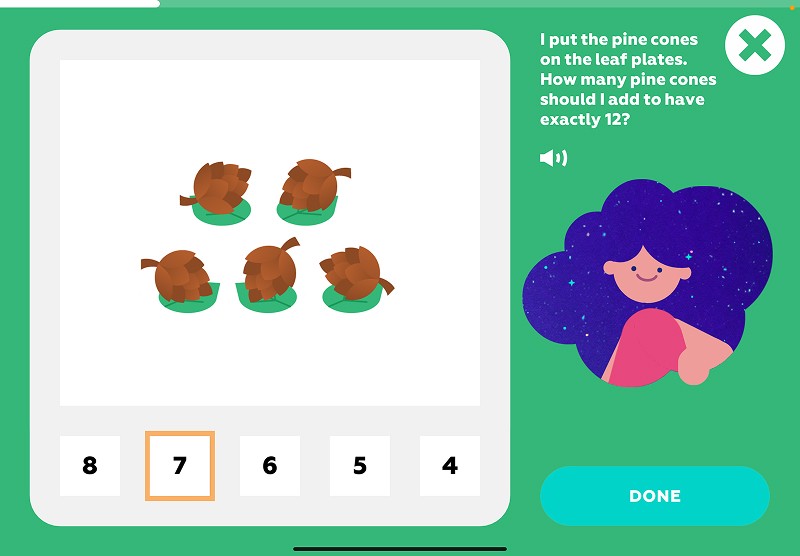
Counting with a twist
Add up
Solve word problems that call for addition of three whole numbers whose sum is less than or equal to 20, e.g., by using objects, drawings, and equations with a symbol for the unknown number to represent the problem.
1.OA.A.2
Standard 1.OA.2 extends problem-solving to situations involving three quantities. Children learn that addition is flexible and can involve more than two parts. Instead of always combining just two numbers, they begin to see a total as something that can be built from several groups. This helps children understand addition as putting together multiple parts and prepares them for more complex reasoning, such as regrouping and mental math strategies in later grades.
Examples for 1.OA.A.2:
There are 4 red balloons, 6 blue balloons, and 5 yellow balloons. How many balloons are there in total?
There are 3 cats in the yard, 7 dogs in the yard, and 4 birds in the yard. How many animals are there altogether?
Mia has 5 stickers. She gets 6 more from one friend and 3 more from another friend. How many stickers does she have now?
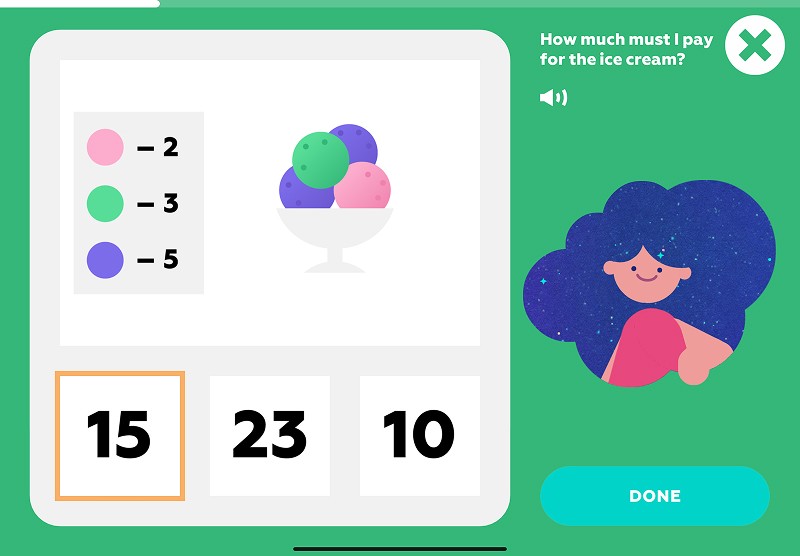
Counting with a twist
Real-life addition

Addition & subtraction
Еquations
Understand and apply properties of operations and the relationship between addition and subtraction
In this section, children learn to notice patterns in how addition and subtraction work. They discover that numbers can be added in different orders without changing the result, that adding zero does not change a number, and that addition and subtraction are closely connected. For example, knowing that 6 + 4 = 10 helps children understand that 10 − 4 = 6.
By exploring these relationships through simple examples, drawings, and explanations, children develop flexible number thinking. This understanding reduces reliance on counting and supports more efficient problem-solving strategies as math becomes more complex.
Apply properties of operations as strategies to add and subtract.
1.OA.B.3
Standard 1.OA.B.3 helps children use simple and intuitive properties of numbers to make addition and subtraction easier. At this stage, children are not expected to name these properties formally. Instead, they notice patterns such as being able to change the order of addends without changing the total, or understanding that adding zero does not change a number. They also begin to see how known facts can help solve new problems. This flexible way of thinking reduces reliance on counting one by one and supports stronger number sense.
Examples for 1.OA.B.3:
Solving 3 + 7 by thinking “7 + 3 is the same, and I already know it equals 10.”
Explaining why 5 + 0 = 5 using objects or drawings.
Using a known fact to solve a new one, such as: “I know 6 + 6 = 12, so 6 + 7 must be one more, which is 13.”
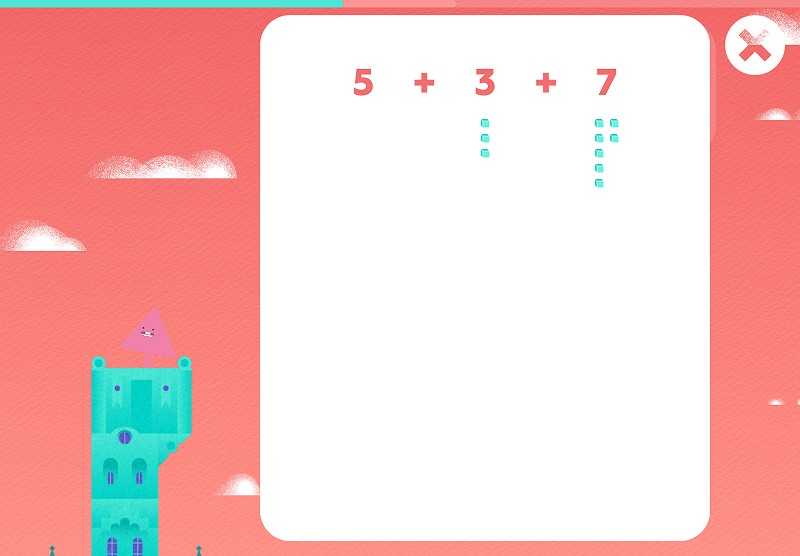
Addition strategies
Reorder addends (up to 20)

Addition
Reorder addends
Understand subtraction as an unknown-addend problem.
1.OA.B.4
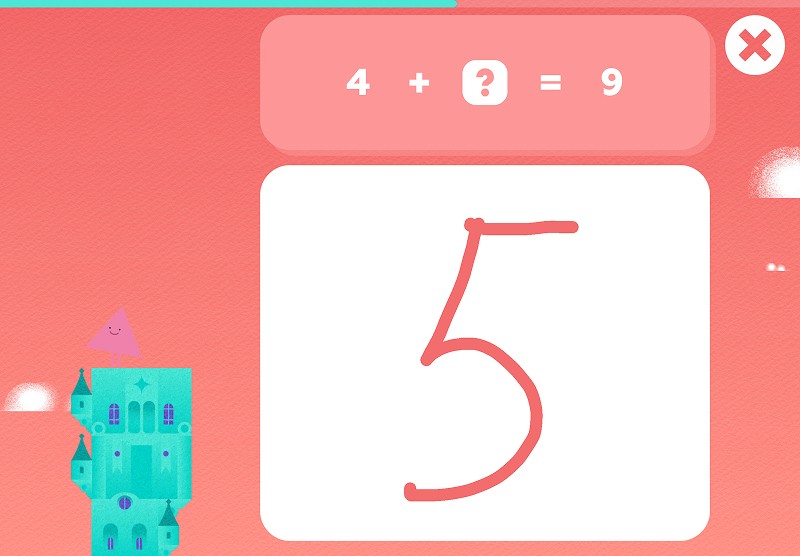
Standard 1.OA.B.4 helps children see subtraction not only as “taking away,” but also as finding a missing part. Instead of removing objects, children learn to ask: What number do I need to add to get the total? This way of thinking connects subtraction directly to addition and supports flexible problem-solving. Understanding subtraction as an unknown-addend problem lays the foundation for algebraic thinking and helps children move beyond counting backward as their only strategy.
Examples for 1.OA.B.4:
Solving 8 − 5 by thinking: “5 plus what makes 8?”
Filling in the missing number in the equation 6 + ⬜ = 9.
Using objects or a number line to find the missing addend in ⬜ + 4 = 10.
Visual addition and subtraction
Using addition to subtract

Subtraction
Using addition to subtract
Add and subtract within 20
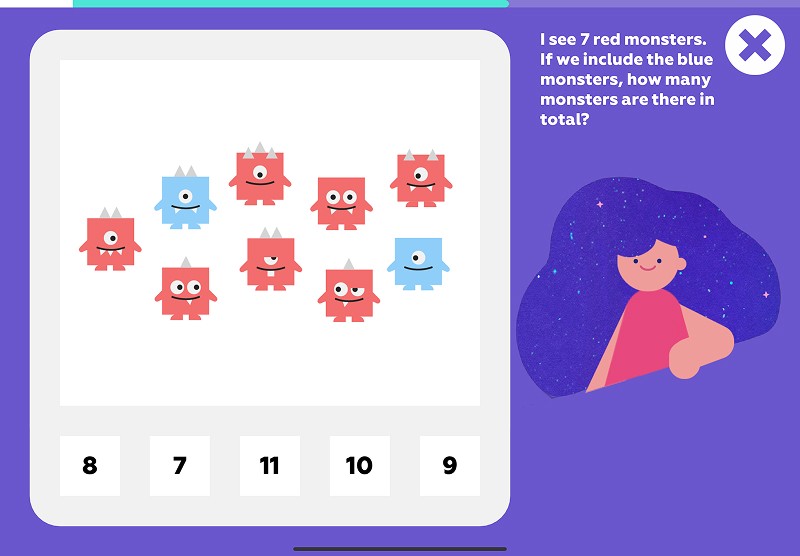
In this section, children work with addition and subtraction up to 20, focusing on developing efficient and meaningful strategies. They learn to use approaches such as counting on, making ten, and using known facts, gradually moving away from counting every number one by one. Fluency is expected especially within 10, while problems within 20 emphasize reasoning and strategy rather than speed.
This progression helps children build confidence and accuracy while strengthening number sense. As a result, they become better prepared to solve problems flexibly and to take on more advanced math in later grades.
Relate counting to addition and subtraction (e.g., by counting on 2 to add 2).
1.OA.С.5
Standard 1.OA.C.5 focuses specifically on using counting as a bridge between early strategies and more advanced thinking. Children learn to count on to add and count back to subtract, treating addition and subtraction as movements along the number sequence rather than as isolated actions.
This understanding helps children see how operations are connected to counting and supports a gradual shift toward strategies that rely less on counting and more on recognizing number relationships.
Examples for 1.OA.C.5:
Solving 6 + 3 by starting at 6 and counting on: 7, 8, 9.
Solving 9 − 2 by counting back two steps: 8, 7.
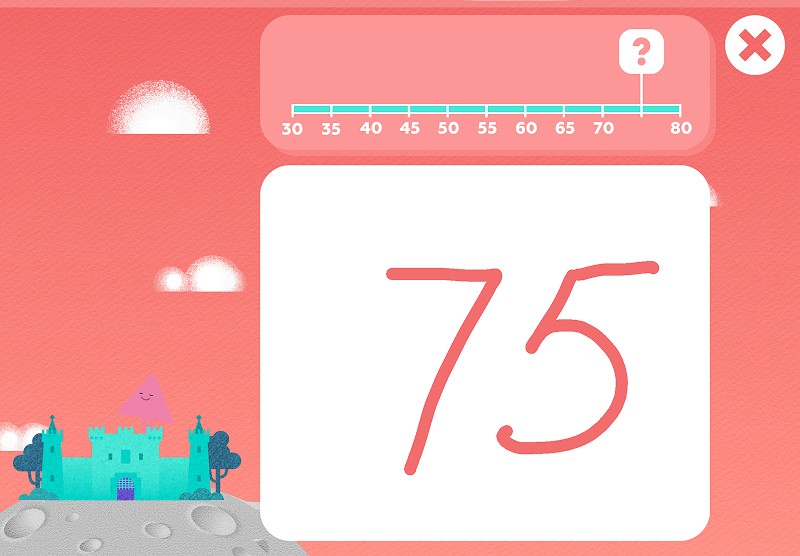
Using a number line to show how counting forward and backward represents addition and subtraction.

Basic subtraction (up to 10)
Subtracting part-by-part
Counting
Add one or two
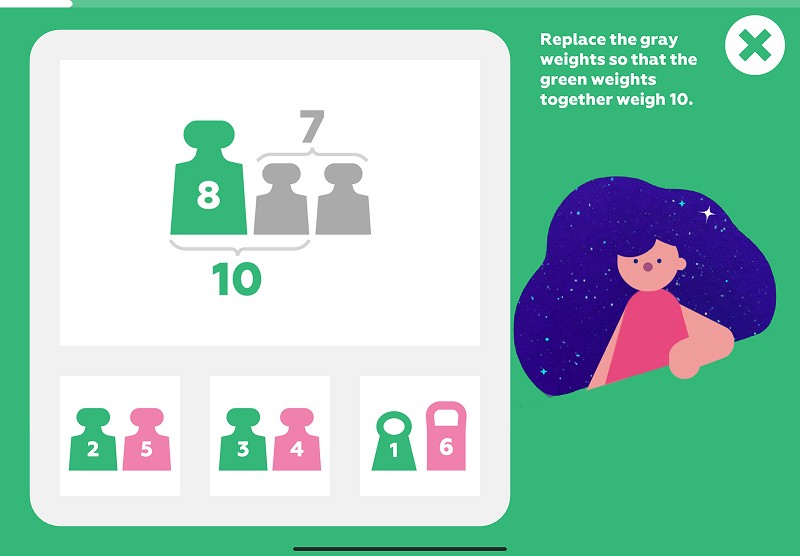
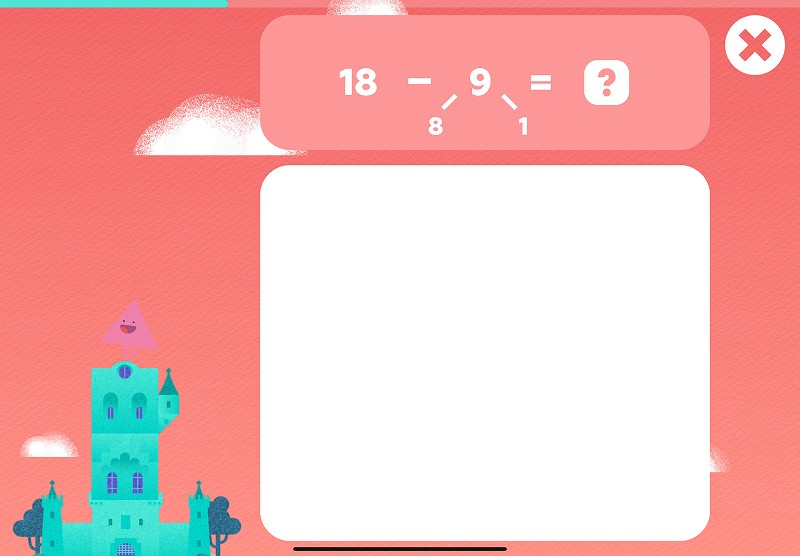
Add and subtract within 20, demonstrating fluency for addition and subtraction within 10. Use strategies such as counting on; making ten (e.g., 8 + 6 = 8 + 2 + 4 = 10 + 4 = 14); decomposing a number leading to a ten (e.g., 13 - 4 = 13 - 3 - 1 = 10 - 1 = 9); using the relationship between addition and subtraction (e.g., knowing that 8 + 4 = 12, one knows 12 - 8 = 4); and creating equivalent but easier or known sums (e.g., adding 6 + 7 by creating the known equivalent 6 + 6 + 1 = 12 + 1 = 13).
1.OA.C.6
Standard 1.OA.C.6 develops fluency with addition and subtraction by building on understanding rather than rote practice. Children are expected to become especially confident within 10, using strategies they understand and gradually recalling facts without relying on counting each time.
Through work with patterns, known facts, and number relationships, children learn to solve problems accurately and efficiently. This flexible fluency supports work with larger numbers and prepares children for more complex operations in later grades.
Examples for 1.OA.C.6:
Solving 4 + 5 by recognizing it equals 9, without counting each number.
Solving 8 + 7 by thinking: “8 + 2 makes 10, and there are 5 more, so the answer is 15.”
Solving 14 − 6 by using a known fact: “6 + 8 = 14, so the answer is 8.”
Addition
Crossing ten
Subtraction strategies
Crossing 10
Work with addition and subtraction equations
In this section, children learn to read and write equations as meaningful relationships between numbers. They explore different equation formats, understand the equal sign as showing that two amounts are the same, and practice finding missing numbers in addition and subtraction equations.
By working with equations in flexible ways, children begin to treat unknowns as numbers that can be reasoned about, not just blanks to fill in. This understanding strengthens their problem-solving skills and lays the groundwork for algebraic thinking in later grades.
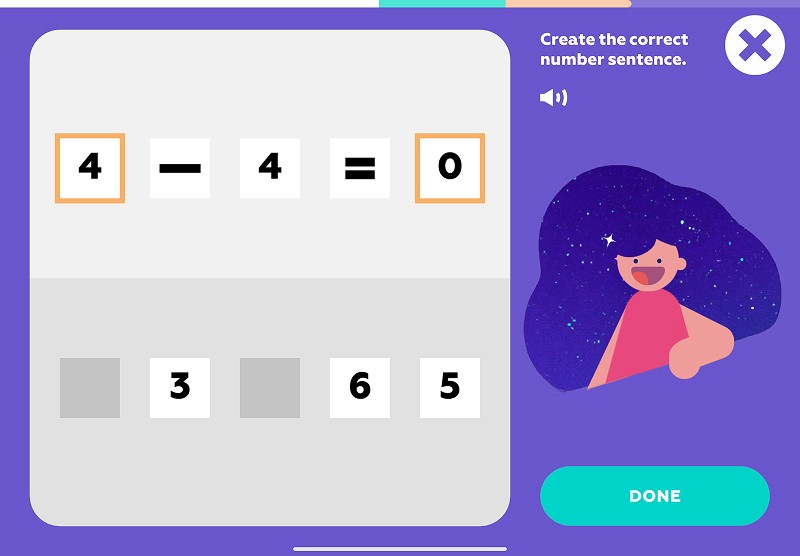
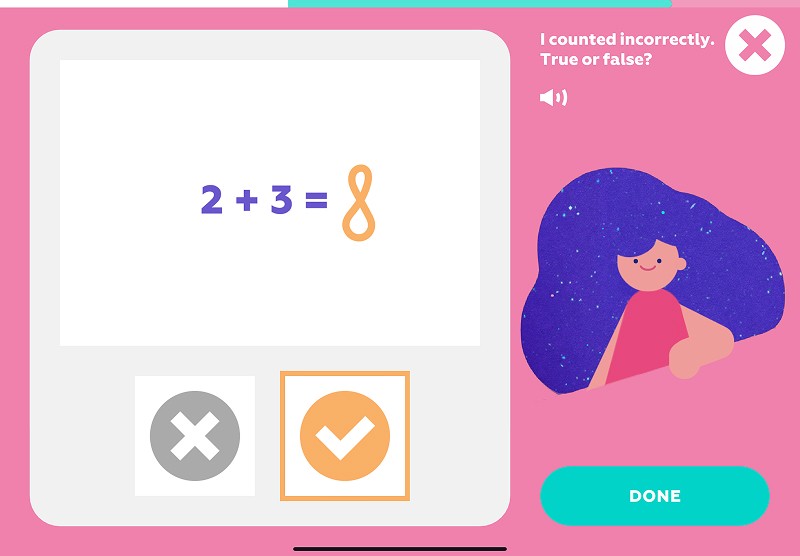
Understand the meaning of the equal sign, and determine if equations involving addition and subtraction are true or false.
1.OA.D.7
Standard 1.OA.D.7 helps children understand that the equal sign means “the same amount,” not “here comes the answer.” Children learn to look at both sides of an equation and decide whether they represent equal values. This is an important shift from earlier experiences, where equations usually appear only in the form “problem = answer.”
By working with true/false equations and equations written in different formats, children develop a deeper understanding of equality and balance. This understanding is essential for later algebraic thinking and helps prevent common misconceptions that can interfere with math learning in higher grades.
Examples for 1.OA.D.7:
Deciding whether 6 + 4 = 10 is true or false.
Explaining why 8 = 5 + 3 is a true equation, even though the answer comes first.
Determining if 7 + 2 = 10 − 1 is true by comparing both sides.
True or false
Fulfill the conditions
True or false
True or false statements
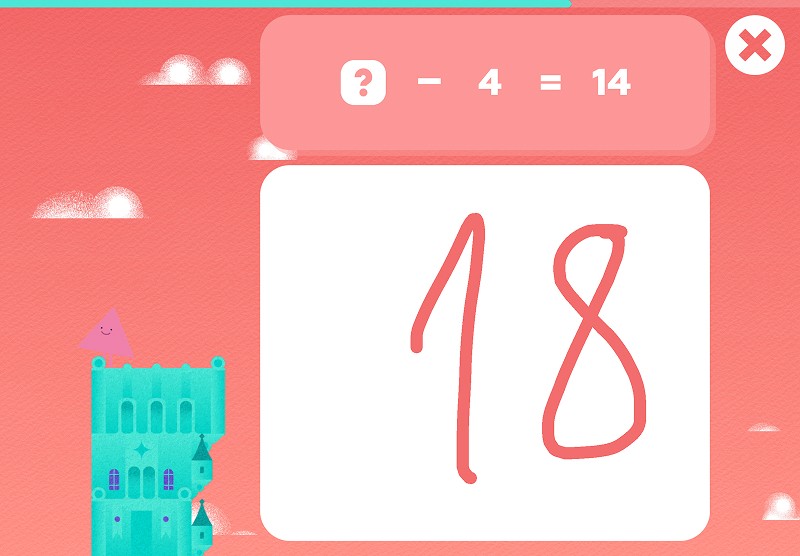
Determine the unknown whole number in an addition or subtraction equation relating three whole numbers.
1.OA.D.8
Standard 1.OA.D.8 helps children learn to find an unknown number in an equation by reasoning about the relationship between the numbers, rather than guessing or counting randomly. Children treat the unknown as a number that can be thought about and solved for, not just a blank to fill in.
By working with equations where one part is missing, children strengthen their understanding of how addition and subtraction are connected. This type of reasoning lays the groundwork for algebraic thinking, helping children see equations as balanced relationships and preparing them for more formal work with variables in later grades.
Examples for 1.OA.D.8:
Finding the missing number in 8 + ⬜ = 13.
Solving ⬜ − 4 = 9 by thinking about what number minus 4 equals 9.
Completing the equation 15 = ⬜ + 6 using addition or subtraction strategies.
Subtraction
Subtraction (up to 20)

Subtraction
Subtraction as a difference
Number and Operations in Base Ten
1.NBT
In this section, children deepen their understanding of place value and learn how numbers up to 100 are built from tens and ones. They practice counting, reading, writing, comparing, adding, and subtracting numbers by focusing on the structure of the number system rather than on memorized procedures.
By working with tens and ones through visual models, drawings, and explanations, children begin to see why addition and subtraction work the way they do. This strong place value foundation is essential for later success in arithmetic and helps children move confidently from small numbers to more complex calculations.
Extend the Counting Sequence
In this section, children develop a more flexible understanding of the number sequence. They learn that counting is not just reciting numbers from the beginning, but a tool that can start at different points and move forward smoothly.
By working with larger ranges of numbers and representing them in different ways, children begin to see how numbers grow and relate to one another. This understanding supports later work with place value, comparison, and operations with larger numbers.
Count to 120, starting at any number less than 120. In this range, read and write numerals and represent a number of objects with a written numeral.
1.NBT.B.1
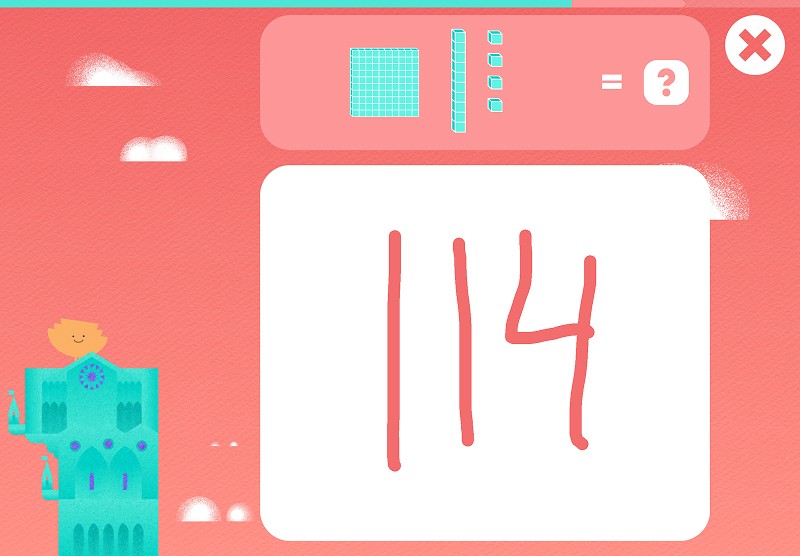
Standard 1.NBT.B.1 extends children’s counting skills beyond what they learned in kindergarten. Children practice counting forward up to 120 and learn to start counting from numbers other than 1. This helps them see the number sequence as continuous and flexible, rather than as a fixed routine that always begins at the start.
In addition to counting, children read and write numerals and connect them to real quantities. This reinforces the idea that numbers are meaningful symbols that represent actual amounts. Together, these skills strengthen number sense and support later work with place value, addition, and subtraction.
Examples for 1.NBT.B.1:
Starting at 47 and counting forward to 60.
Reading and writing the numeral 102 and matching it to a group of objects.
Showing 89 using counters or drawings and labeling the set with the correct numeral.
Numbers on the number line
Count in 5s on the number line
Big numbers
Count blocks (100–199)
This domain prioritizes understanding over memorization. By using visual aids, hands-on activities, and verbal problem-solving, children develop a flexible and practical understanding of numbers. These skills lay the groundwork for tackling more advanced math concepts in the future.
Understand Place Value
In this section, children develop a deeper understanding of how numbers are structured. They learn that two-digit numbers are made up of tens and ones, and that the position of a digit determines its value. Rather than treating numbers as single, indivisible labels, children begin to see them as composed of parts that can be analyzed, compared, and used in calculations.
This understanding of place value is a key foundation for first grade math. It supports addition and subtraction within 100, helps children compare numbers meaningfully, and explains why certain strategies work. Place value is introduced through visual models, hands-on materials, and discussion, allowing children to build strong conceptual understanding before moving to more formal procedures.
Understand that the two digits of a two-digit number represent amounts of tens and ones. Understand the following as special cases:
a. 10 can be thought of as a bundle of ten ones — called a “ten.”
b. The numbers from 11 to 19 are composed of a ten and one, two, three, four, five, six, seven, eight, or nine ones.
c. The numbers 10, 20, 30, 40, 50, 60, 70, 80, 90 refer to one, two, three, four, five, six, seven, eight, or nine tens (and 0 ones).
1.NBT.B.2
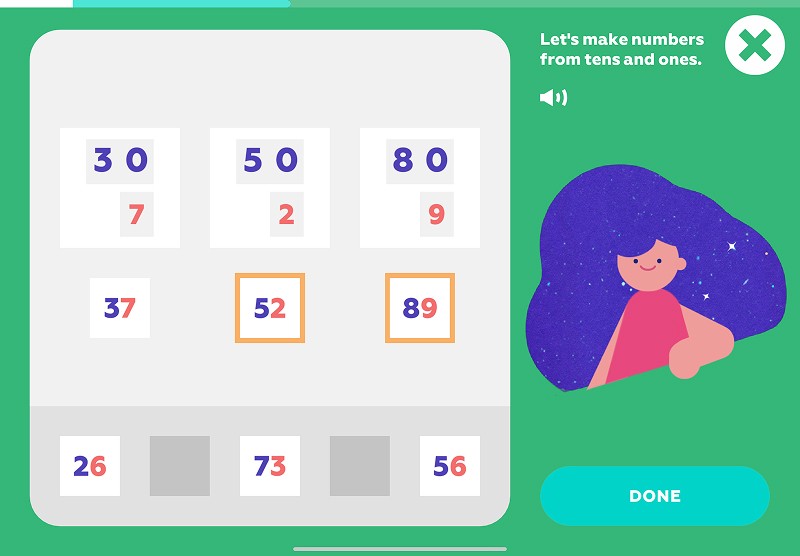
Standard 1.NBT.B.2 introduces children to the core idea of place value. Children learn that in a two-digit number, the digit in the tens place shows how many tens there are, and the digit in the ones place shows how many ones. For example, the number 34 is understood as 3 tens and 4 ones, not just “thirty-four” as a single unit.
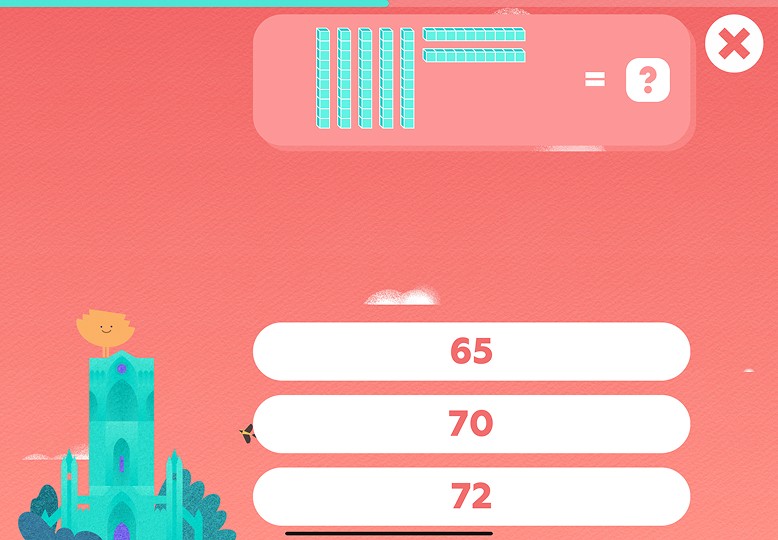
This standard helps children see structure in numbers and understand why numbers behave the way they do when they add, subtract, or compare them. Instead of memorizing procedures, children build meaning through hands-on models such as bundles of ten, base-ten blocks, or drawings. This conceptual understanding of place value is essential for later success in arithmetic and problem-solving.
Examples for 1.NBT.B.2:
Showing 28 using 2 groups of ten and 8 single objects.
Breaking the number 45 into tens and ones and explaining what each digit means.
Comparing two numbers by discussing their tens and ones, such as explaining why 62 is greater than 56.
Place value
Tens and ones
Base ten blocks
Count blocks by tens (10, 20, 30...)
Compare two two-digit numbers based on meanings of the tens and ones digits, recording the results of comparisons with the symbols >, =, and <.
1.NBT.B.3
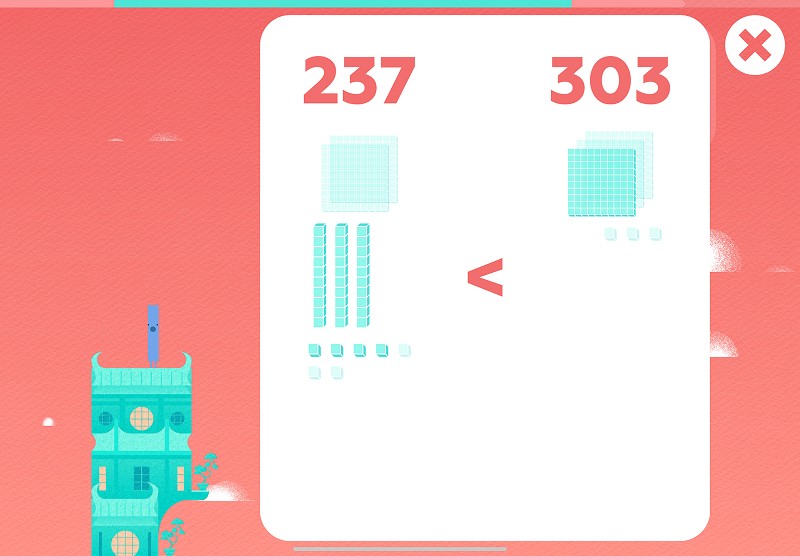
Standard 1.NBT.B.3 builds directly on place value understanding by teaching children to compare two-digit numbers meaningfully. Children learn to look first at the tens digit to decide which number is greater or smaller, and to compare the ones digits only when the number of tens is the same.
This approach reinforces the idea that the position of a digit matters and deepens children’s understanding of number structure. By explaining their comparisons verbally or using visual models, children strengthen number sense and gain confidence when working with larger numbers.
Examples for 1.NBT.B.3:
Comparing 47 and 52 by explaining that 52 has more tens than 47.
Deciding whether 68 > 65 by noticing that both numbers have 6 tens and comparing the ones.
Using >, <, or = to compare 40 and 40 and explaining why they are equal.
Comparison
Compare numbers (from 1 to 50)
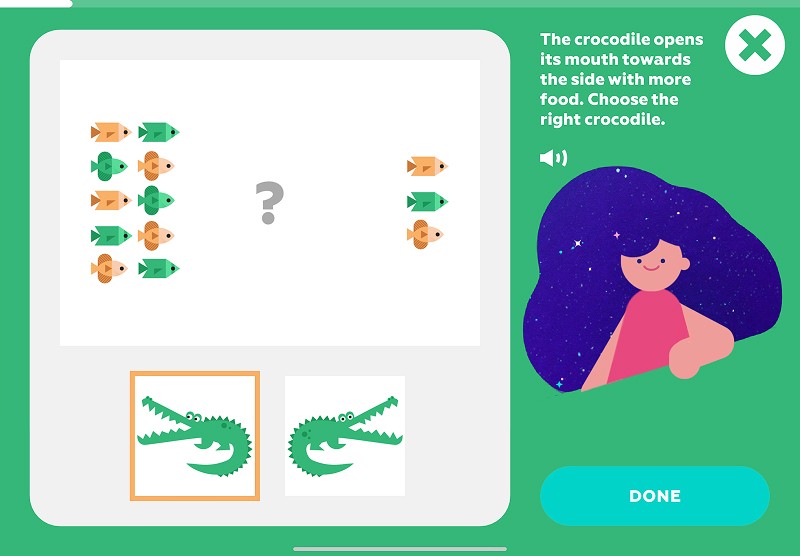
Comparison
Comparison symbols
Use place value understanding and properties of operations to add and subtract
In this section, children use their understanding of tens and ones to add and subtract numbers in meaningful ways. They learn that when working with two-digit numbers, tens are added to tens and ones to ones, and that numbers can be regrouped when needed. Instead of following a fixed written algorithm, children explain their thinking using drawings, objects, or mental strategies.
By relying on place value and number relationships, children begin to see why addition and subtraction work, not just how to perform them. This approach supports flexible thinking, strengthens mental math skills, and prepares children for more advanced operations in later grades.
Add within 100, including adding a two-digit number and a one-digit number, and adding a two-digit number and a multiple of 10, using concrete models or drawings and strategies based on place value, properties of operations, and/or the relationship between addition and subtraction; relate the strategy to a written method and explain the reasoning used. Understand that in adding two-digit numbers, one adds tens and tens, ones and ones; and sometimes it is necessary to compose a ten.
1.NBT.C.4
Standard 1.NBT.C.4 helps children use their understanding of tens and ones to add numbers within 100 in a meaningful way. Instead of learning a formal written algorithm, children use drawings, base-ten blocks, number lines, or mental strategies to show how numbers are combined.
Children learn that when adding two-digit numbers, tens are added to tens and ones to ones. Sometimes, adding the ones results in more than ten, and children regroup those ones to make a new ten. This process is introduced conceptually, through visual models and explanations, rather than as a mechanical procedure. Understanding why regrouping works is far more important at this stage than speed or neat written work.
Examples for 1.NBT.C.4:
Solving 34 + 5 by adding the ones first and explaining how the total changes.
Adding 46 + 20 by combining tens and noticing that the ones stay the same.
Using base-ten blocks or a drawing to show why 28 + 7 results in a new group of ten.
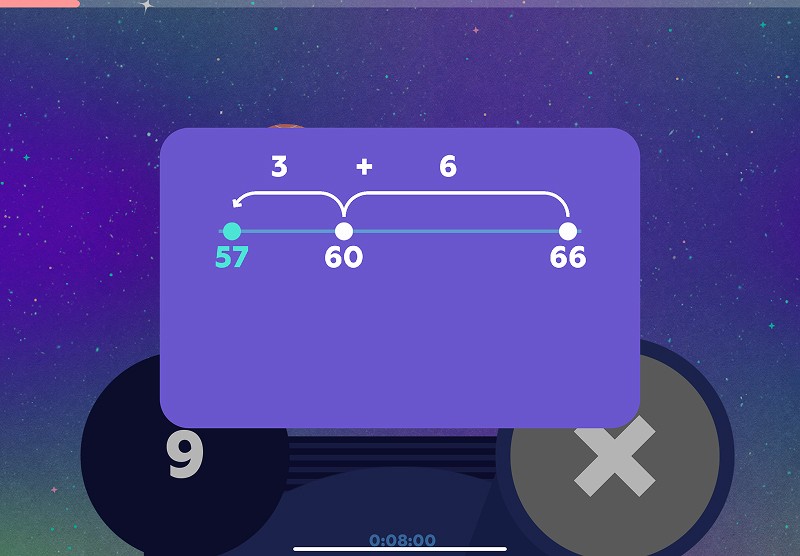
Distance on the number line
Distance on the number line up to 100 (numbers only)
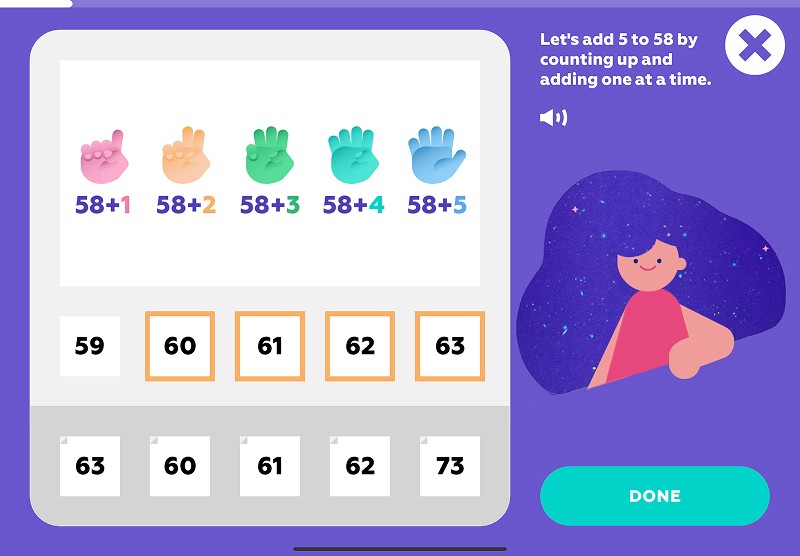
Addition
Counting up
Given a two-digit number, mentally find 10 more or 10 less than the number, without having to count; explain the reasoning used.
1.NBT.C.5
Standard 1.NBT.C.5 helps children understand how adding or subtracting 10 affects a number. Children learn that adding 10 increases the tens digit by one while the ones digit stays the same, and subtracting 10 decreases the tens digit by one. This builds on their understanding of place value and strengthens mental math skills.
Instead of counting forward or backward one by one, children reason about the structure of the number. This kind of thinking helps children work more efficiently with numbers and prepares them for later operations with larger numbers.
Examples for 1.NBT.C.5:
Finding 10 more than 34 by explaining that it becomes 44.
Finding 10 less than 62 and explaining why the ones digit stays the same.
Using a number chart to show how moving down or up one row changes a number by 10.
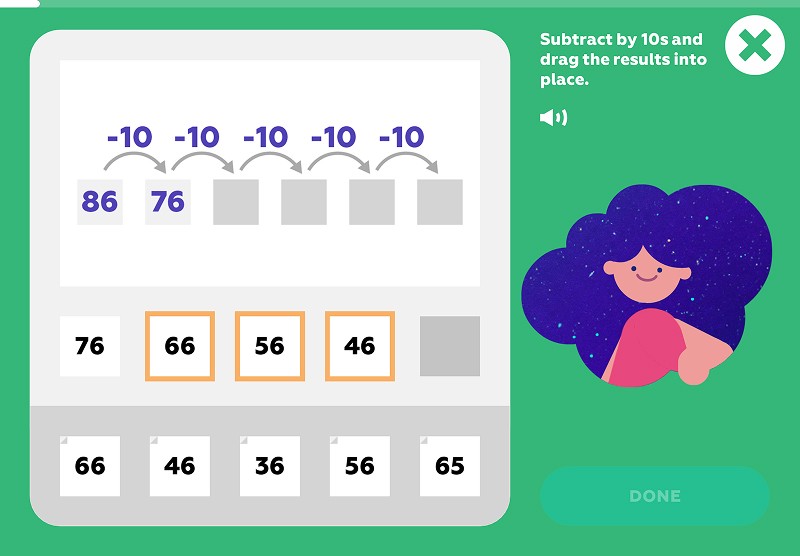
Number line up to 100
Subtracting tens

Number line & skip counting
Counting down by 5s
Subtract multiples of 10 in the range 10-90 from multiples of 10 in the range 10-90 (positive or zero differences), using concrete models or drawings and strategies based on place value, properties of operations, and/or the relationship between addition and subtraction; relate the strategy to a written method and explain the reasoning used.
1.NBT.C.6
Standard 1.NBT.C.6 helps children use place value understanding to subtract tens from tens. Children learn that when subtracting multiples of 10, only the number of tens changes while the ones stay at zero. This reinforces the idea that numbers are made of tens and ones and that operations follow this structure.
Rather than memorizing rules, children use visual models such as base-ten blocks, drawings, or number lines to explain their thinking. By connecting subtraction to place value and to known addition facts, children develop confidence and clarity when working with larger numbers.
Examples for 1.NBT.C.6:
Solving 60 − 30 by removing three groups of ten and explaining the result.
Using a number line to show why 80 − 20 equals 60.
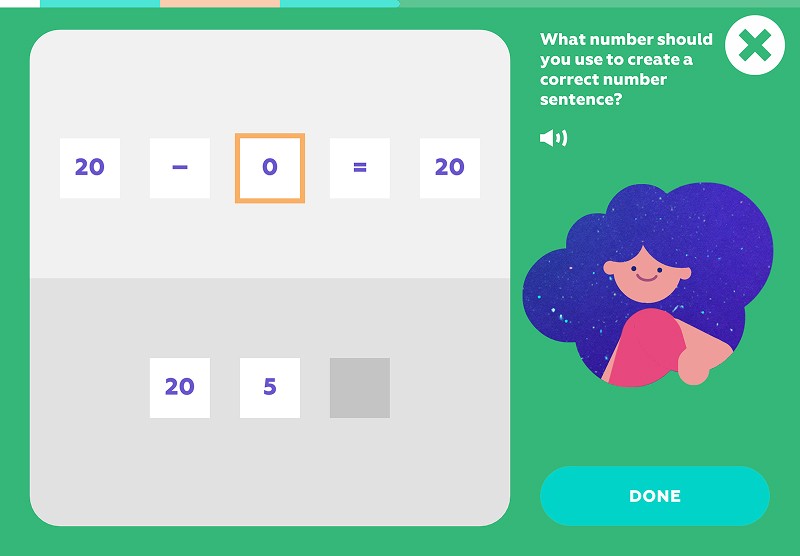
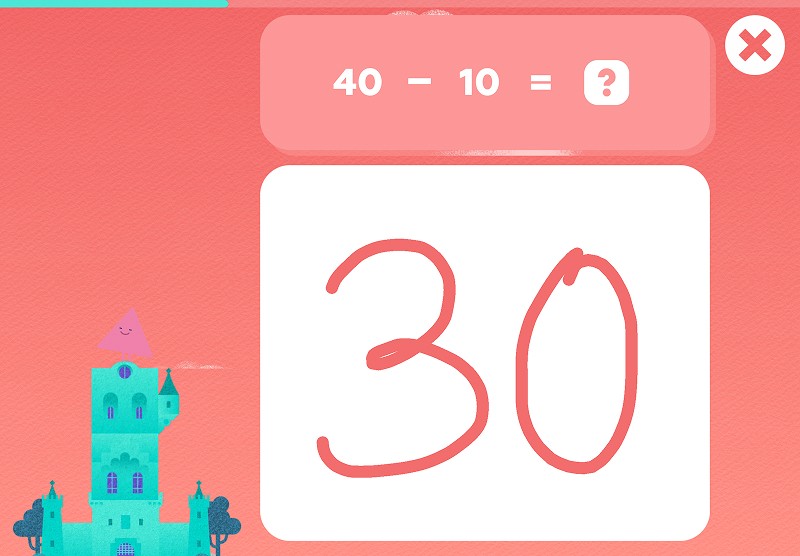
Explaining 40 − 10 by describing how one ten is taken away while the ones remain zero.
Place value
Subtraction: two digits
Subtraction
Column addition
Measurement and Data
K.MD
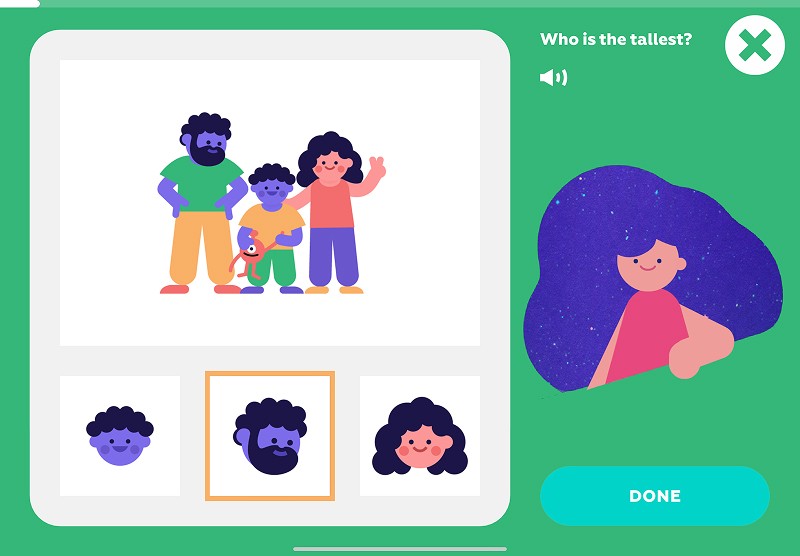
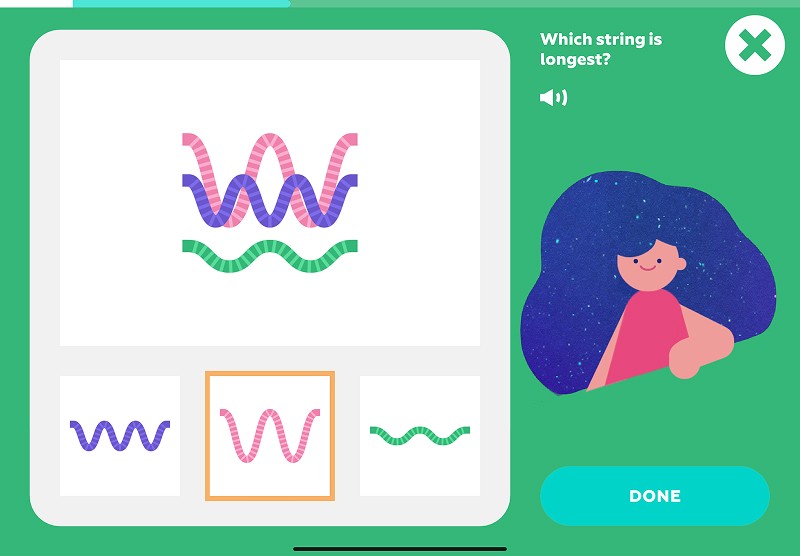
The Measurement and Data domain introduces young learners to fundamental measurement concepts. Through three key standards, children learn to describe, compare, and organize measurable attributes, linking math to everyday experiences. Think about comparing which toy is taller or sorting blocks by color - these activities make math relatable and practical.
This domain helps children build a vocabulary for measurement (like length, weight, height, and capacity) while sharpening their observation skills. They notice differences between objects and use simple terms to describe them. These standards also tie into counting, as students group items and connect numbers to real-world data. Let’s break down each standard with examples and visual aids.
Describe and Compare Measurable Attributes
This part of the domain focuses on helping children identify measurable features of objects and compare them directly.
Identify measurable attributes (e.g., length, weight) of objects.
K.MD.A.1
In K.MD.A.1, children explore the idea that objects have measurable qualities. For example, a book has length, width, and weight, while a cup has height and capacity. Recognizing that one object can have multiple measurable traits helps children think more deeply about the world around them.
Examples for K.MD.A.1:
A pencil: "What can we measure about this pencil?"
A backpack: "Name two things we could measure about this backpack."
A water bottle: "How would you describe the size of this bottle using measurement words?"
Order by length and height
Order by height
Measurements
Comparing lengths
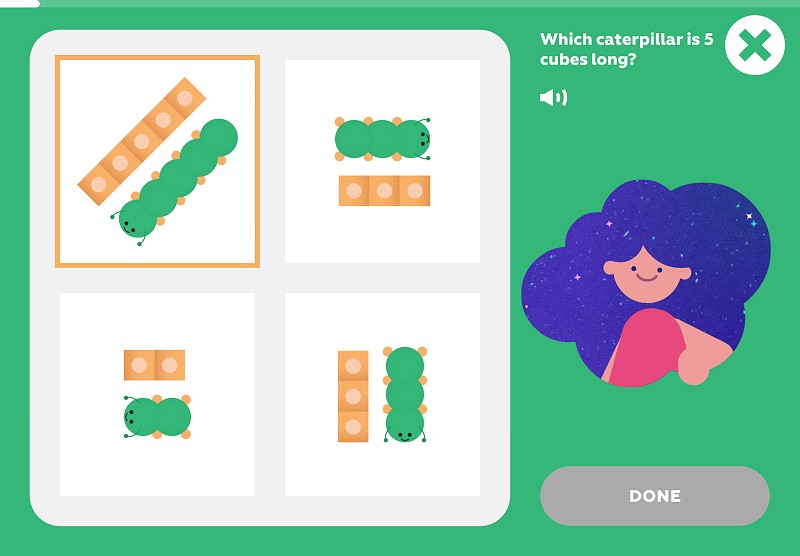
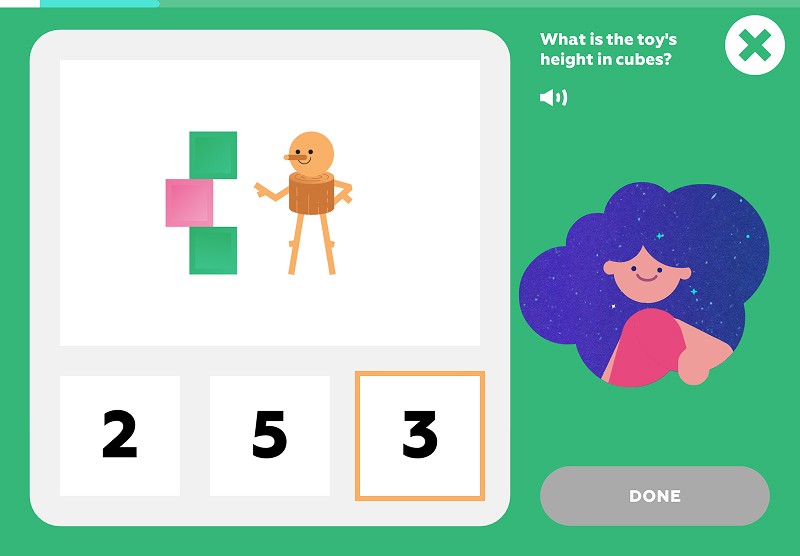
Express the length of an object as a whole number of length units, by laying multiple copies of a shorter object (the length unit) end to end; understand that the length measurement of an object is the number of same-size length units that span it with no gaps or overlaps.
1.MD.A.2
Standard 1.MD.A.2 introduces children to the idea of measuring length using equal-sized units. Children learn that measurement is not about guessing or comparing by sight, but about counting how many identical units fit along an object without gaps or overlaps.
By physically placing units end to end, children begin to understand why consistency matters in measurement. This hands-on experience helps them see length as a quantity that can be measured and counted, building a strong foundation for later work with rulers and standard units like centimeters and inches.
Examples for 1.MD.A.2:
Measuring the length of a book using paper clips placed end to end.
Finding how many identical cubes fit along the edge of a desk without gaps or overlaps.
Explaining why using different-sized units would give different measurements for the same object.
Measurements
Units of measurement
Measurements
Units of measurement
Tell and write time
In this section, children learn to tell and write time to the hour and half-hour using both analog and digital clocks. They explore how the hands on an analog clock move and how this movement relates to written time.
By connecting clocks to daily routines—such as school time, meals, or bedtime—children begin to understand time as a meaningful part of everyday life. This foundational understanding helps them organize their day and prepares them for more precise time concepts in later grades.
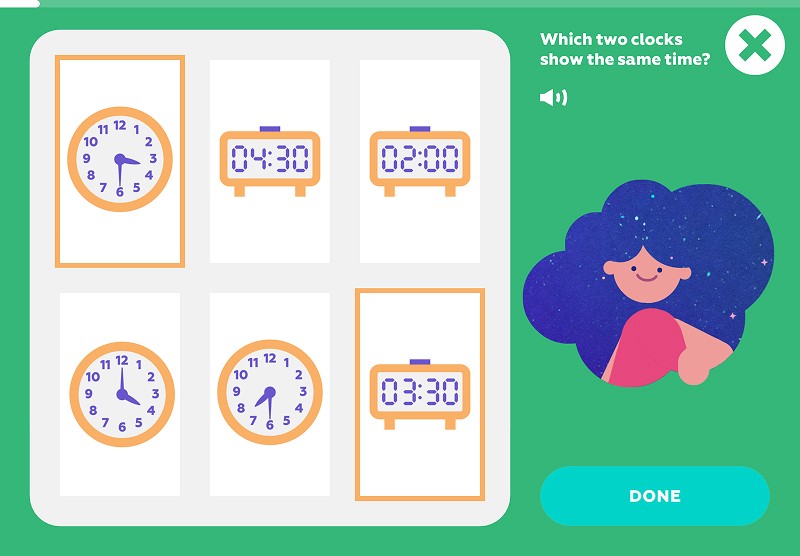
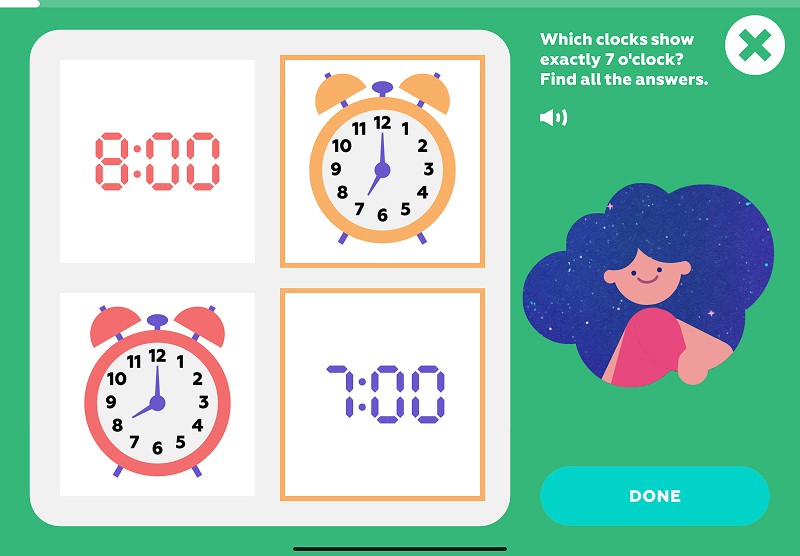
Tell and write time in hours and half-hours using analog and digital clocks.
1.MD.B.3
Standard 1.MD.B.3 introduces children to reading and writing time to the hour and half-hour. Children learn to recognize how the hour and minute hands move on an analog clock and how this movement relates to digital time displays. At this stage, the focus is on understanding the structure of time, not on precise minute-by-minute reading.
By working with both analog and digital clocks, children begin to connect visual patterns (such as the long hand pointing to the 12 or the 6) with meaningful time intervals. This helps them make sense of daily routines—like knowing when school starts, when lunch happens, or how long an activity lasts—and builds a foundation for more detailed time concepts in later grades.
Measurements
Tell and write time
Measurements
Tell and write time
Represent and interpret data
In this section, children learn to collect, organize, and make sense of simple data. They sort information into categories and represent it visually using charts or graphs, then ask and answer questions about what the data shows.
By comparing groups and talking about which categories have more, fewer, or the same number of items, children begin to see how numbers can describe and explain real-world information. These early data skills support logical thinking and help children interpret information in clear and meaningful ways.
Organize, represent, and interpret data with up to three categories; ask and answer questions about the total number of data points, how many in each category, and how many more or less are in one category than in another.
1.MD.C.4
Standard 1.MD.C.4 introduces children to working with data in a simple and meaningful way. Children learn to collect information, sort it into categories, and represent it visually using charts or graphs. At this stage, the focus is on understanding what the data shows, not on creating complex graphs or calculations.
By asking and answering questions about the data—such as how many items are in each category or which group has more or fewer—children begin to see numbers as tools for describing and comparing real-world information. These experiences build early data literacy and strengthen both counting skills and logical reasoning.
Examples for 1.MD.C.4:
Creating a picture graph showing favorite fruits (apples, bananas, oranges) and answering questions about which fruit is most popular.
Sorting classroom objects into three categories (for example, pencils, crayons, markers) and comparing how many are in each group.
Looking at a simple bar graph and answering questions like “How many more students chose cats than dogs?”

Tables and coordinates
Picture graphs

Tables and coordinates
Models for word problems
Geometry
1.G
In this section, children deepen their understanding of shapes and spatial relationships. They learn to recognize what defines a shape, build and combine shapes to create new ones, and divide shapes into equal parts such as halves and quarters. The focus is on exploring shapes through hands-on activities, drawing, and discussion.
By working with shapes in flexible and visual ways, children develop spatial reasoning and learn to notice structure in the world around them. These skills support later learning in geometry, measurement, and problem-solving, and help children see math as something they can explore and create, not just memorize.
Identify and Describe Shapes
In this section, children learn to recognize and describe shapes based on their defining features. They focus on what makes a shape a shape—such as the number of sides or corners—rather than on features that can change, like color, size, or orientation. Children also practice naming shapes they see in their environment.
By describing shapes using clear and accurate language, children strengthen their spatial awareness and attention to detail. This understanding helps them classify shapes correctly and lays the foundation for deeper geometric thinking in later grades.
Distinguish between defining attributes (e.g., triangles are closed and three-sided) versus non-defining attributes (e.g., color, orientation, overall size); build and draw shapes to possess defining attributes.
1.G.A.1
Standard 1.G.A.1 helps children understand what truly makes a shape a shape. Children learn to focus on defining attributes—such as the number of sides or corners—rather than on features that can change, like color, size, or how the shape is turned. For example, a triangle is still a triangle whether it is big or small, red or blue, or pointing up or sideways.
By building and drawing shapes with specific defining attributes, children develop a deeper and more accurate understanding of geometry. This kind of reasoning helps prevent common misconceptions and supports flexible thinking about shapes, which is important for later work in geometry and spatial reasoning.
Examples for 1.G.A.1:
Deciding whether different triangles are still triangles even when they are rotated or different sizes.
Building a rectangle with sticks and explaining which features make it a rectangle.
Sorting shapes by their defining attributes rather than by color or appearance.
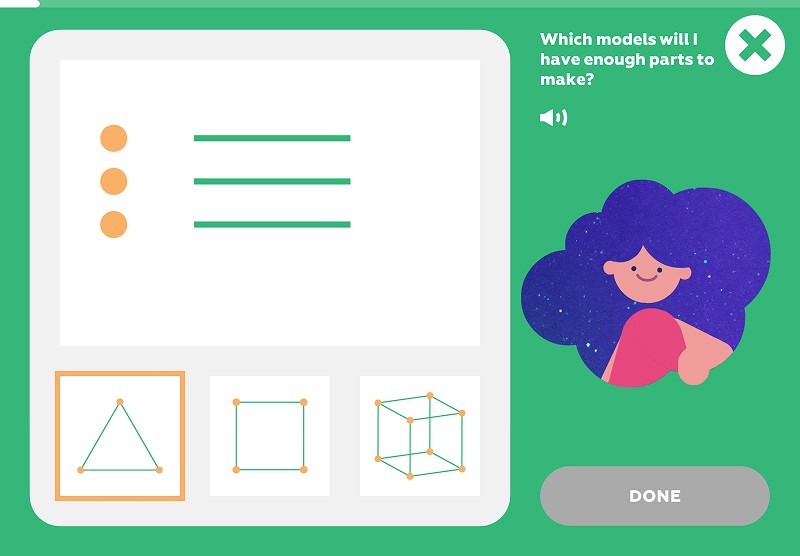
Reason with shapes and attributes
Mental geometry
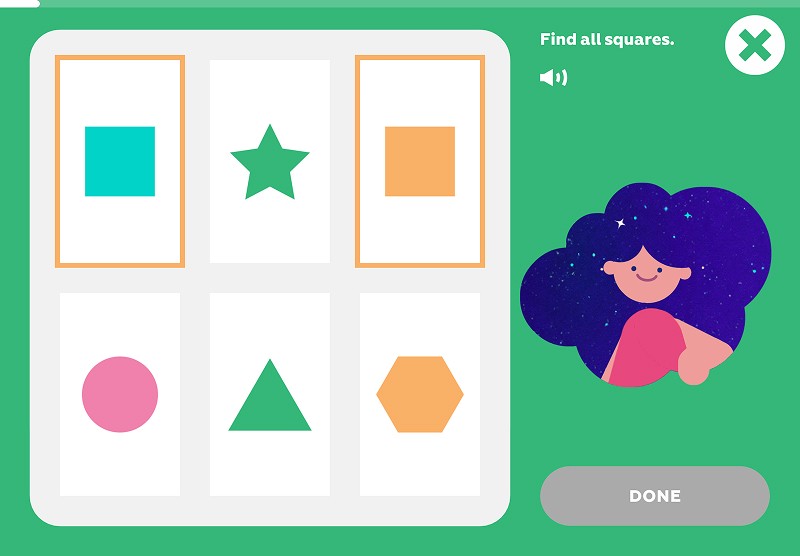
Reason with shapes and attributes
Shape recognition
Analyze, Compare, Create, and Compose Shapes
In this section, children explore shapes more deeply by comparing their features, building new shapes from smaller parts, and breaking shapes into equal pieces. They learn that shapes can be combined, rearranged, and divided while still keeping their defining properties.
Through hands-on activities such as building, drawing, and partitioning shapes, children develop spatial reasoning and flexible thinking. These experiences help them understand how shapes relate to one another and lay the foundation for later work with geometry concepts like fractions, symmetry, and area.
Compose two-dimensional shapes (rectangles, squares, trapezoids, triangles, half-circles, and quarter-circles) or three-dimensional shapes (cubes, right rectangular prisms, right circular cones, and right circular cylinders) to create a composite shape, and compose new shapes from the composite shape
1.G.A.2
Standard 1.G.A.2 encourages children to explore how shapes can be combined to form new shapes. Children learn that complex shapes can be built from simpler ones and that the same pieces can often be arranged in different ways to create different figures. This helps develop spatial reasoning and flexible thinking.
By composing shapes through hands-on activities—such as using pattern blocks, cut-out shapes, or building materials—children begin to understand how shapes relate to one another. These experiences support problem-solving skills and lay the groundwork for later geometry concepts, including area, symmetry, and spatial visualization.
Examples for 1.G.A.2:
Combining two triangles to make a rectangle or a square.
Using pattern blocks to create a larger shape and then rearranging the same pieces to make a different shape.
Building a simple 3D structure by combining cubes and describing the new shape.
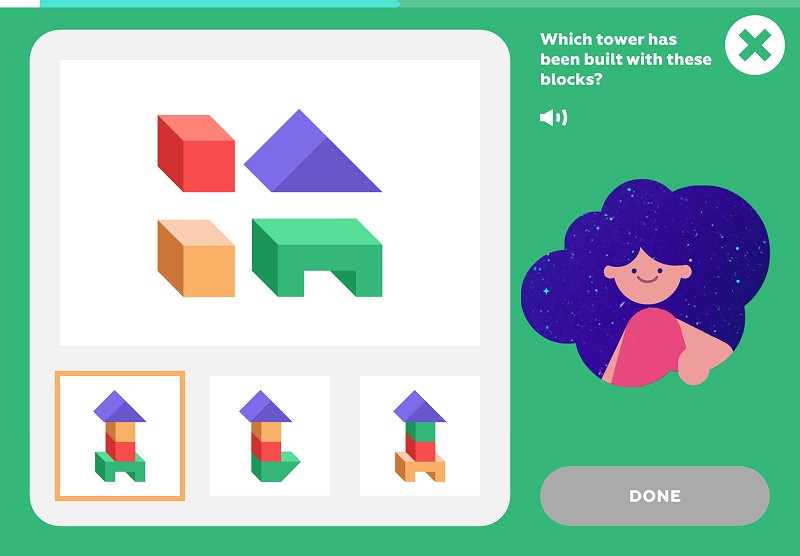
Building with blocks
Build models of 3D shapes
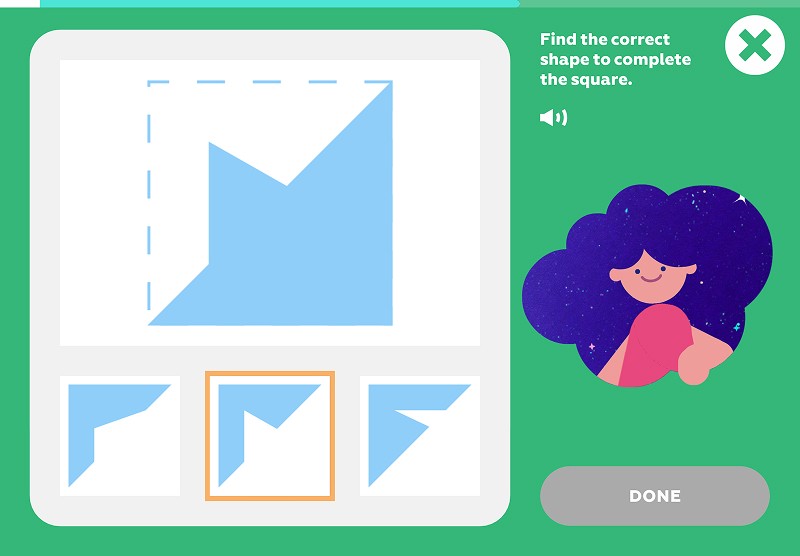
Compose shapes
Complete the square
Partition circles and rectangles into two and four equal shares, describe the shares using the words halves, fourths, and quarters, and use the phrases half of, fourth of, and quarter of. Describe the whole as two of, or four of the shares. Understand for these examples that decomposing into more equal shares creates smaller shares.
1.G.A.3
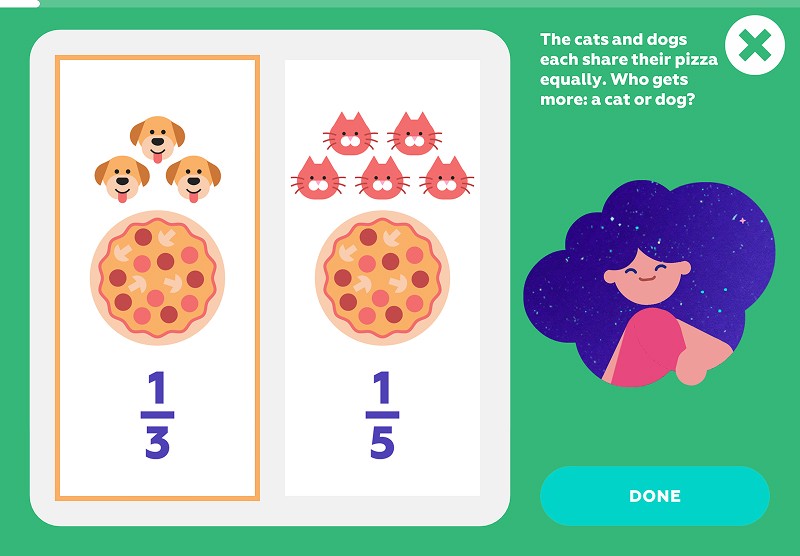
Standard 1.G.A.3 introduces children to the idea of equal sharing, which is the foundation for understanding fractions in later grades. Children learn to divide circles and rectangles into equal parts and to describe these parts using everyday language such as halves and quarters.
The focus is on fairness and equality, not on formal fraction notation. Children explore what it means for shares to be equal and discover that when a whole is divided into more equal parts, each part becomes smaller. This hands-on, visual approach helps children build an intuitive understanding of fractions before working with numbers and symbols.
Examples for 1.G.A.3:
Dividing a circle into two equal parts and describing each part as a half.
Partitioning a rectangle into four equal parts and explaining that each part is a quarter of the whole.
Comparing two drawings of the same shape—one divided into halves and one into quarters—and explaining why the quarters are smaller.
Visual fractions
Fractions and pizzas

Halves and multiples
Halves
Mathematical Practice Standards in First Grade
The Standards for Mathematical Practice describe how students should approach mathematics, complementing the content standards such as Operations and Algebraic Thinking or Number and Operations in Base Ten. These eight practices shape the way first graders think about and engage with math, encouraging deeper reasoning, explanation, and problem-solving skills. Unlike the content standards, which change from grade to grade, these practices remain consistent across all levels.
In first grade, these practices become more visible as children begin to explain their strategies, compare different solutions, and justify their reasoning. When a first grader solves an addition problem using place value, determines whether an equation is true, or explains why one number is greater than another, they are not just applying procedures — they are developing structured mathematical thinking.
The practice standards also guide the design of educational tools, such as Funexpected Math, which support a balance of conceptual understanding, strategic fluency, and real-world application. Together, the content and practice standards provide a clear framework for developing confident and flexible mathematical thinkers in first grade.
Key Mathematical Practices for First Graders
The Mathematical Practice Standards describe how children learn and think about math, not just what they learn. In first grade, these practices guide children to make sense of problems, explain their thinking, use models and tools, and look for patterns in numbers and shapes. They are woven into all math topics—addition, place value, measurement, and geometry.
As children work through problems, they learn to reason, communicate their ideas, and try different strategies when something doesn’t work right away. These habits help children build confidence and persistence, showing them that math is about thinking and understanding, not just getting quick answers. The practice standards support deeper learning and prepare children for more complex problem-solving in later grades.
MP.1: Make sense of problems and persevere in solving them
add
MP.2: Reason abstractly and quantitatively
add
MP.3: Construct viable arguments and critique the reasoning of others
add
MP.4: Model with mathematics
add
MP.5: Use appropriate tools strategically
add
MP.6: Attend to precision
add
MP.7: Look for and make use of structure
add
MP.8: Look for and express regularity in repeated reasoning
add
Using Funexpected Math to Support These Standards
Funexpected Math is a game-based app designed to align with Common Core first grade standards. It uses interactive puzzles and problem-solving tasks to strengthen children’s understanding of key math concepts, including addition and subtraction, place value, measurement, and geometry. Developed with input from math Olympiad winners and university mathematicians, the app presents these ideas through short, engaging missions that typically last 5–10 minutes.
Research highlights the effectiveness of well-crafted, concept-driven digital tools in improving early math skills. A Stanford/Harvard working paper found that such tools, when paired with teacher-guided instruction, can boost early math scores by 0.3–0.4 standard deviations. Similarly, the U.S. Department of Education's Office of Educational Technology notes that focused, short digital activities (10–15 minutes) are more impactful than extended, unsupervised screen time. Funexpected Math's bite-sized puzzles fit perfectly within this framework, making it a versatile tool for both classrooms and homes. The app’s approach aligns with each mathematical domain outlined in the Common Core standards.
How Funexpected Math Aligns with Each Domain in First Grade
Operations and Algebraic Thinking: In first grade, Funexpected Math helps children deepen their understanding of addition and subtraction through visual and interactive puzzles. Children practice solving story problems, working with equations that include missing numbers, and exploring the relationship between addition and subtraction. These activities support Common Core standards by encouraging children to explain their reasoning, use different strategies, and build fluency within 20 while maintaining a strong focus on understanding.
Number and Operations in Base Ten: Activities in this domain focus on place value and numbers up to 100. Children work with tens and ones, compare two-digit numbers, and add or subtract using place value strategies. Visual models and hands-on representations help children see why adding tens to tens or regrouping ones makes sense, aligning closely with first grade standards on place value and operations within 100.
Measurement and Data: Funexpected Math includes tasks where children measure length using repeated units, compare objects indirectly, tell time to the hour and half-hour, and organize data into simple charts or graphs. These activities reflect first grade Common Core goals of understanding measurement as a process and using data to answer meaningful questions.
Geometry: In the Geometry domain, the app offers puzzles that help children identify defining attributes of shapes, compose and decompose shapes, and divide shapes into equal parts such as halves and quarters. By building, combining, and partitioning shapes, children develop spatial reasoning skills that align with first grade geometry standards.
Beyond these specific domains, Funexpected Math consistently supports the Mathematical Practice Standards. Children are encouraged to make sense of problems, model situations visually, explain their thinking, and look for patterns and structure. Open-ended challenges invite children to try different strategies and reflect on their solutions, reinforcing the problem-solving mindset emphasized throughout the Common Core in first grade.
Using Funexpected Math in Classrooms and Homes
Funexpected Math is designed for flexible use in first grade, both in classrooms and at home, supporting children as they move toward more structured mathematical thinking while still learning through exploration and play.
In U.S. first grade classrooms, teachers can integrate the app into math centers or learning rotations, typically for 5–10 minutes per session. These rotations may include hands-on manipulatives, small-group instruction with the teacher, and app-based activities. Funexpected’s adaptive difficulty allows children to work on tasks that match their current level, from strengthening addition and subtraction strategies to exploring place value with tens and ones. Teachers can select missions that align with specific Common Core standards, making it easier to connect digital activities with lesson goals.
Pairing app-based tasks with follow-up hands-on activities helps deepen understanding. For example, after solving addition problems in the app using place value strategies, children might use base-ten blocks or drawings to model the same problems offline. After working with shape composition or partitioning, they can recreate or extend these ideas using physical pattern blocks or paper shapes. This blended approach supports different learning styles and reinforces conceptual understanding.
At home, parents can set aside 10–15 minutes a day for Funexpected Math as an engaging alternative to passive screen time. Parents can support learning by asking questions such as “How did you figure that out?” or “Is there another way to solve it?” and by connecting app activities to everyday situations—like finding 10 more or 10 less than a number, solving small addition or subtraction problems while shopping, or reading the clock during daily routines.
Funexpected Math is available by subscription, typically costing around $5–$8 per month or $40–$60 per year. The app complies with COPPA and FERPA requirements, ensuring data privacy for young users. Schools can inquire about classroom or educator plans, which may include rostering options, progress tracking, and support for diverse learners. As with any digital tool, schools should review privacy policies and data practices to ensure alignment with local ed-tech guidelines.
Conclusion
The Common Core math standards for first grade build directly on the foundation established in kindergarten and help children move toward more structured and confident mathematical thinking. In first grade, the focus shifts to using addition and subtraction as meaningful tools, developing a strong understanding of place value within 100, working with measurement and data, and exploring geometry more deeply.
These standards are designed as a clear progression, where each new skill grows out of earlier understanding. Children are not only learning how to calculate, but also why mathematical strategies work. This balance between procedural skill and conceptual understanding supports flexible thinking and prepares students for more complex problem-solving in later grades.
The Common Core focuses on a clear set of math skills and concepts, organizing math skills sequentially across grades. The goal is to help students apply these concepts to solve real-world problems
Common Core State Standards Initiative
By emphasizing connections—such as how place value supports addition and subtraction, or how shapes can be composed, decomposed, and shared equally—the standards help children see math as a coherent system rather than a set of isolated topics.
Parents and teachers can support this learning through meaningful practice and discussion. Interactive tools like Funexpected Math help reinforce first grade concepts by combining visual models, problem-solving, and hands-on exploration. This approach supports classroom learning while helping children develop the reasoning skills and confidence they will need as mathematics continues to grow in complexity.


