Common Mistakes to Avoid When Teaching Kids the Concept of Time
Early Childhood Education
Oct 2, 2026
Avoid six common errors when teaching time: tie clock reading to routines, practice duration with timers and play, and teach meaning first.

A lot of parents have this misconception: to teach time means to teach reading a clock. But educational experts usually suggest a different approach: put routine photos in order, connect dinner to 6:00 p.m., or use a 5-minute timer during play.
Here are 6 mistakes to avoid, with a simple change for each:
Teaching clocks alone: Link clock times to familiar events.
Relying on memorization: Explain what the hands and numbers tell us.
Expecting children to feel 10 minutes: Let them guess, time an activity, and compare.
Correcting every “in a minute”: Use clear timing language when it matters.
Turning all routines into quizzes: Talk about what comes next without testing.
Equating clock struggles with poor time understanding: Look separately at sequence, duration, routines, and clock reading.
The general rule is simple: meaning before precision. Keep practice short and playful, using routine photos, timers, clocks, and optional sequencing games. Reading a clock is one skill - not the whole picture.

Teaching Kids Time: 6 Mistakes and Simple Fixes
3 Mistakes That Separate Time From Daily Life
Mistake 1: Teaching Clocks Without Everyday Connections
A clock time means little to a child without a familiar activity attached to it. Connect clocks to school arrival, lunch, and bedtime. Use first, next, before, and after to link the routine to the clock. Then name its start time and how long it lasts. Once children make that connection, show how the clock’s hands represent the same moment.
Teaching approach | Child’s task | Recommended adjustment |
|---|---|---|
Isolated clock worksheet | Name a clock time | Connect the time to a familiar activity |
Routine-based instruction | Relate a clock display to an event | Discuss both the event’s start time and duration |
Mistake 2: Relying on Memorization
Begin with whole hours. The short hand shows the hour, and the long hand shows the minutes. Connect those times to familiar routines before teaching five-minute intervals or skip counting by fives.
Have children move the hands on an analog practice clock to match a digital display.
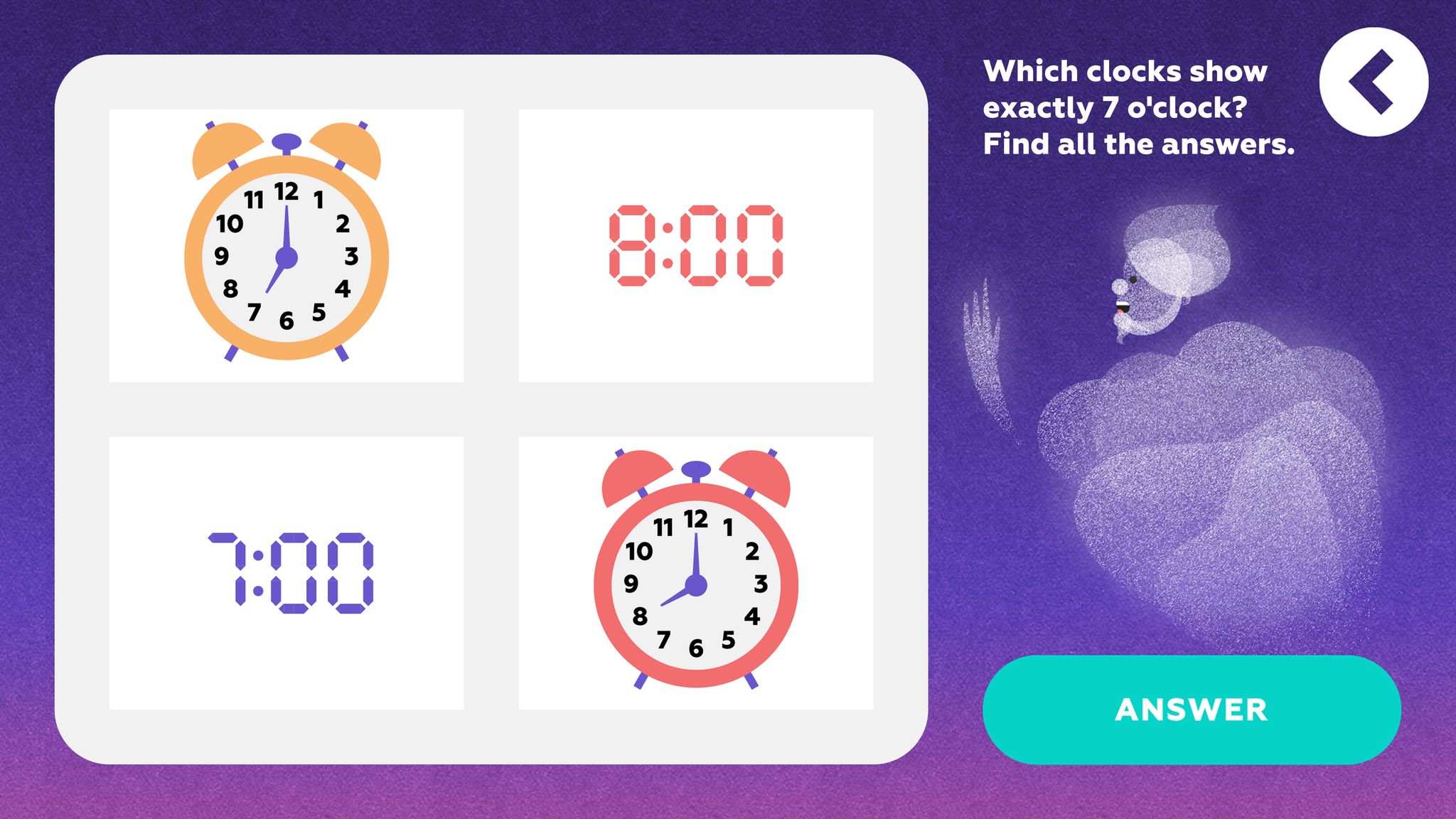
Learning to match analog and digital time display in the Funexpected Math app
Once children can match the readings, shift from naming a time to understanding how long an activity lasts.
Mistake 3: Assuming Children Can Sense 10 Minutes
Duration is how long something lasts. Saying “You have ten minutes” gives a child a number, but not necessarily a sense of how much time they have. A familiar activity lets them estimate, experience, and discuss that interval.
Step
Suggested activity
Estimate
Predict whether drawing will take less or more than 10 minutes.
Measure
Set a 10-minute timer and draw.
Compare
Say whether it felt shorter or longer than expected.
Describe
Name the start and end times.
Treat estimates as starting points, not right or wrong answers. Repeat with 1, 5, or 10 minutes so children can compare different intervals. Help them distinguish the two ideas: 3:00 p.m. names a time; ten minutes describes a length of time.
3 Mistakes in Talking About and Assessing Time
After duration, the next challenge is how adults talk about time - and judge children’s understanding of it - during everyday routines.
Mistake 4: Overcorrecting “In a Minute”
Model clear language without correcting every casual phrase.
When timing matters, use a concrete marker such as after lunch or when the timer rings in 3 minutes.
Keep the conversation moving. You don’t need to interrupt and ask your child to repeat a more precise phrase.
Mistake 5: Turning Routines Into Quizzes
Explain what happens next rather than turning the routine into a quiz. Instead of asking clock questions, tell children how much time remains or what comes next.
When a transition needs a clear endpoint, let children use a visible timer. This can cut down on repeated verbal reminders.[1] These habits help you see what children understand without making daily routines feel like tests.
Mistake 6: Confusing Clock Reading With Time Understanding
Trouble reading a clock doesn’t, by itself, mean a child has a poor understanding of time. Track these skills separately:
Skill | Observable evidence | Teaching response |
|---|---|---|
Sequence | Knows what happened first | Use first, next, and last language |
Duration | Notices that one activity lasts longer than another | Compare durations using a timer |
Daily routine | Moves through familiar routine steps in order | Talk through the routine with before-and-after language |
Clock reading | Needs help reading clock times | Link clock times to familiar events |
Watch what your child does during ordinary activities, not just what they can explain when asked. Let those observations guide what you practice next.
How to Teach Time Through Play
Play gives children a way to practice sequence, duration, and clock time - without turning learning into a test.
Start With Sequence and Duration
Choose the next game based on the skills your child shows, not their age.
Start with photos of a familiar routine, such as getting dressed, and put them in order. Use fewer pictures if the order is confusing; add steps when your child shows interest.
Sticker collages also show order: which sticker came first, which one came last.
Keep games short, and stop before play starts to feel like a test.
For duration, compare two familiar tasks, such as cleanup and story time. Invite a guess about which will take longer, then measure both with a timer.
The guess isn’t an answer to grade. It’s a starting point for learning together. Repeat the game with familiar activities so your child can connect the time on the timer with something they’ve experienced.
Once your child can put events in order, link those events to clock times.
Link Routines to Clock Times
Start with whole hours tied to real events, such as dinner at 6:00 p.m.
Give children time to experience intervals before asking them to calculate elapsed time. Reading two clock times isn’t the same as understanding the stretch between them. Add more precise times when your child shows interest and feels comfortable with the simpler connections.
Add Early Math Practice With Funexpected Math
When your child is ready for a digital game, use it to practice the same ideas.

Funexpected Math is a playful, interactive math and logic app for children ages 3–7. Its sequencing and step-order activities help children practice putting steps in order and thinking about what comes next[2].
After a game, connect that idea to arranging routine photos.
Use the app alongside routines, timers, and clocks to reinforce what your child is learning.
Conclusion: Teach Meaning Before Precision
Small changes help children connect time to daily life. Teach it through routines, language, and experience - not just clock drills.[3]
Try one short, playful activity each week. Look for progress in understanding sequence and duration, even when reading a clock still feels hard.[3]
Reading a clock is just one part of understanding time - teach meaning first; precision can come later.
FAQs
How can I tell if my child is ready to learn clock reading?
Notice whether your child uses time-related words like “now,” “soon,” and “later.” Also, watch for signs that they understand the order of daily events, such as what comes first or last in a routine.
Reading a clock is a separate skill. Introduce it with activities that spark curiosity, like riddles about a clock’s face and hands, instead of asking your child to memorize how it works.
What if timers make my child anxious?
If timers make your child anxious, hold off on timed tasks until they’ve fully mastered the concept and just need more practice. Focus on accuracy rather than speed. Rushing can lead to mistakes and frustration.
Help your child see mistakes as chances to learn. Keep practice sessions to 10–15 minutes, and work time concepts into hands-on activities or everyday routines so your child feels comfortable and stays engaged.
When should I seek help for my child’s struggles with time?
Seek help when repeated errors point to a misunderstanding, not just a calculation mistake. Children develop time-related skills at different rates. Trouble reading a clock doesn’t necessarily mean a child doesn’t understand time.
Focus support on basic concepts, such as sequencing or duration, instead of generic drills. Getting help early can address gaps, build confidence, and keep struggles from becoming ingrained.
Related Blog Posts
Transform Math Learning for Kids
Explore Funexpected's interactive math program designed for children aged 3-7. Build math fluency, logic, and problem-solving skills through engaging, hands-on activities and a personalized digital tutor.